
Ensuring National Waqf Month Does Not Stop at Ceremony
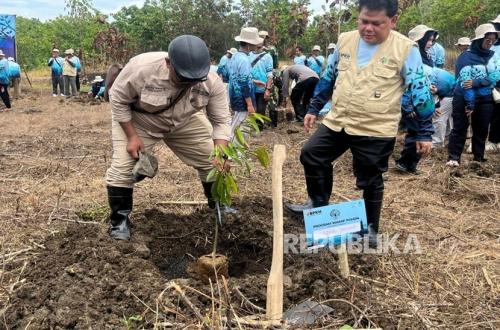
The issuance of the Minister of Religious Affairs Decree (KMA) Number 571 of 2026 on National Waqf Month is good news for Indonesia’s waqf ecosystem. Through this decree, the government has designated the month of Muharram in each Hijri year as National Waqf Month. This decision deserves appreciation as it provides an official platform for waqf as an important instrument in the socio-economic development of the community. However, the best appreciation for this KMA is not merely welcoming it ceremonially. The best appreciation is ensuring that National Waqf Month truly becomes a momentum for transformation. The biggest challenge for Indonesian waqf today is not solely a lack of potential, but the ability to convert that vast potential into a real, measurable, productive force with broad impact for society. All this time, waqf has often been called a sleeping giant. That expression is true but simultaneously serves as a criticism for all of us. If waqf is continuously said to have great potential but is not yet optimal in delivering public welfare, it means there are serious issues in governance, institutional frameworks, literacy, nazhir capacity, asset legality, business models, and accountability. Therefore, National Waqf Month should not be understood as a month of celebration, but as a month of reform. This KMA has the right direction. It emphasises that National Waqf Month is implemented to improve transparent, accountable waqf governance in accordance with sharia principles; increase community participation; strengthen nazhir professionalism; encourage the development of productive waqf; enhance waqf literacy and education; and expand collaboration between the government, sharia financial institutions, waqf institutions, the business world, and society. This formulation is strong. But a strong formulation will lose its meaning if it is not followed by strong execution. Herein lies the real test. National Waqf Month must not stop at banners, seminars, opening ceremonies, group photos, and social media uploads. All of that may be done, but it must not become the core of the movement. The core of the waqf movement is real change: waqf assets becoming more secure, nazhir becoming more professional, public literacy becoming broader, cash waqf becoming more trusted, productive waqf growing further, and the benefits of waqf being increasingly felt by society. The following steps are important to take. First, National Waqf Month must become a major momentum to improve waqf literacy. To this day, a portion of society still understands waqf in a limited way. Waqf is often identified with land for mosques, cemeteries, or madrasahs. This understanding is not wrong, but it is incomplete. Waqf is actually much broader. Waqf can be in the form of money, movable assets, sharia securities, productive gardens, commercial buildings, health facilities, educational institutions, and even environmental and food security projects. Waqf literacy must not stop at the introduction of terms. Waqf literacy must change the public’s perspective. The community needs to understand that waqf is not merely an act of worship of giving, but also a strategy for building long-term benefit. Waqf transforms private wealth into public benefit. Waqf turns idle assets into productive assets. Waqf changes individual piety into social welfare. At this point, waqf becomes highly relevant to the agenda of economic justice. Second, the professionalisation of nazhir must be placed as a primary agenda. The future of Indonesian waqf is largely determined by the quality of nazhir. A nazhir is not merely a custodian of assets, a certificate administrator, or an administrative trustee. A nazhir is an investment manager of the community’s trust. They must possess integrity, competence, managerial ability, legal understanding, business acumen, technological mastery, social sensitivity, and a strong commitment to sharia principles. Therefore, the certification and development of nazhir as mentioned in the KMA must be carried out seriously. Certification must not become a formality. It must be an instrument for quality improvement. Development must not only be in the form of brief training. It must be conducted continuously, based on field needs, and with measurable results. Small nazhir in the regions need practical assistance. Large nazhir need strengthening of governance, risk management, sharia investment development, digitalisation, and public accountability. Third, the legalisation and safeguarding of waqf assets must be accelerated. One of the classic problems of waqf is the large number of assets that are not yet legally and administratively organised. There is waqf land that has not been certified. There are waqf assets that have not been properly documented. There are also assets vulnerable to disputes due to weak legal evidence. If this basic problem is not resolved, the development of productive waqf will always face serious obstacles. The waqf land certification movement stated in the KMA must be translated into a concrete national programme. The Ministry of Religious Affairs, the Indonesian Waqf Board, the Ministry of Agrarian Affairs and Spatial Planning/National Land Agency, local governments, Islamic community organisations, universities, and nazhir need to build measurable joint work. The targets must be clear: how many waqf assets are mapped, how many are certified, how many are saved from potential disputes, and how many are ready to be developed productively. Fourth, productive waqf must move beyond jargon. Almost all waqf forums today talk about productive waqf. However, the questions are: productive for whom, managed by whom, using what business model, what are the risks, where are the results channelled, and what does its accountability look like? These questions are important so that productive waqf does not only become a beautiful term, but truly becomes a healthy practice. Productive waqf must be present in real and replicable models. For example, agricultural waqf, livestock waqf, shophouse waqf, hospital waqf.