
Enough of the Semester II Losses: Please Let the IHSG Stay Green!
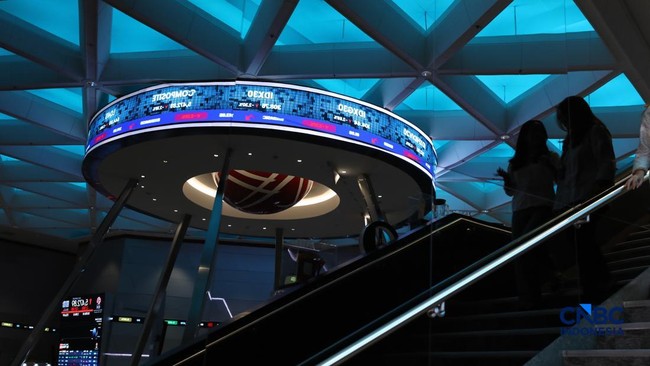
The movement of the Jakarta Composite Index (IHSG) throughout the first six months of 2026 recorded extremely volatile dynamics. Various essential sentiments, ranging from changes in domestic regulator policies, global geopolitical tensions, to portfolio restructuring by foreign institutions, alternately exerted massive pressure on the performance of the Indonesian capital market. Entering the last trading day of the first semester on 30 June 2026, the index closed the half-year at 5,643.19. This closing position confirmed the magnitude of the selling pressure that hit the domestic stock exchange for six consecutive months, leaving macroeconomic challenges as well as asset accumulation opportunities for market participants in the second half of this year. The Indonesian capital market began 2026 with fairly solid optimism. Based on historical trading data, the index briefly touched its year-to-date high of 9,174.70 on 20 January 2026. However, this euphoria was abruptly halted due to a negative market response to a circular from Morgan Stanley Capital International regarding the methodology for evaluating public free float shares on the domestic exchange on 28 January. The pressure was further accelerated by internal dynamics, namely the resignation of several leaders from the Financial Services Authority and the Indonesia Stock Exchange at the end of January, which immediately triggered risk-aversion sentiment due to regulatory uncertainty and brought the index down drastically. Entering February, the index recorded a technical recovery towards the 8,396.08 level on 23 February, driven by the release of financial performance reports from large-capitalisation issuers. Unfortunately, this recovery was thwarted by the escalation of international geopolitical conflict. Reports of a United States military operation at the end of February triggered global panic, pushing world crude oil prices to soar to US$120 per barrel. This macroeconomic condition was worsened in early March by the leak of a Fitch Ratings document revising Indonesia’s outlook to negative. This series of external sentiments effectively reduced investment interest in high-risk asset instruments. The weakening phase continued structurally into the second quarter alongside the implementation of exchange transparency policies. The announcement of a special monitoring watchlist in early April triggered widespread asset disposals. Subsequently, risk mitigation ahead of the execution of global index rebalancing in mid-May forced foreign fund managers to make portfolio adjustments on a massive scale. The peak of capital outflows was recorded on 29 May, with a value penetrating Rp8.52 trillion in a single trading day. This series of negative sentiments culminated in early June when the Rupiah exchange rate breached the psychological level of Rp18,000 per US dollar and the market responded to rumours of a downgrade by other global institutions, ultimately pushing the index to its year-to-date low of 5,317.91 on 8 June 2026. The consecutive weakening resulted in a very deep valuation correction since the start of the year. Compared to the closing level at the end of last year on 30 December 2025, which stood at 8,646.93, the end-of-June 2026 closing position of 5,643.19 represents a year-to-date decline of 34.74%. This depreciation figure is equivalent to the evaporation of Rp6,000 trillion from the IDX market capitalisation in just six months. The substantial wave of selling in the first semester proved overwhelming for the majority of retail investors facing the rapid shrinkage of their portfolio values. On the other hand, this massive decline in capitalisation has brought the valuations of premium fundamental stocks in Indonesia to a heavily discounted level, opening rational space for long-term accumulation. Additionally, the continued weakening of the Rupiah and net foreign outflow from the domestic market was also observed to be very heavy, reaching Rp73.61 trillion year-to-date. Entering the second half of 2026, the stock market movement map is expected to begin finding a footing of stability, although room for aggressive surges will still be restrained by macroeconomic conditions. The year-end closing target is estimated to be in the range of 6,200, due to projections of continued liquidity tightening. The United States central bank’s plan to raise its benchmark interest rate again will force domestic monetary authorities to maintain a high interest rate regime. This condition will directly keep the cost of capital expensive, reflected in the suboptimal corporate credit absorption rate due to high business expansion uncertainty. Besides monetary liquidity constraints, the spillover impact from the energy turmoil in the previous quarter still overshadows corporate profitability prospects. Although crude oil prices have currently subsided to the US$70 per barrel range, operational burdens that had already swelled over the past three months have eroded profit margins precisely. Furthermore, the current exchange ecosystem no longer supports artificial price movements. Regulator transparency policies and liquidity screening tightening by global institutions ensure there are no more fund injections into issuers without clear operational foundations. Index gains in the second half absolutely require a pure boost from blue-chip stocks. Amid liquidity constraints, the Indonesian exchange has crucial supporting instruments. Instructions for domestic institutions to accumulate banking stocks