
Enjoying Sumatran Dances in Northern Padang
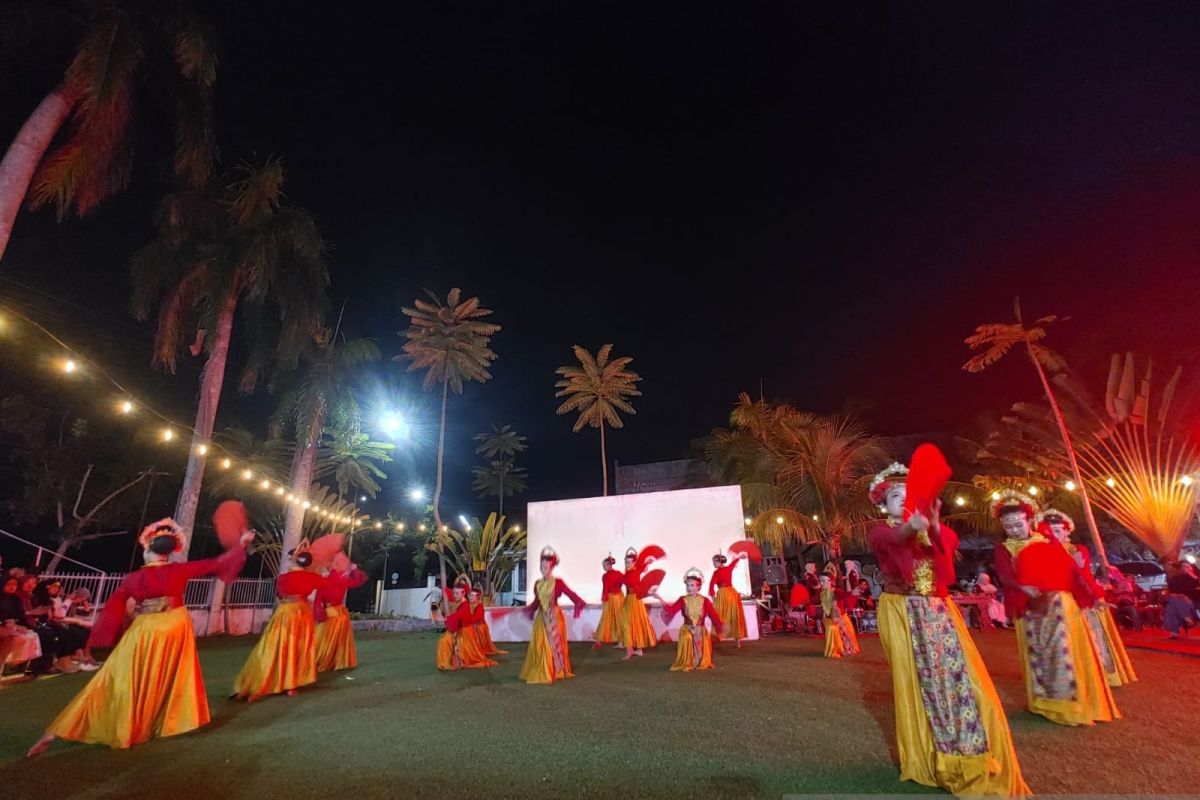
Weekend coffees are always more delightful, especially when savoured while watching a captivating traditional dance performance.
This was the atmosphere at Fabriek Blok on Saturday (24/5) evening. The cafe located in northern Padang, right along Prof Dr Hamka Street, transformed into a warm and vibrant cultural performance space.
Under a clear night sky, dancers moved in smooth, graceful rhythms, harmonising with the traditional Malay music accompanying the performance.
An invisible thread seemed to bind the audience’s gaze, compelling them to follow every gesture of the dancers—from footwork, shoulders, waist, fingers, hands, to the sway of the neck and expressive facial emotions.
Eighty dancers took to the stage that evening, performing in groups adorned with traditional attire from various regions across Sumatra.
Not only Minangkabau costumes, dominant as the identity of West Sumatra’s majority, but also diverse ethnic costumes from other Sumatran communities enriched the stage.
The dancers were students from the Dance Education Study Program at the Faculty of Languages and Arts (FBS), Padang State University (UNP).
They deliberately took to public spaces to introduce traditional dance to the wider community, especially the youth, through the performance titled ‘Langgam Ranah Sumatra’.
Eight dance pieces were performed that evening, all rooted in Sumatran traditional arts from Aceh, Lampung, North Sumatra, to West Sumatra.
Featured pieces included ‘Pusaka Irama Gayo’, ‘Gemulai Serumpun’, ‘Suhul Ni Dolok’, and ‘Tari Piriang Galatiak’.
‘Pusaka Irama Gayo’ from Aceh is a creative dance rooted in the Saman Dance. It portrays the cultural richness of the Gayo community, passed down through generations as a precious heritage.
Through synchronized, rapid, and cohesive movements, the dancers embodied the Saman Dance’s hallmark spirit of togetherness, discipline, and unity.
The harmonious rhythm of clapping hands and chest, alongside lyrical chants, reflected the Gayo community’s reverence for tradition, religion, and solidarity.
Each tempo shift symbolised life’s dynamism—from tranquillity and togetherness to the fervent passion of preserving cultural heritage.
Meanwhile, ‘Gemulai Serumpun’ from Lampung, performed by 14 dancers, blended the grace of Bedana Dance with the rhythm of Zapin Dance.
Dancers used fans, scarves, and the Siger Tower prop to symbolise honour and nobility.
Elegant, unified movements depicted Lampung’s communal spirit, unity, and cultural identity.
Through harmonious movement combinations, the dance invited audiences to celebrate diversity and showed life’s beauty when lived with mutual respect.
From North Sumatra, ‘Suhul Ni Dolok’ is a development of the Batak Toba’s Dolok Pusuk Buhit Dance.
Literally meaning ‘mountain handle’, the dance symbolises steadfast principles, strong life foundations, and the spiritual depth of the Toba community.
Inspired by the sacredness of Dolok Pusuk Buhit—the mountain believed to be the Batak people’s origin—and the philosophy of ‘suhul’ as a sturdy cultural anchor to preserve identity.
Meanwhile, ‘Tari Piriang Galatiak’ from West Sumatra showcased Minangkabau youth’s vigour, agility, and joy in expressing gratitude for blessings.
Dynamic, fast-paced plate props brought the dance to life, captivating the audience.
Each performance successfully captivated the cafe’s visitors, with some children outside the stage area mimicking the dancers’ moves.
The performance was part of the Dance Education students’ academic requirement for the ‘Creative Arts Industry Dance’ and ‘Sumatran Dance’ courses.
Lecturers Nerosti and Vina Aulya for ‘Creative Arts Industry Dance’, and Susmiarti for ‘Sumatran Dance’, attended to watch their students’ performance.
‘The Creative Arts Industry Dance course encourages students to access public spaces and perform there, broadening appreciation,’ said Nerosti.
He believes young people should be introduced to traditional arts from regions like Aceh, Minang, Batak, Lampung, and Bengkulu.
‘The works performed tonight are creative interpretations, but their foundation remains traditional arts from across Sumatra,’ he added.
He hopes such performances will broaden young people’s understanding of Sumatra’s diverse traditional arts.
Susmiarti echoed this, stating traditional arts are ethnic cultural expressions that must be preserved and introduced to future generations.
Vina Aulya explained that the final project for ‘Creative Arts Industry Dance’ requires students to ‘sell their services’, manifested through performances.
The university is committed to advancing traditional dance through education and practice, blending it with modern and contemporary artistic approaches.
Cafe visitor Sani (36) praised the creative dance performances by UNP’s Dance Education students.
He hopes similar events continue to familiarise the public with diverse traditional arts through creative and fresh performances.