
Enhancing AI Readiness to Support Healthcare Capacity
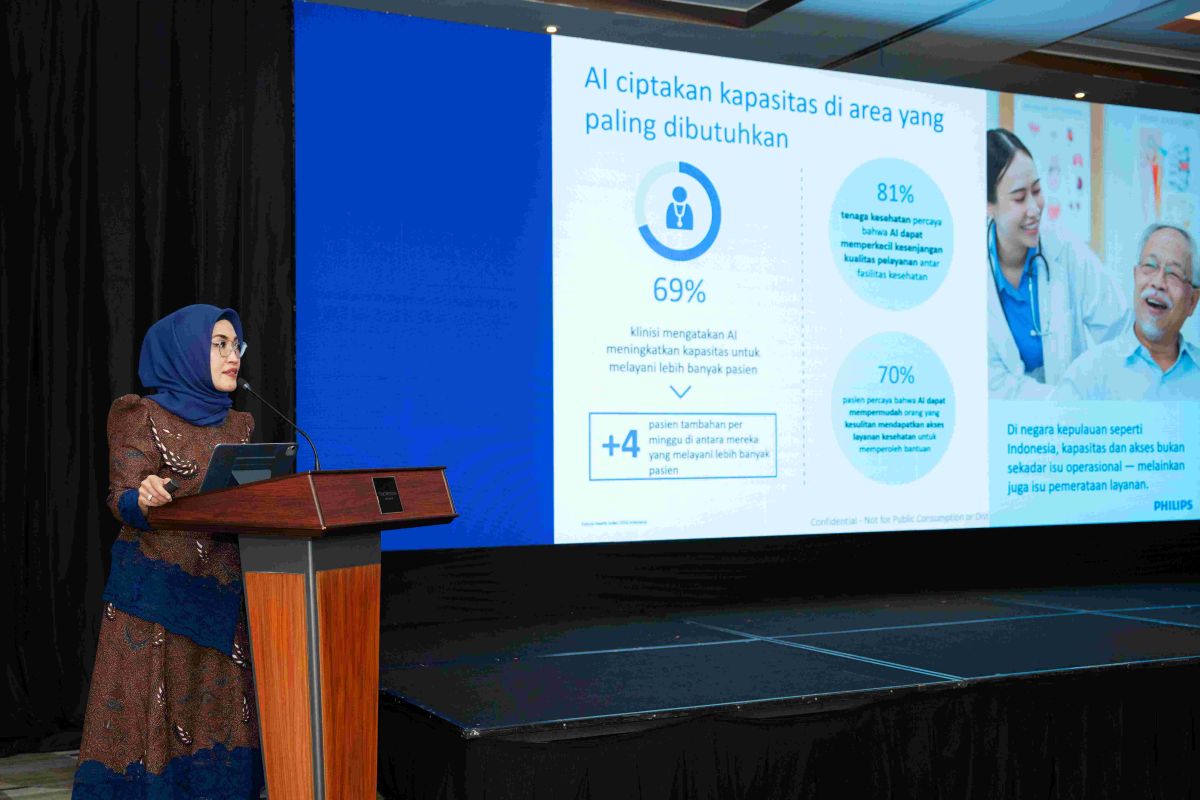
Royal Philips, a global leader in health technology, has launched the 11th edition of the Future Health Index 2026 for the Indonesia region. The report reveals that artificial intelligence (AI) has provided tangible benefits for healthcare professionals, patients, and healthcare institutions in Indonesia.
These findings mark a significant shift in the journey of AI usage within Indonesia’s healthcare sector. While the Future Health Index 2025 focused on the importance of building trust and creating conditions conducive to AI adoption, this year’s report examines how AI has delivered real impact in practice. Indonesian healthcare professionals reported faster workflows and diagnostic processes, increased capacity to serve patients, better access to information, and reduced workplace pressure.
Nevertheless, the pace of AI adoption among healthcare professionals is outstripping the readiness of training, system integration, monitoring, and the governance required to support safe and consistent AI implementation on a larger scale.
The report was launched at an event themed “AI in practice: Scaling AI for better care in Indonesia,” organised by Philips in Jakarta. The event included leaders from the Ministry of Health, healthcare providers, and hospital associations to discuss the next stages of responsible AI adoption in Indonesia.
“Discussions regarding AI in healthcare in Indonesia have now entered a new chapter. The question is no longer merely whether AI can improve the quality of healthcare, but how AI has helped healthcare professionals have more time, strengthen decision-making, and assist them in providing services to more patients,” said Astri Ramayanti Dharmawan, President Director of Philips Indonesia.
“Our priority now is to ensure these initial benefits can be translated into sustainable improvements in healthcare. To achieve this, AI needs to be integrated into clinical workflows and trusted health data, supported by enhanced capabilities of healthcare professionals, while keeping human judgement and accountability at the core of every healthcare service,” Astri added.
AI is increasing capacity in the areas most needed in Indonesia. Healthcare professionals in Indonesia reported tangible benefits from the use of AI, particularly those directly related to increasing capacity and the delivery of healthcare services.
Nearly 9 out of 10 healthcare professionals (88%) stated that AI has improved workflow efficiency, a figure significantly higher than the 71% reported globally. Furthermore, 87% of healthcare professionals reported faster access to diagnostic results, while 82% stated that AI has accelerated decision-making related to diagnoses.
Three-quarters of healthcare professionals (75%) reported easier access to integrated patient data across medical teams, compared to 57% globally. Better access to information can relevantly reduce time wasted searching for data across various systems and support more coordinated decisions. This improvement is beginning to impact clinical capacity.
More than two-thirds of Indonesian healthcare professionals (69%) stated that AI-based tools have increased their capacity to serve more patients, compared to 50% globally. Among those reporting increased capacity, the median increase was four additional patients per week.
AI also helps healthcare professionals manage their time more effectively. Nearly 6 in 10 healthcare professionals (59%) reported saving an average of at least 88 hours per year, equivalent to more than two full working weeks. They noted that this provides more time and peace of mind to review cases carefully, improving accuracy and allowing focus on higher-value clinical work.
The benefits extend beyond productivity. Two-thirds of Indonesian healthcare professionals (67%) stated that AI has improved their work-life balance, compared to 50% globally. An equal proportion reported a reduction in stress, while half stated they are less likely to work overtime or bring work home.
This potential is highly relevant to Indonesia’s geographically dispersed healthcare system. More than eight in 10 healthcare professionals (81%) believe that AI can narrow the gap in healthcare quality between regions and improve services for communities in underserved areas.
Initial financial benefits are also becoming apparent. Among leaders of Indonesian healthcare institutions, 43% reported budget savings due to AI implementation, compared to 34% globally, while 69% stated that the benefits from their AI investments have met or even exceeded their costs.
“AI provides the greatest benefit when integrated into clinical workflows and helps reduce obstacles in the daily work of healthcare professionals,” said David Utama, President Director of Siloam International Hospitals.
“For Siloam, the opportunity is not merely about implementing more technology, but accelerating Siloam’s transformation towards a ‘Hospital of the Future’ that always focuses on clinical results and the best outcomes for patients. AI helps healthcare professionals make faster and more accurate decisions, while providing more time for meaningful interaction with patients. In this vision, technology acts as an enabler that strengthens clinical capabilities, while doctors and healthcare professionals remain at the centre of decision-making and patient care,” he explained.