
Energy Transition Drives Logistics Transformation, Elnusa Boosts Low-Carbon Operations
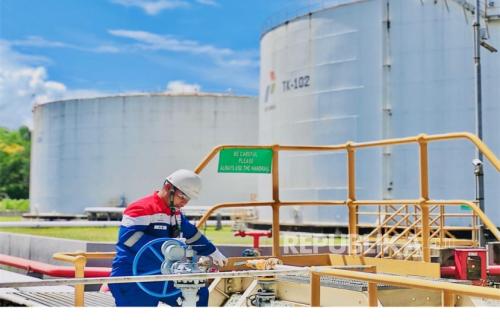
The transition to low-carbon energy is not only transforming the power generation sector but also driving change in the national energy supply chain and distribution. Digitalisation of operations, enhanced safety measures, and the use of more environmentally friendly energy are strategies increasingly being adopted to maintain supply reliability.
PT Elnusa Petrofin (EPN), a subsidiary of PT Elnusa Tbk (ELSA), is capitalising on this momentum as it marks its 30th anniversary by strengthening its transformation into an integrated energy services and supply chain solutions provider. The company is expanding its use of digital technology while increasing support for the national energy transition agenda.
President Director of PT Elnusa Petrofin Doni Indrawan said the company’s three-decade journey is a reflection of its responsibility to maintain reliable energy distribution while delivering benefits to the community. "For three decades, we have been present to ensure energy can be distributed safely and reliably, while providing increasingly broad benefits to the people and environment of Indonesia," Doni said in a press statement on Saturday.
Over the past 30 years, Elnusa Petrofin has developed various services, including energy transportation and logistics, terminal and storage facility management, infrastructure development, fuel supply for the industrial and maritime sectors, and integrated lubricant and chemical services. The company’s operational network now spans various regions across Indonesia, including areas with significant geographical challenges.
The company is also supporting energy infrastructure development through the construction of the Labuan Bajo Fuel Terminal and the Tembilahan Fuel Terminal. In addition, Elnusa Petrofin has begun distributing B50 Industrial Biodiesel from the Indonesia Bulk Terminal Fuel Terminal on Pulau Laut, South Kalimantan, in support of increasing domestic energy utilisation and the government’s energy transition policies.
On the operational side, the company is strengthening digitalisation to improve the safety and efficiency of energy distribution. One of the technologies deployed is Road Traffic Control (RTC), which utilises GPS tracking and artificial intelligence-based cameras to monitor fleet movements, speed limit compliance, driver conditions, and potential route deviations in real time.
Elnusa Petrofin has also developed the Remote Asset Daily Activity Recorder (RADAR) to strengthen asset monitoring, especially at operational sites in remote areas or those requiring special supervision. The use of this technology is aimed at improving operational excellence while reinforcing the implementation of Health, Safety, Security, and Environment (HSSE) aspects.
"We want to ensure that behind every unit of energy distributed, there is a reliable system, competent human resources, continuously evolving technology, and a responsibility to maintain safety and sustainability," Doni said.
In line with the national energy transition targets and the Net Zero Emissions 2060 goal, the company is involved in the implementation of a Green Terminal at the Tanjung Sekong LPG Terminal in Cilegon, Banten. This initiative includes operational digitalisation, environmental management, the application of more eco-friendly technology, circular economy practices, biodiversity protection, and human resource capacity building.
Beyond strengthening operations, the company runs various social responsibility programmes in its operational areas. Throughout 2025, Elnusa Petrofin carried out 1,010 CSR activities across 98 operational units, reaching more than 52,000 beneficiaries through the five pillars of Petrofin Peduli, namely education, health, environment, community safety, and disaster response.
Digital transformation, strengthening energy distribution, and implementing sustainability principles are the focus for Elnusa Petrofin as it navigates changes in the energy industry increasingly geared towards operational efficiency, supply resilience, and carbon emission reduction.