
Energy Transition Drives Demand for Competent and Highly Competitive Workforce
Amidst intense global economic competition and the acceleration of the energy transition, investment in human resources (HR) has become the most decisive factor in maintaining Indonesia’s competitiveness. Strengthening workforce competence is required not only to increase industrial productivity but also to serve as the foundation for sustainable national economic growth.
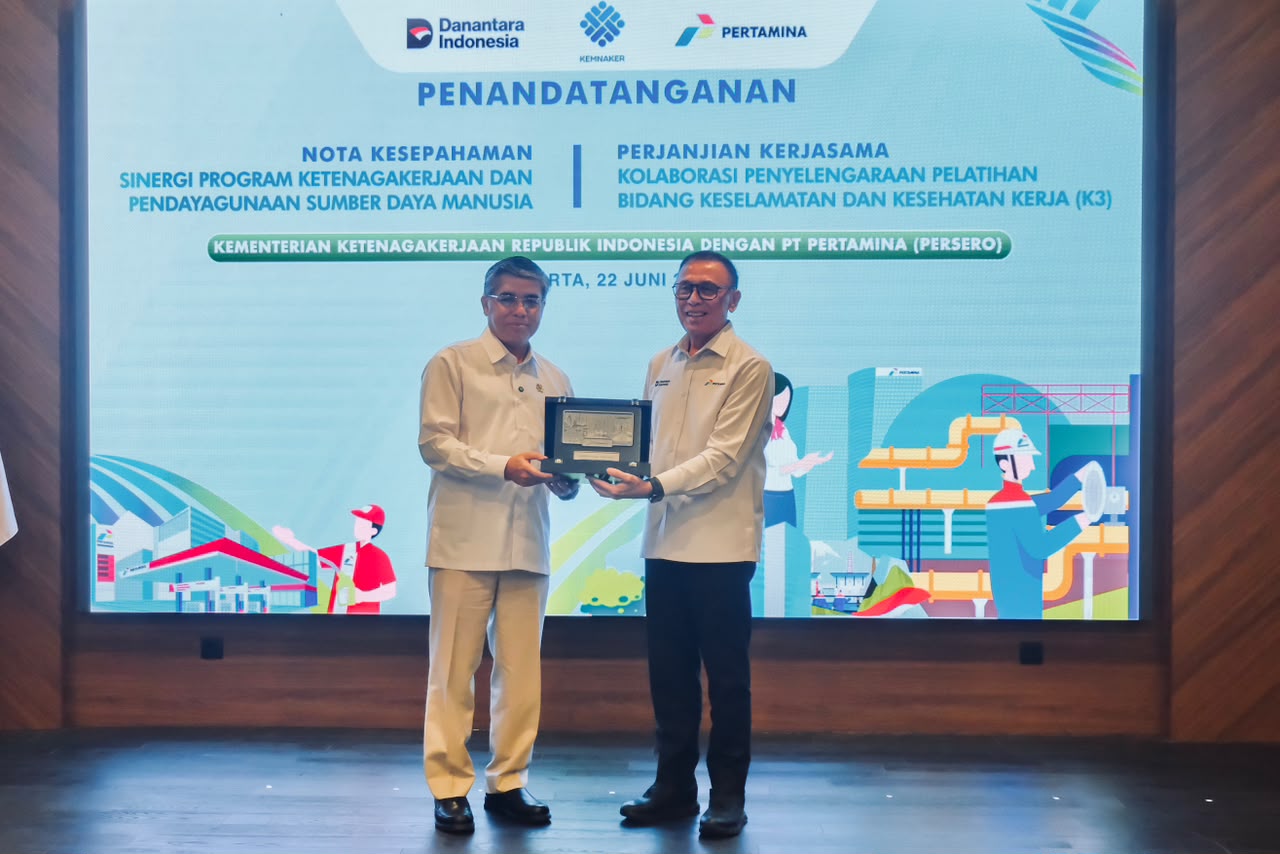
This view was expressed by the President Commissioner of PT Pertamina (Persero), Mochamad Iriawan, during the signing of a Memorandum of Understanding (MoU) and Cooperation Agreement (PKS) between Pertamina and the Ministry of Manpower in Jakarta on Monday (22/06/202<0xA0>26).
The collaboration focuses on strengthening vocational training in the field of Occupational Health and Safety (K3) to create a more competent workforce prepared to face future industrial challenges.
According to Iriawan, the success of companies and the nation is no longer solely determined by the ownership of assets or technology, but by the quality of human resources capable of adapting to change. “The best investment that can be made is an investment in people. Superior, adaptive, and competitive human resources will be the determinant of Indonesia’s success in facing global economic changes,” he stated.
Commonly known as Iwan Bule, he assessed that collaboration between the business world and the government is a strategic step to strengthen national competitiveness, especially as the energy sector undergoes a major transformation towards a low-carbon economy. In such conditions, the demand for highly competent labour continues to rise.
From an economic perspective, he continued, improving the quality of the workforce is believed to provide a multiplier effect on industrial productivity, operational efficiency, and the competitiveness of Indonesian investment. “Strengthening competence is also a vital factor in supporting the growth targets of the energy sector, which is one of the pillars of the national economy,” concluded Iwan Bule.
Minister of Manpower Yassierli noted that the synergy with Pertamina serves as an example of collaboration that can strengthen the quality of the Indonesian workforce. He stated that developing future skills is an urgent necessity amidst the rapidly changing world of work.
“Pertamina is a strategic national asset. Strengthening human resources and maintaining healthy industrial relations are keys to ensuring the company can continue to grow and contribute to the national economy,” he said.
Meanwhile, the Vice President Director of Pertamina, Oki Muraza, emphasised that occupational safety is a crucial aspect of efforts to increase productivity and business sustainability. This is increasingly relevant alongside the target to increase national oil production to one million barrels per day by 2029.
As an implementation of this cooperation, Pertamina and the Ministry of Manpower are conducting a Training of Trainer (ToT) programme for the HSSE Passport for instructors at the Ministry of Manpower’s Large Vocational Training and Productivity Centre (BBPVP/BPVP). As of June 2026, the programme has been running in Bekasi, Sidoarjo, Semarang, Medan, and Serang.
Additionally, both parties are conducting HSSE Passport training for 250 of Pertamina’s partner workers simultaneously. This programme is expected to expand the culture of occupational safety while improving the quality of the workforce involved in the national energy business chain.
“This collaboration demonstrates that human resource development cannot be done in isolation. Synergy between the government and the business world is an essential element in creating a competent workforce, increasing industrial productivity, and strengthening Indonesia’s economic competitiveness amidst ever-changing global dynamics,” concluded Oki.