
Energy Transition and the Test of Indonesia's Technological Sovereignty
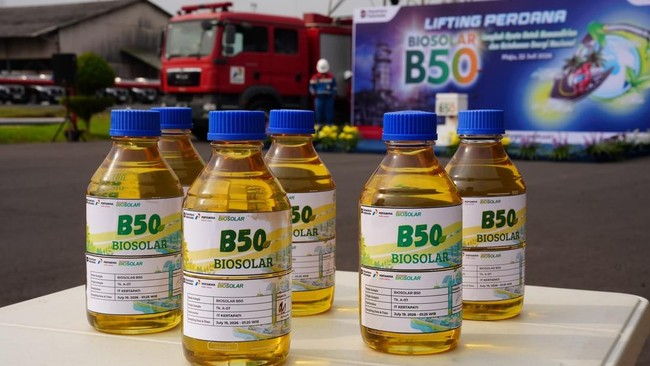
Since 1 July 2026, Indonesia has entered a new phase of mandatory B50 biodiesel. This policy is worthy of appreciation as it increases the domestic utilisation of palm oil while reducing the need for imported diesel. The Ministry of Energy and Mineral Resources estimates that the implementation of B40 in the first half and B50 in the second half of 2026 could reduce fuel import costs by approximately Rp157.28 trillion.
However, the success of the energy transition cannot be measured solely by the scale of the renewable energy mix or the volume of fossil fuels replaced. The more decisive question is the extent of added value, technological capability, manufacturing capacity, and the growth of productive jobs in Indonesia. Without this, we will merely shift our dependency from oil imports to the import of intermediate materials, components, machinery, catalysts, control devices, and technology licences.
Energy Transition is an Industrial Policy
The energy transition has become an arena for global industrial competition. The International Energy Agency (IEA) noted that the market value of six mass-produced clean energy technologies—solar panels, wind turbines, electric vehicles, batteries, electrolysers, and heat pumps—exceeded US$700 billion in 2023. Under current policies, this value is projected to nearly triple, exceeding US$2 trillion by 2035.
This figure explains why many nations treat the energy transition as a simultaneous policy for economy, industry, trade, and supply security. Countries that master the technology will sell equipment, materials, engineering services, and intellectual property rights for decades. Countries that remain mere users may reduce emissions, but the industrial benefits will flow elsewhere.
China provides the most striking lesson. In the Energy Technology Perspectives 2026, the IEA estimates that China controls approximately 85 per cent of the solar supply chain production capacity and 80 per cent of the lithium-ion battery supply chain. In certain links of the chain, the concentration is even higher, at around 95 per cent for photovoltaic wafers and 97 per cent for anode materials. This position was built through a large domestic market, manufacturing investment, technological learning, infrastructure, financing, and consistent industrial policy.
The Domestic Market Must Serve as a Learning Space
Indonesia possesses capital that few other nations possess simultaneously. We have nickel and cobalt resources, potential silica, biodiversity, palm oil, geothermal energy, and a large domestic market. However, resource advantages do not automatically translate into industrial advantages. Nickel ore does not inherently mean battery technology. Silica sand does not inherently mean solar cells. Palm oil does not inherently mean a fully domestically controlled biofuel ecosystem.
Every value chain has several critical links. In batteries, these include material purification, active material synthesis, cell design, separators, electrolytes, battery management systems, equipment manufacturing, safety testing, and recycling. In solar energy, these include the production of solar-grade polysilicon, ingots, wafers, cells, modules, inverters, power electronics, and system integration. The highest added value and control over product performance do not always reside in the raw materials.
Therefore, the domestic market must be treated as an industrial learning space. Incentives, government procurement, blending mandates, and local content requirements must encourage companies to enhance engineering capabilities, production yields, quality, efficiency, and technology ownership. Local content that stops at mere assembly is insufficient to protect Indonesia from supply chain disruptions or global price competition.
Lessons from B50 for the National Value Chain
B50 demonstrates the power of policy in creating demand. This programme also illustrates why an energy policy must be analysed down to its supporting materials and technologies. Fatty acid methyl ester-type biodiesel is produced from vegetable oils through a reaction that requires methanol and generally uses catalysts such as sodium methoxide. This means that palm oil independence does not automatically result in the independence of the entire biodiesel process.
Indonesia already has PT Kaltim Methanol Industri as a domestic methanol producer with a design capacity of 660,000 tonnes per year. However, national methanol demand serves many sectors, and part of the supply is still met through imports. The same applies to certain catalysts, process equipment, and engineering knowledge.
Consequently, the benefits of B50 should be assessed net, accounting for the reduction in diesel imports, the need for imported supporting materials, subsidies, logistics costs, the impact on food supplies, and the added value that truly remains within the country.
Increasing domestic methanol production should not be driven solely by import substitution. Choices regarding raw materials and technology must pass assessments of cost, energy availability, water usage, life-cycle emissions, and the risk of high-carbon asset lock-in. Coal-based methanol might improve the import balance, but it could increase the carbon footprint if emissions are not managed.
Biomethanol and low-carbon methanol offer a direction more aligned with the transition, though their economics and scale must still be proven. This is why industrial roadmaps must compare various technological pathways, rather than choosing raw materials simply because they are available.
Choosing Technology According to Needs
The same principle applies to energy storage and transport. Solar and wind power are intermittent, so electrical systems require flexibility and storage. Pumped hydroelectric power and compressed air energy storage can provide large capacities but are highly dependent on location. Batteries are more…
Source: jawawa.id (https://jawawa.id/newsitem/energy-transition-and-the-test-of-indonesias-technological-sovereignty-1789361834)
Originally published by CNBC Indonesia (https://www.cnbcindonesia.com/opini/20260914102735-14-767634/transisi-energi-dan-ujian-kedaulatan-teknologi-indonesia), translated from Indonesian