
Energy Security is Not About Reserves, But About Time
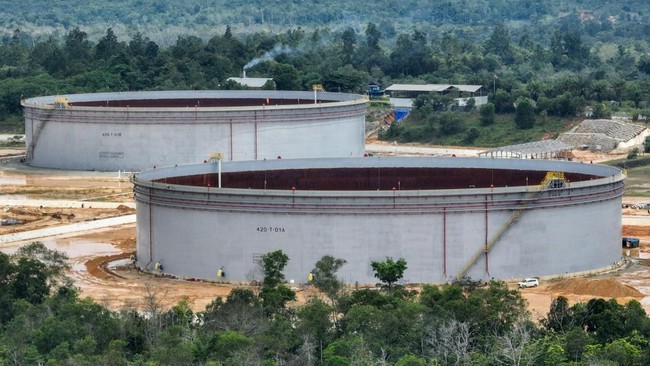
Energy security is often imagined as a question of how large a nation’s reserves are. How many millions of barrels of oil are stored, how much fuel stock is available, how much gas can be supplied, or how much energy capacity can be utilised when a disruption occurs.
All of this is important. However, if energy security is only viewed from the perspective of reserve quantities, we lose a much more strategic dimension. Energy reserves are essentially not just about how much energy we have, but about how much time we can buy when circumstances change.
Under normal conditions, the benefits of reserves may not be very apparent. The economy functions, ships arrive with supplies, energy networks operate, refineries produce fuel, and markets perform their functions. But normal conditions do not always persist.
Geopolitical conflicts can disrupt trade routes, natural disasters can halt production, infrastructure disruptions can reduce supply, and global price changes can quickly alter energy cost structures. When this happens, the primary issue is no longer simply whether energy is available. The question is how long Indonesia can maintain economic activity before having to make difficult decisions.
This is where the strategic value of reserves becomes clearer. Reserves provide a buffer, and a buffer provides time. Time to seek alternative suppliers, time for domestic production to be increased, time for markets to adjust, time for the government to regulate distribution, and time for diplomacy to work.
Without an adequate buffer, a disruption can escalate into significant pressure as the nation is forced to make decisions in haste. Conversely, when a nation has sufficient time, the available options become more numerous. In geopolitics, time is not merely duration. Time is the space to make decisions.
Therefore, Indonesia needs to begin changing how it measures energy security. We should not merely ask how large the stocks of fuel, petroleum, or LPG are. We need to know how long those stocks can sustain national needs in the event of a supply disruption, how quickly alternative sources can be activated, and which regions are most vulnerable during a disruption.
The government already possesses a framework for the Energy Buffer Reserve (CPE) which covers petroleum, petrol, and LPG. The challenge is to bring this concept to a more strategic level: Indonesia needs to have a national energy security time map. Every commodity and every region must have a measure of ‘days of resilience’, rather than just a measure of stock volume.
The next agenda is to build a multi-layered strategic energy buffer. National reserves do not necessarily have to be entirely in one form or managed through a single mechanism. Part of it could be in the form of physical government stocks, part through contracted storage capacity, part through the operational reserves of business entities, and part through alternative supply contracts that can be activated during emergencies.
With such an approach, security does not only depend on what is already in the tanks, but also on how quickly the nation can activate available resources. The government has already identified the strengthening of fuel storage as a necessity for reinforcing national energy security by 2026.
However, reserves alone are not enough. The time bought by reserves must be used to find alternatives. Therefore, energy security policy must go hand-in-hand with the agenda of diversifying sources and supply routes. Indonesia must not rely too heavily on a single country, a single trade route, a single port, a single type of fuel, or a single technology.
Diversification does not mean building everything at once, but ensuring that when one source is disrupted, other options can be activated. In the context of oil and gas, for example, long-term supply cooperation with various countries can be part of this strategy. The government is already exploring additional supply sources from various countries amidst global geopolitical volatility.
At the same time, Indonesia needs to expand domestic capabilities that can be activated during periods of pressure. Energy security is not just about storing energy, but also about the ability to produce energy when required.
The development of domestic oil and gas production, the strengthening of refineries, the utilisation of biofuels, the development of renewable energy, and the increase of energy system flexibility must be viewed within this same framework.
The B50 policy, for instance, does not only have dimensions of energy transition and the use of domestic resources, but can also serve as an instrument to reduce dependence on fuel imports. The government is positioning biofuel development as part of the strategy to strengthen independence and energy security.
The next equally important agenda is to build a national energy crisis response system capable of acting before a disruption turns into a crisis. Indonesia needs a sort of ‘energy resilience dashboard’ that periodically monitors stocks, production, imports, trade routes, storage capacity, infrastructure conditions, and geopolitical risks.
This is not just to know whether supply is safe today, but to know how many days of manoeuvring space remain if a disruption occurs. With such information, the government can take action before pressure reaches a critical point. Energy security, therefore, becomes an anticipatory system, rather than merely a reactive one.