
Energy Security Is National Security: A New Chapter in Indonesia's Self-Reliance
For years, energy in Indonesia has mostly been treated as an economic and sectoral matter. We discuss it through oil and gas production, fuel consumption, energy subsidies, generation capacity, investment, or renewable energy mix targets.
Yet in an increasingly complex global strategic environment, energy has a far larger dimension. Energy determines a country’s ability to keep economic activity running, ensure industry obtains reliable supply, maintain public purchasing power and give the government room to make decisions independently when external shocks occur.
For this reason, President Prabowo Subianto’s speech on 14 August 2026 is important to read not merely as a report on development achievements, but as an affirmation that energy self-sufficiency is part of the national self-reliance agenda. Together with food and water self-sufficiency, energy is positioned as one of the foundations towards an Indonesia that is increasingly sovereign and possesses strong economic resilience, defence and national security.
This shift in perspective is all the more relevant as the world faces an uncertain geopolitical environment. The Russia-Ukraine conflict, escalating tensions in the Middle East, disruptions to trade routes, supply chain fragmentation, commodity price volatility and competition among countries to secure strategic resources all demonstrate that dependence on external supply can turn into national vulnerability.
When energy prices rise, the impact does not stop at the energy sector. It can spread to transport costs, food prices, inflation, industrial production costs, the exchange rate and the state’s fiscal position.
Energy resilience is therefore fundamentally a country’s ability to keep its economic system functioning when the external environment changes. Indonesia cannot control world geopolitics, but Indonesia can determine how vulnerable its economy is to such turbulence.
Indonesia is entering a new phase with increasingly strong foundations. The Energy Resilience Index rose from 6.74 in 2024 to 7.13 in 2025 and reached 7.15 in the first half of 2026. However, this achievement should not be seen as the finish line.
The true measure of energy resilience is not only the ability to supply energy under normal conditions, but the ability of the national system to keep functioning when disruptions occur.
Energy must be available when global prices rise, when international supply is disrupted, when domestic production declines, and when industrial demand grows rapidly. Indonesia’s challenge is therefore no longer simply how to provide enough energy for today, but how to build an energy system capable of facing uncertainty for decades to come.
This is where the concept of energy self-sufficiency needs to be elevated to energy resilience. Self-sufficiency means a growing ability to meet needs from domestic resources. However, self-reliance does not mean depending on a single energy source.
Resilience requires diversification, robust infrastructure, adequate reserves, technology, and supporting industries capable of keeping the system running when disruptions occur. Indonesia needs to move from self-sufficiency towards energy resilience, namely the ability to meet energy needs while absorbing shocks, adapting to change and recovering the system when disruptions occur.
The implementation of B50 is one important example. The biodiesel policy is not merely a fuel substitution programme, but demonstrates how domestic resources can be turned into an instrument of national resilience.
The government recorded biofuel consumption of 7.48 million kilolitres in the first half of 2026, and the implementation of B50 is one of the key milestones in reducing dependence on imported fuel. The policy also strengthens the linkages between the plantation sector, processing industry and energy.
However, B50 must not become the end point. It must be part of a broader energy portfolio, alongside domestic oil and gas, geothermal, hydro, solar and other energy sources. The more diverse the energy sources Indonesia possesses, the greater its ability to manage risk.
For this reason, strengthening oil and gas production still has an important place during the transition. The energy transition does not mean Indonesia can ignore current energy needs. Domestic production is still needed to maintain security of supply while the transformation takes place.
The government itself still faces challenges in the form of natural production decline at ageing oil and gas fields, the need for infrastructure development and global energy price volatility. Efforts to optimise existing wells, enhanced oil recovery, reactivation of old wells and development of new working areas are important to maintain domestic supply.
Indonesia therefore does not need to pit fossil energy against renewable energy. Both must be placed within a transition strategy that ensures today’s energy security while building tomorrow’s energy system.
At the same time, renewable energy must be seen not only as a decarbonisation instrument, but as a strategy to reduce national vulnerability. The government has pushed to increase the share of renewables and accelerate the 100 GW solar power agenda.
Solar potential has strategic significance because the energy source is available domestically and can be developed across various regions. However, the 100 GW solar target must not stop at being a generation capacity target.
It must be built together with transmission, interconnection, energy storage and supporting industries. If the entire ecosystem develops simultaneously, Indonesia will not only add electricity capacity, but also build a domestic energy source that can reduce exposure to global energy market volatility.
The same applies to strategic minerals. The energy transition has changed the definition of strategic resources. Batteries, electricity grids, electric vehicles and various clean energy technologies require minerals that are increasingly important in the global supply chain.
The government has placed strategic minerals and downstreaming as part of the national industrial development agenda. Mineral downstreaming therefore actually has a very strong energy resilience dimension.
Indonesia does not merely need to possess mineral reserves, but must be able to build a value chain from mining, refining and processing through to energy technology manufacturing. The longer the value chain that can be built domestically, the greater the economic value added and the smaller the vulnerability to global supply chain disruptions.
This is where energy meets industrialisation directly. There is no industrialisation without sufficient, competitive and reliable energy. Smelters require large amounts of electricity. Battery factories require stable supply.
Data centres require electricity 24 hours a day. Industrial estates require a combination of electricity, gas and energy infrastructure. Even industries seeking to enter global supply chains increasingly require low-carbon energy.
This means that the greater Indonesia’s ambition to become an industrial country, the greater the need to build a robust energy system. Energy is no longer merely an input for industrialisation. Energy is part of the strategic infrastructure that determines the competitiveness of national industry.
Indonesia’s future energy agenda must therefore move towards an energy resilience architecture that integrates domestic production, diversification of energy sources, transmission and distribution networks, storage, strategic reserves, technology and supporting industries.
Within this framework, national energy reserves become increasingly important. Global markets remain necessary, but the state must have a buffer when disruptions occur. Resilience does not mean closing oneself off from the world, but rather ensuring that connectedness to global markets does not turn into a dependence that weakens the national position.
This paradigm also changes the way we view the energy transition. The energy transition is not only a journey from fossil energy to low-carbon energy. For Indonesia, the energy transition is also a process of diversifying national risk.
When solar, geothermal, hydro and bioenergy develop, dependence on global energy market dynamics can be reduced. When the battery and energy component industries develop domestically, dependence on external supply chains can be narrowed.
And when strategic minerals are connected to the domestic technology industry, Indonesia not only gains economic value added, but also builds strategic capacity to face technological and geopolitical change.
Ultimately, the measure of energy resilience success is not simply how much energy is produced or how high the renewable share is. The more important question is whether Indonesia can keep the economy running when shocks occur.
Can industry continue to produce when global energy prices rise? Can the public still obtain energy at affordable prices when international supply is disrupted? Does the state have sufficient reserves?
Do we have the technology, minerals and infrastructure to maintain our own energy system? These questions take us from the paradigm of energy independence towards energy resilience. Independence means less dependence on others. Resilience means having the ability to remain standing when that dependence is tested.
President Prabowo’s speech of 14 August 2026 should therefore be a momentum to elevate the level of national energy discourse. B50 is an important milestone, but not the finish line. Strengthening oil and gas production remains necessary, but must proceed alongside diversification.
The 100 GW solar programme is a major opportunity, but must be built together with grids and storage. Mineral downstreaming is a strategic strength, but must be connected to the technology industry. Renewable energy is the future, but requires a reliable electricity system.
All of these agendas ultimately converge on one goal: building an Indonesia that has the ability to meet its own energy needs, withstand external shocks and continue its development without being easily swayed by changes in the global strategic environment.
For in the end, energy is not only about fuel available at petrol stations or electricity lighting up homes and industrial estates. Energy is the foundation of a country’s ability to sustain its economy, run its industry and determine its own strategic direction.
In a world increasingly marked by geopolitical tension, supply chain fragmentation and competition over strategic resources, countries with strong energy systems will have greater room for manoeuvre. Indonesia may not be able to control all the changes occurring in the world, but Indonesia can build the capacity not to be easily shaken by them. Energy security is national security.
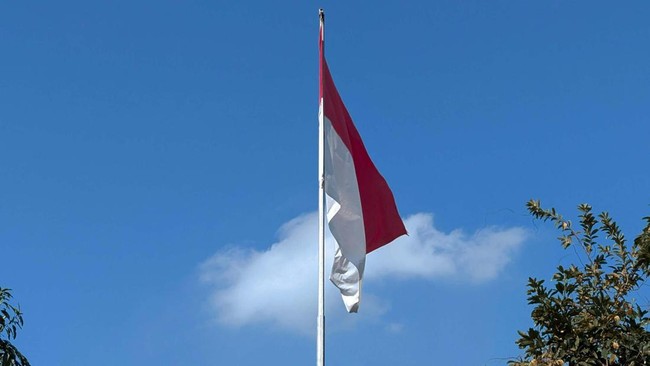
Ultimately, the meaning of independence is not only about being free from colonialism, but also about a nation’s ability to determine its own future. At the age of 81 years of the Republic of Indonesia, energy self-reliance is an important part of that endeavour.
A nation that can secure its energy is a nation that has the room to determine its own development direction. Happy 81st Independence Day of the Republic of Indonesia. Long live the Republic of Indonesia. Merdeka!