
Energy Savings: Transformation of Civil Servants' Work Culture in Central Java Province
A circular dated 1 April 2026 follows the Interior Minister’s Circular No. 800.1.5/3349/SJ on the Transformation of the Work Culture of Civil Servants. The circular issued by the Central Java Provincial Government includes, among others, the implementation of work from home (WFH) for some civil servants every Friday, limiting or reducing domestic official travel by 50% and overseas official travel by 70%, and/or reducing the frequency and the size of delegations for official travel.
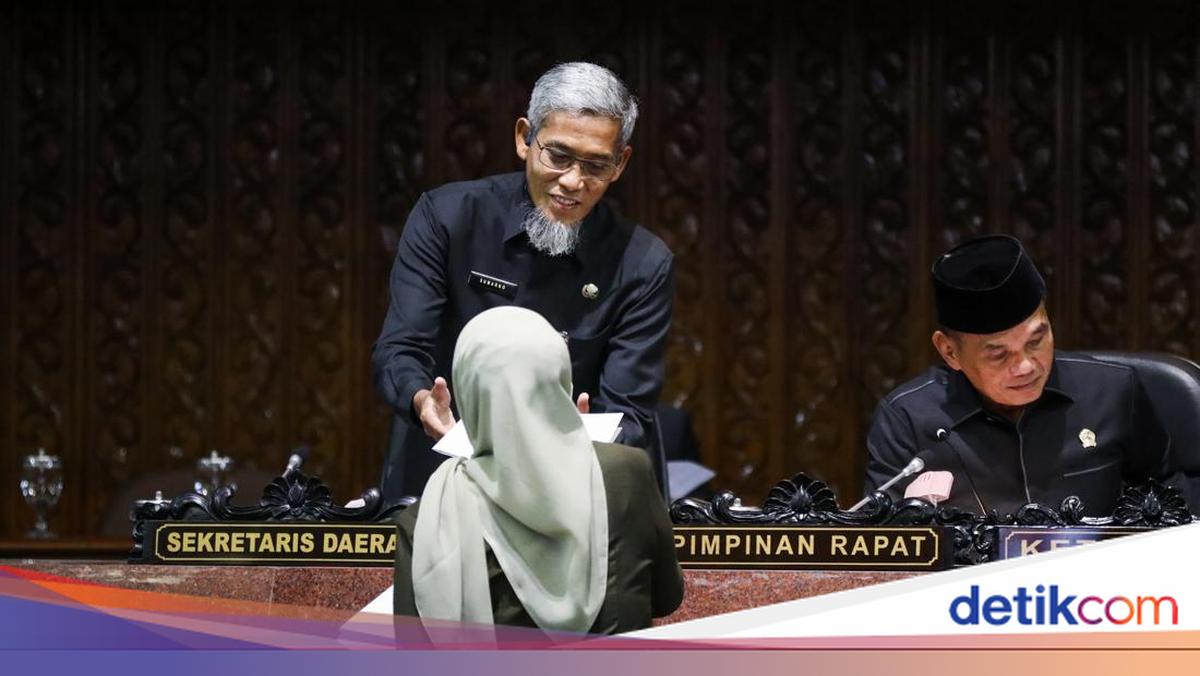
This was stated by the Secretary of the Central Java Province, Sumarno, on the sidelines of the Plenary Meeting at the Central Java DPRD Building today.
“In addition, priority is given to conducting meetings, technical guidance, seminars, conferences, and the like in a hybrid manner (in-person and online) by maximising the use of information and communication technology,” said Sumarno in a written statement on Monday (6/4/2026).
In the circular, civil servants are also required to limit and reduce the use of official vehicles by a maximum of 50%, increase the use of electric vehicles, public transport, bicycles, and other non-fossil fuel-based transport.
Furthermore, the transformation of civil servants’ work culture is carried out through the use of electricity in work rooms turned on from 06:30 to 15:30 WIB according to real needs, and outside rooms/open spaces in a limited manner from 17:30 to 05:30 WIB. The use of air conditioning is applied at an efficient temperature of 24-26°C according to needs.
Lights/air conditioning in rooms (AC) that are left for 2 hours or more are turned off according to needs. The use of clean water is controlled according to real needs in the field and initiatives are started to utilise renewable energy sources (EBT) such as solar cells in office environments.
“Civil servants can also walk, prioritised for employees with a distance between residence and office of less than or equal to approximately 1.5 kilometres. Using non-oil fuel transport such as bicycles and electric bicycles, prioritised for civil servants with a distance between residence and office of less than 10 kilometres and relatively flat terrain,” he said.
Using public transport where possible in terms of accessibility, distance, travel time, and availability of transport facilities. Using shared vehicles (carpooling or ride-sharing) for several employees according to vehicle capacity.
“We encourage fellow civil servants to change their work patterns by prioritising efficiency, and not having many activities that require moving places. We are encouraged to prioritise online activities,” he explained.
He stated that for commuting to the office, civil servants can reduce the use of carbon fuel-based vehicles. He also encouraged civil servants to use bicycles to be more efficient in carbon fuel usage.
“We very much hope that this will have an impact on the efficiency of carbon fuel usage,” he clarified.
Sumarno added that his side will also propose a new circular regarding Friday activities. There are two bases: the Interior Minister’s circular on the Transformation of Civil Servants’ Work Culture and the Youth and Sports Minister’s designation of Friday as Hari Krida. Hari Krida is interpreted as a day of health and also a day of sports.
The regulation will apply to civil servants who are carrying out official duties from the office or Work From Office (WFO) and not undergoing Work From Home (WFH). On Fridays, civil servants’ activities to the office are part of sports, for example, cycling or running.
“As for the number of civil servants implementing WFH, it cannot yet be determined, as it depends on the policies of each Regional Work Unit (OPD). Moreover, each OPD has different characteristics,” he said.
Sumarno emphasised that with online work regulations, the head of the OPD is fully responsible for the implementation of the WFH policy. Through this concept, it is hoped that performance and activities for the public will not decrease.
He added that not all OPDs can implement WFH. He gave an example of hospitals or services that directly interact with the public such as Samsat.
“In addition, Echelon 1 and 2 officials in the provincial government also cannot carry out WFH. Even in districts/cities, Echelon 3 officials do not have the opportunity to undergo WFH,” he concluded.