
Energy Ministry Seeks Certainty on Tax Holiday for CATL Battery Project
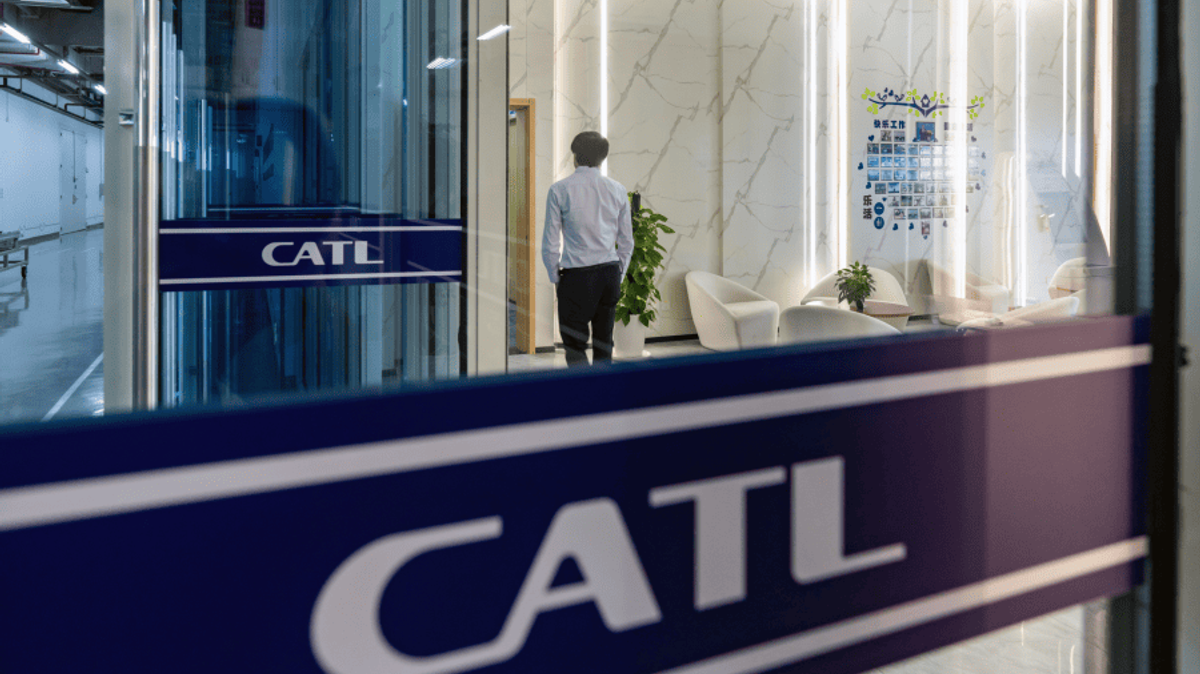
The Ministry of Energy and Mineral Resources (ESDM) is seeking certainty regarding the provision of tax holiday incentives for an integrated battery ecosystem project. The project is being developed by a consortium led by Contemporary Amperex Technology Co Ltd (CATL).
Secretary General of the ESDM Ministry Ahmad Erani Yustika explained that his party has held an audience with the Ministry of Investment and Downstreaming/Investment Coordinating Board (BKPM) and the Directorate General of Taxes (DJP) at the Ministry of Finance. This step was taken to clarify the status of the tax holiday incentive for the integrated battery project. The matter has become crucial with the implementation of the global minimum tax (GMT) policy.
“Regarding the interpretation of the Minister of Finance’s decision related to the tax holiday, there have been several changes. This concerns the use of the year. There needs to be a common understanding between the DJP, BKPM, and ESDM to ensure whether the Dragon project, CATL, and its several joint ventures can obtain [the incentive],” Erani told the media at the ESDM Ministry office on Friday (3/7/2026). Erani could not yet convey the results of the meeting. The process of harmonising tax regulations will continue between the DJP and BKPM.
Meanwhile, the Indonesian Employers Association (Apindo) stated that several nickel processing and refining plants (smelters) are no longer receiving this corporate income tax exemption facility. Hendra Sinadia, Chairman of the Mining and Minerals Committee at Apindo, explained that this situation has arisen because Indonesia officially implemented the 15% GMT rule starting from the 2025 tax year. According to Hendra, this global tax policy reduces the effectiveness of the tax holiday, especially for large multinational companies. However, the tax holiday facility can still be utilised by a small number of smelter companies.
“The 0% tax holiday is still formally in effect. However, since the implementation of the 15% GMT rule based on OECD Pillar 2, the effectiveness of the tax holiday has decreased for multinational corporate groups with global turnover above the specified threshold,” Hendra said when contacted in early June.
Meanwhile, Minister of Energy and Mineral Resources Bahlil Lahadalia announced that the integrated battery factory from the CATL consortium is scheduled to be inaugurated at the end of July 2026. The physical construction of the project has reportedly been fully completed. “We also reported to the President that our downstreaming programme for the electric vehicle battery ecosystem, a collaboration between CATL and Antam, has been completed and will be inaugurated at the end of July,” Bahlil told the media at the Presidential Palace complex on Monday (22/6/2026).
In its implementation, PT Industri Baterai Indonesia or Indonesia Battery Corporation (IBC) is partnering with the CBL consortium (Contemporary Amperex Technology Co., Limited, Brunp, and Lygend). They established a joint venture called PT Contemporary Amperex Technology Indonesia Battery (CATIB). CATIB is currently building a production facility for battery cells, modules, and packs for electric vehicles in the Artha Industrial Hills (AIH) area, Karawang. The first phase is targeted to have a capacity of 6.9 GWh, which will be increased to 15 GWh in the second phase.
This downstream project, known as the Dragon Project, is estimated to require a total investment of US$6 billion, or approximately Rp98.58 trillion. The cooperation includes the formation of several joint ventures from the upstream to downstream sectors. In the upstream sector, PT Sumber Daya Arindo (SDA) was formed to manage nickel mines, with Antam holding a 51% stake and the remainder held by Hongkong CBL Limited. For the midstream to downstream sectors, the cooperation includes PT Feni Haltim for RKEF and a hydrometallurgical HPAL plant. In the share ownership structure for the midstream and downstream projects, IBC holds a minority stake, with 30% in the raw material processing and battery cell assembly project, and 40% in the battery recycling business unit.