
Energy Ministry Expert: Shift to Renewables a Strategic Imperative
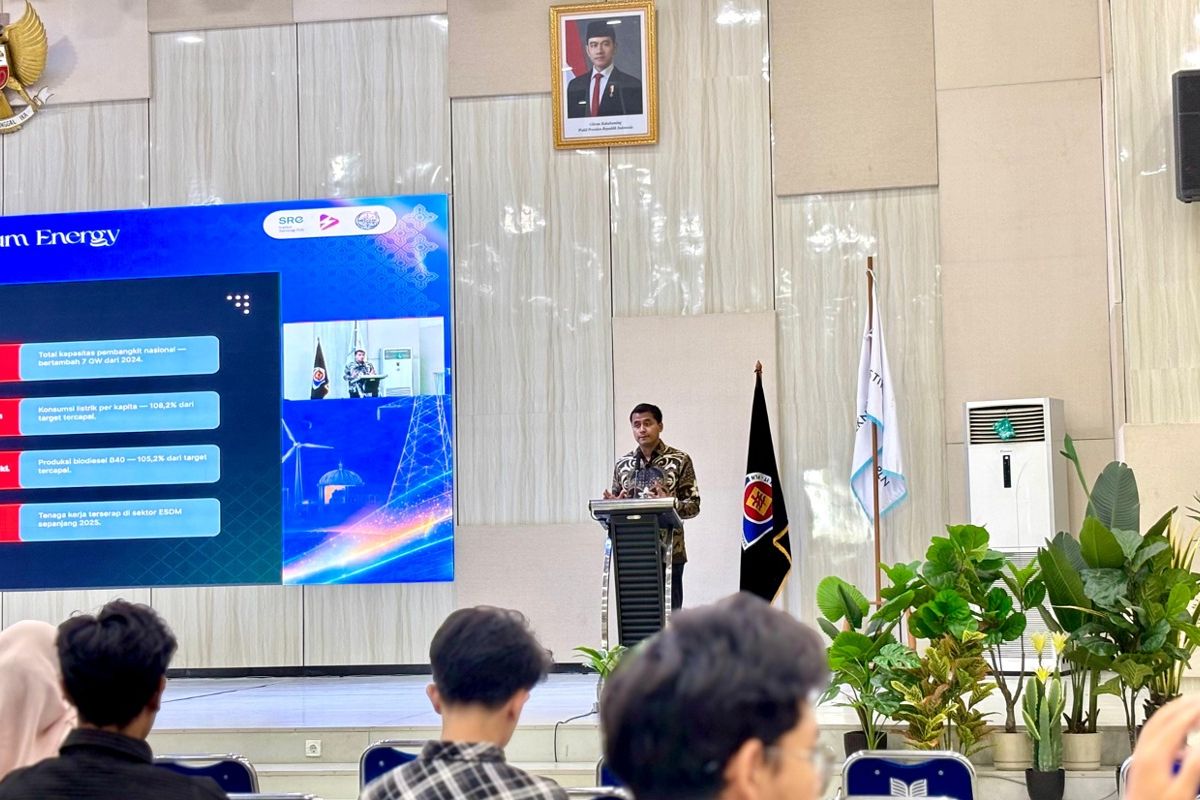
An expert from the Ministry of Energy and Mineral Resources (ESDM), Satya Hangga Yudha Widya Putra, has stated that the transition from fossil fuels to new and renewable energy (EBT) is a strategic imperative. He noted that the President has directed a shift in dependence from fossil fuels to EBT to reduce the national import burden. “Indonesia is currently facing major challenges in the oil sector. Our oil consumption is at 1.6 million barrels per day, while domestic production (lifting) is 577,000 barrels per day. This means we have to import more than 1 million barrels every day,” he said. Hangga added that since 2004, Indonesia has been a net importer of oil due to ageing reservoirs with high water content. He further explained infrastructure constraints, where the total national refinery capacity of 1.2 million barrels per day is currently only able to process 900,000 barrels, forcing the shortfall to be imported in the form of finished fuel products. This dependence on energy imports strains the state budget (APBN), especially during global geopolitical shocks such as the closure of the Strait of Hormuz in the Middle East. “Therefore, the shift to EBT is no longer just an alternative, but a strategic necessity,” he said while speaking at the Symposium Energy 2026. Hangga added that although the national EBT mix is currently only at 18 percent, the government is optimistic about achieving the net zero emission (NZE) target by 2060 through an aggressive roadmap. One programme being overseen by the Ministry of ESDM together with PT PLN (Persero) is the construction of 100 GW of solar power plants over the next three years, as well as optimising local potential such as geothermal, biomass, village electricity programmes, and even nuclear. Hangga noted that unlike the oil sector, Indonesia has a strong bargaining position in other commodities. The gas sector is in surplus, with 70 percent allocated for domestic needs and 30 percent exported as LNG or pipeline gas. Additionally, Indonesia controls over 40 percent of the global coal supply and is rich in strategic mineral reserves such as nickel and gold. He said the government is looking to create a green industry that will open up many jobs for the younger generation. He also invited students to contribute through research and scientific studies to provide solutions for the community’s energy needs.