
Energy Ministry Approves 664 Mining Work Plans and Budgets up to June 2026
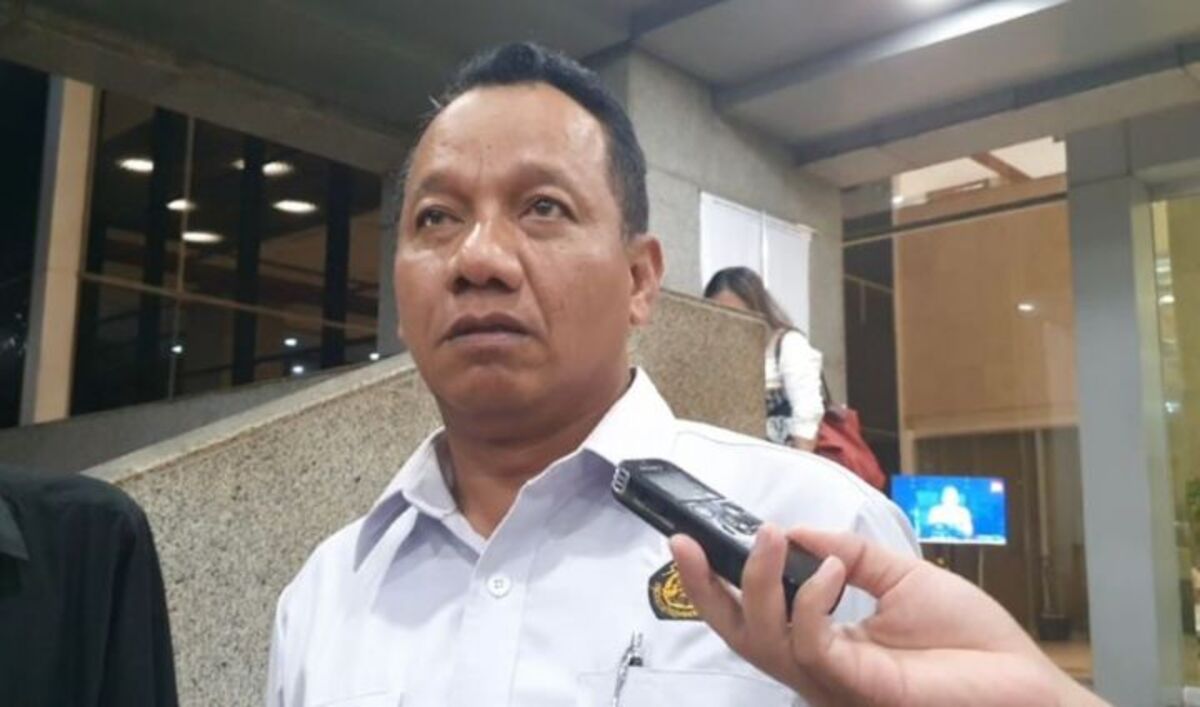
The Ministry of Energy and Mineral Resources (ESDM), through the Directorate General of Mineral and Coal, has granted approval for 664 Work Plans and Budgets (RKAB) for the year 2026 up to 12 June 2026.
To strengthen the governance of the mineral and coal sector, the Ministry of ESDM is ensuring that all licensing and supervision processes for mining activities are conducted through a standardised, measurable, and digitised system. The Director General of Mineral and Coal, Tri Winarno, emphasised that mining activities cannot be conducted solely by possessing a Mining Business Licence (IUP). Every company is also required to prepare clear activity plans that meet technical, environmental, and safety aspects, as well as state revenue obligations, before obtaining approval to commence operations.
“Every mining activity must have a legal basis, clear planning, and meet all applicable provisions,” he stated in an official statement on Friday (1/12).
Furthermore, the government is conducting a thorough evaluation of various requirements that form part of mining governance. In accordance with Article 111 of Law Number 3 of 2020 concerning Mineral and Coal Mining, the RKAB is a mandatory document for holders of Mining Business Licences (IUP) and Special Mining Business Licences (IUPK), containing plans for mining business activities, ranging from exploration, technical, and financial aspects to environmental management.
The RKAB document serves as a reference for companies in conducting mining activities during the exploration, production, processing, and/or refining stages, as well as post-mining activities. Therefore, every RKAB submission must undergo an evaluation process before receiving government approval. The entire submission, evaluation, and approval process is processed online and integrated through the MinerbaOne information system.
During the evaluation process, the Directorate General of Mineral and Coal conducts inspections on various aspects, including administrative completeness and permit legality, the alignment of mining plans with Good Mining Practice, fulfilment of environmental obligations including reclamation guarantees, mining safety aspects, and the company’s ability to meet state revenue obligations.
Tri admitted that his office continues to perform corrections and evaluations of submitted documents to ensure that mining activities proceed according to plan and meet the principles of good mining governance. “Every approval is granted only after all required aspects are declared to meet the provisions,” Tri explained.
Regulations regarding the RKAB are strengthened through Government Regulation Number 39 of 2025 and Minister of ESDM Regulation Number 17 of 2025. All RKAB submissions are also conducted electronically through the integrated e-RKAB information system as part of the digital transformation of mineral and coal governance.
Through this policy, the RKAB matrix has been simplified into three matrices for the exploration stage and ten matrices for the production operation stage. This simplification is carried out without reducing supervision over mining safety aspects, fulfilment of Non-Tax State Revenue (PNBP) obligations, the use of mining services, community empowerment and development (PPM), and reclamation obligations. “Other matrices that are no longer used have been moved into the realisation reporting matrix, which must be submitted periodically,” Tri added.
For business entities whose RKAB documents still require refinement, the government provides an opportunity for improvements in accordance with the applicable mechanism. “If there are still parts that need to be improved, we provide space for completion. We also continue to provide assistance through coaching clinics so that companies understand the aspects that need to be adjusted so that their documents can meet the provisions,” said Tri.
Hundreds of assistance sessions have been conducted. Based on evaluation results, several aspects still requiring refinement include exploration data and reserve resources, mining and overburden removal plans, processing and refining aspects, marketing plans, and company legality completeness.