
Energy Ministry and IEA Strengthen Cooperation to Support Government Programmes
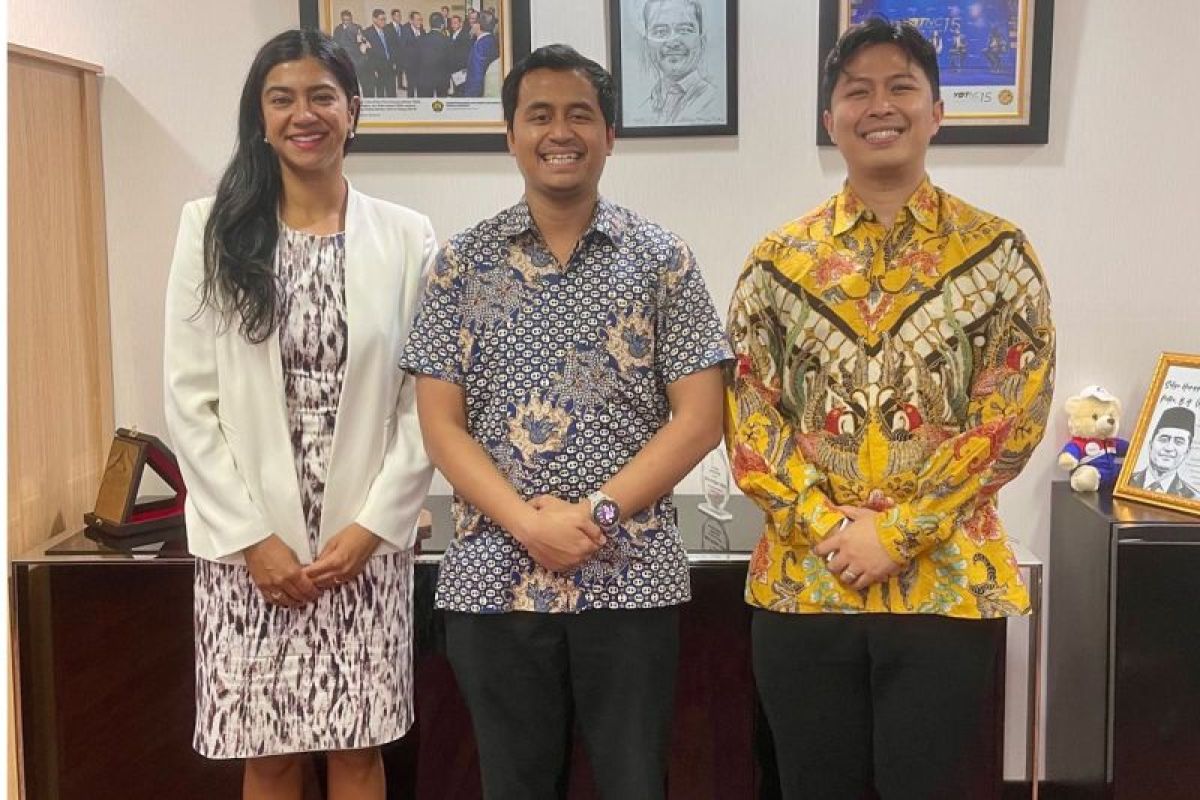
Indonesia needs to build a resilient energy system that can sustainably meet domestic needs.
Jakarta (ANTARA) – The Ministry of Energy and Mineral Resources (ESDM) and the International Energy Agency (IEA) are strengthening their cooperation to support the Indonesian Government’s programmes.
Energy Minister’s Expert Staff member Satya Hangga Yudha Widya Putra said in a statement issued in Jakarta on Thursday that international cooperation played an important role in strengthening Indonesia’s capacity to face global energy challenges while supporting the national energy self-sufficiency agenda.
“Indonesia needs to build a resilient energy system that can sustainably meet domestic needs,” he said during a meeting with IEA representatives Vrinda Tiwari, its South East Asia Lead, and Axel Priambodo, its Indonesia Lead.
Hangga said the ministry hoped cooperation with the IEA would strengthen the implementation of government programmes through research, policy recommendations and international exchanges of experience. Priority programmes include strengthening national oil reserves, reducing methane emissions and developing battery energy storage systems (BESS) to support the integration of new and renewable energy (EBT).
Hangga added that a key topic was increasing the capacity to store and manage national oil reserves. The Indonesian Government aims to raise reserve capacity to 60 days as a medium-term target around 2029–2030, while working towards supply resilience equivalent to the 90-day standard.
Developing storage facilities in several regions, including Sumatra, is part of the government’s efforts to strengthen national oil-reserve infrastructure. The measures are important for anticipating global supply-chain disruptions, geopolitical developments and uncertainty in international energy markets.
“We need to ensure that storage infrastructure, distribution systems and reserve governance are ready so that national energy resilience is stronger,” Hangga said.
Vrinda said international experience and practices in managing energy reserves could provide an important reference for Indonesia as it strengthens its preparedness for supply disruptions.
“Indonesia has a strategic position in South-East Asia’s energy sector. The IEA hopes to continue supporting Indonesia through the exchange of international knowledge and experience, particularly in strengthening energy resilience and addressing various challenges in global energy markets,” she said.
Hangga said the meeting also discussed efforts to reduce methane emissions from the energy sector. Controlling these emissions requires better monitoring, identifying sources of leaks and using mitigation technologies so that oil and gas production and distribution can operate more efficiently and sustainably.
The development of BESS was also discussed as a way to accelerate the use of new and renewable energy.
“The increasingly competitive cost of battery technology gives Indonesia an opportunity to develop energy-storage systems that can optimise the use of solar power and other renewable energy sources,” Hangga said.
BESS allows surplus electricity generated from renewable sources to be stored and used when demand rises or renewable-energy production falls. The technology can therefore make the electricity system more flexible while reducing reliance on fossil-fuel power stations.
Stronger cooperation between the Energy and Mineral Resources Ministry and the IEA also aligns with President Prabowo Subianto’s vision of national self-reliance through energy self-sufficiency, which forms part of Astacita.
Reliable energy supplies, stronger strategic infrastructure and the development of energy technology are important foundations for national resilience and Indonesia’s economic growth.
Hangga said sustained collaboration and programme implementation would be key to achieving national energy targets.
“We hope cooperation with the IEA can continue to be strengthened so that the government’s strategic programmes can be implemented optimally. This synergy is expected to make a tangible contribution to achieving national energy targets through the end of 2026 and throughout 2027,” he said.
Source: jawawa.id (https://jawawa.id/newsitem/energy-ministry-and-iea-strengthen-cooperation-to-support-government-programmes-1795701182)
Originally published by Antara (Indonesian) (https://www.antaranews.com/berita/5881107/kementerian-esdm-iea-memperkuat-kerja-sama-dukung-program-pemerintah), translated from Indonesian