
Energy, Institutions and a Nation’s Resilience
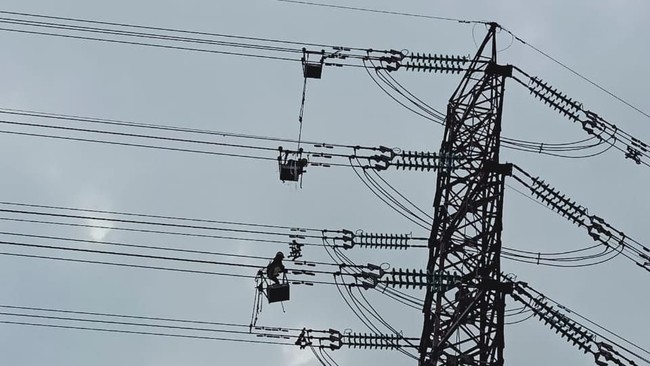
A nation is tested not only by the resources it possesses when conditions are normal, but also by its ability to sustain essential functions when circumstances change. In normal conditions, energy supply may appear to be a matter of production, distribution and prices.
But when supply is disrupted, prices surge, geopolitical conflict erupts or the global economy changes suddenly, energy reveals a more fundamental dimension: a country’s ability to anticipate risks, make decisions, coordinate different interests and keep economic activity running.
This is where energy resilience meets the question of institutions. Resources and infrastructure provide the material foundation, but institutions determine how they are managed, when they are used and how effectively they can be deployed when needed.
A nation’s resilience, therefore, depends not only on what it possesses, but also on its ability to organise those strengths into a focused response.
Discussions of energy resilience have often centred on the adequacy of supply, the size of reserves, generating capacity and the ability to meet domestic demand. All these indicators matter, because no energy system can endure without an adequate physical foundation.
But owning assets does not automatically mean being able to use them effectively. Energy reserves have strategic value only if they are available when needed, can be delivered to the areas that require them and are backed by clear decision-making mechanisms.
Large-scale infrastructure does not guarantee resilience if coordination between institutions is slow or responsibilities during a crisis are poorly defined. Even abundant resources can lose some of their strategic value if the state lacks adequate information to identify risks, set priorities and activate a timely response.
This points to the difference between having capacity and having capability. Capacity describes the resources, infrastructure or potential available. Capability indicates the extent to which these can be used to achieve a particular goal in real-world conditions.
A country may have substantial reserves but still be unable to distribute them quickly when supply routes are disrupted. It may build a large number of power plants but continue to face reliability problems if the grid, storage and system management do not develop in balance.
In institutional terms, a country may have numerous ministries, agencies and regulatory instruments, yet lack the coordination needed for all these elements to work as one system. Energy resilience requires both: sufficient capacity and the capability to mobilise it.
Indonesia has a strong interest in building that capability. Its archipelagic geography, the distribution of energy resources, differences in demand between regions and economic links to international markets mean that energy management requires coordination across sectors and regions.
Energy production, infrastructure, trade, finance, industry and diplomacy all affect one another. A disruption in one area can spread to others. Rising energy prices can increase production and transport costs, while distribution problems can affect industry, public services and regional economic activity.
Energy resilience, therefore, cannot be built through policies focused on a single commodity or institution. It requires an understanding of how the different components relate and the ability to manage the wider effects of disruption.
This is where the quality of institutions matters. Institutions are more than organisations with structures, powers and budgets. They are mechanisms that turn objectives into decisions, decisions into action, and action into accountable results.
In the energy sector, this includes the ability to gather and analyse information, map risks, set priorities, coordinate policy implementation and evaluate outcomes. When conditions change, institutions must also be able to update their assumptions and adjust their actions without losing strategic direction.
Resilience is not just a matter of having a plan before a crisis. It also means being able to turn that plan into relevant action when reality no longer matches expectations.
The management of strategic energy reserves is one of the clearest examples. Reserves are often understood as physical stocks set aside to deal with disruption. But their value is not determined by volume alone.
The government also needs to know which critical needs must be met, how long supplies can be sustained, where stocks are located, whether distribution infrastructure is ready and how reserves can be activated. Who has the authority to decide that reserves should be used? Under what conditions should that decision be made? How should coordination with businesses, regional governments and distributors work?
How should reserves be replenished after use? These questions show that reserves are as much a matter of governance as of logistics. Without clear rules and implementation mechanisms that are ready to operate, physical stocks may not translate into real resilience.
The same principle applies to the management of the energy system as a whole. The transition to a more diverse range of energy sources requires coordination between power-plant construction, transmission networks, energy storage, investment and the development of supporting industries.
Decisions in one part of the system can affect the effectiveness of another. Building power plants without a ready grid can constrain energy delivery, while developing technology without preparing the necessary workforce can slow its adoption.
The quality of governance is therefore measured not only by the ability to set targets, but also by ensuring that different components move in an order and framework that support one another. The more complex the energy system, the greater the need for coordination that connects technical decisions with national economic objectives.
Coordination, however, does not always mean concentrating all authority in one institution. Centralisation can help clarify direction and responsibility in certain circumstances, but it also risks creating bottlenecks if every decision has to pass through a single channel.
Conversely, distributing authority can bring decisions closer to those who understand conditions on the ground, but it requires strong coordination and accountability mechanisms. The main issue is not whether to choose centralisation or decentralisation outright, but how to allocate functions in a way that suits the nature of the risks and the needs of the system.
Strategic planning, operational management, oversight and emergency response require clear lines of authority to avoid both overlap and gaps in responsibility. A resilient institution is not one that does everything itself, but one that enables different parties to work towards the same goal.
Another equally important dimension is the capacity to learn. Energy risks continue to change with technological developments, shifts in demand, global prices and geopolitical dynamics. A policy that is effective in one period may not be adequate in the next.
Institutions therefore need mechanisms to review assumptions, learn from disruptions, identify weaknesses and improve procedures. Evaluation should not simply establish whether administrative targets have been met; it should also determine whether policies have genuinely improved the system’s ability to withstand pressure.
How long can supplies be maintained during a disruption? How quickly can alternatives be activated? Which parts of the infrastructure are critical points of failure? Which decisions were delayed, and what information was unavailable? Questions such as these turn experience into institutional knowledge that can strengthen resilience in the future.
The capacity to learn is also linked to the quality and transparency of information. Good decisions require a sufficiently accurate picture of supply, demand, reserves, infrastructure and risks. If information is fragmented, lacks consistent standards or is not available to authorised parties in time, coordination can slow and responses become less effective.
Strengthening energy data systems, establishing clear indicators and creating mechanisms for information-sharing between institutions are therefore part of building resilience. Transparency, combined with safeguards for sensitive information, can strengthen accountability and improve the quality of decisions. In a complex system, information is not merely an administrative aid. It is one of the key infrastructures that enables the state to act.
More broadly, energy resilience also requires sound relations between the state, businesses and the public. The government is responsible for setting strategic direction, regulating markets and protecting the public interest.
Businesses play a role in investment, production, distribution and technology development. Universities and research institutions can strengthen knowledge and innovation, while regional governments help implement policies in line with local conditions.
None of these actors can build resilience effectively if they operate without clear links to the others. Good governance must combine a division of responsibilities with mechanisms for cooperation, so that each party understands its role and can be held accountable for results within its remit.
Indonesia’s energy-resilience agenda must therefore move beyond simply building assets towards developing institutional capability. Reserves need clear rules for use and replenishment. Infrastructure must be planned with the connections across the system in mind.
Risks need to be mapped regularly. Data must be available to support decisions. Responsibilities must be clearly allocated, while coordination and evaluation mechanisms ensure that decisions can be implemented. Measures of success should include not only the scale of assets built, but also response speed, recovery capability, clarity of accountability and lessons learned after disruptions.
Ultimately, a nation’s resilience is not created only when a crisis strikes. It is built well in advance through the quality of decisions, policy consistency, institutions’ ability to learn and readiness to turn resources into action.
Reserves can buy time, technology can open up options and infrastructure can keep energy flowing. But institutions determine how these capabilities are connected and used. When pressure mounts, what is tested is not only the availability of energy, but also the quality of the system managing it.
Indonesia needs more than a large energy system. It needs a system capable of understanding its own risks, coordinating a response, learning from change and sustaining economic functions when events do not go according to plan.
Ultimately, energy resilience reflects not only the strength of a country’s resources, but its ability to manage them. Energy provides the power for development; institutions determine how that power is directed, and together they shape a nation’s resilience.