
Energy and Mineral Resources Ministry expert pushes for retail LNG as alternative fuel
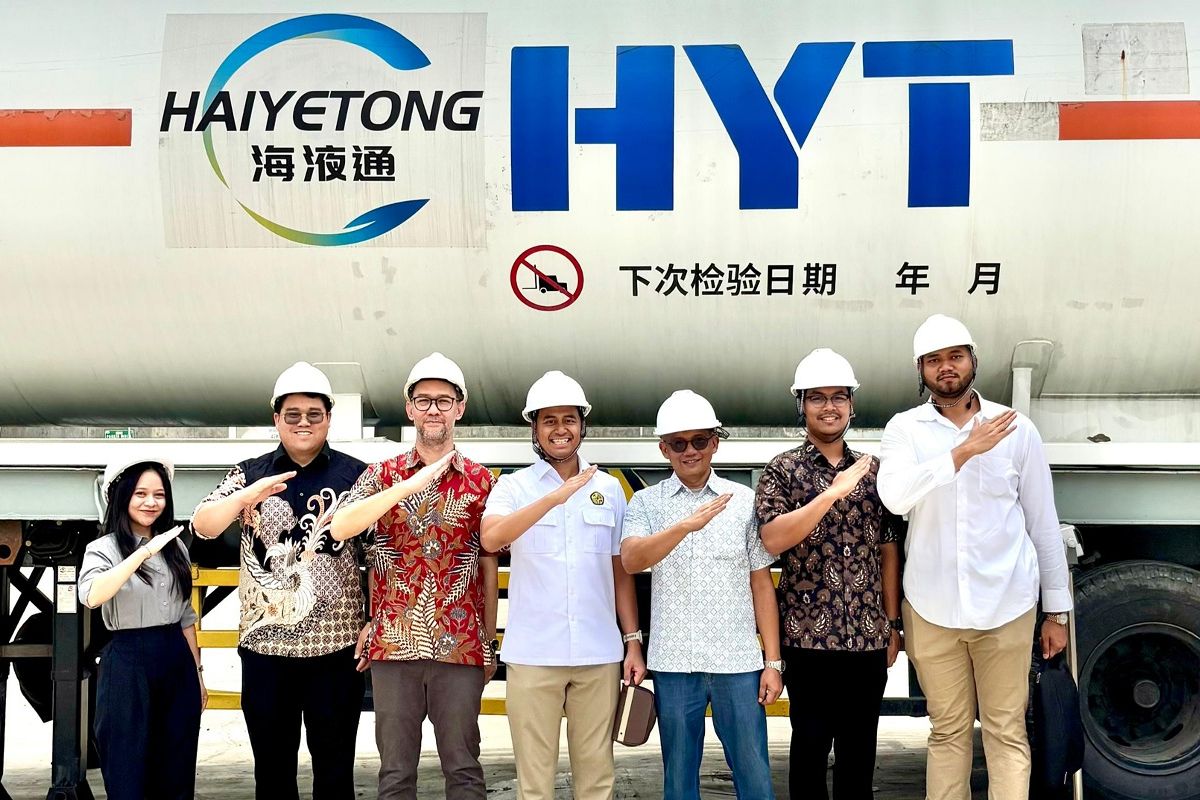
Expert Staff of the Ministry of Energy and Mineral Resources for Commercialisation and Transport of Oil and Gas, Satya Hangga Yudha Widya Putra, has urged the adoption of retail liquefied natural gas (LNG) as an alternative fuel for the public.
In a statement in Jakarta on Tuesday, Hangga said LNG is a potential transitional option to replace diesel and Pertalite in transport and logistics sectors. “Indonesia currently has a gas production surplus of 2.5 billion cubic feet per day,” he said during a visit to Elenji, a subsidiary of PT Solusi Prakarsa Metana (SPM), in Jakarta on Monday (25/05/2026).
Hangga added that Indonesia’s LNG supply is projected to increase further with the development of projects such as the Andaman Block in Arun, Bontang expansion via Geng North, Geliga and Gula Blocks, FLNG Genting, and INPEX’s Masela mega-project.
However, he noted that Indonesia still faces a significant deficit in the LPG sector, with domestic production meeting only 20% of market demand.
SPM Director Saxa Wiza Reyhan highlighted that Indonesia is one of the world’s largest LNG producers, with an annual output of 28.8 million tonnes and a total national capacity of 35.9 million tonnes per annum (MTPA), while the country consumes 6.91 million metric tonnes of imported LPG annually.
He explained that the LNG-to-imported LPG conversion ratio is 1:7, meaning domestic LNG utilisation could significantly bolster national energy security.
Elenji has introduced a breakthrough in non-pipeline retail LNG using 175-litre vessel gas liquid (VGL) tanks as a substitute for non-subsidised LPG in commercial and industrial sectors.
Research shows each VGL tank is equivalent to two 50kg LPG cylinders and offers four key advantages: smaller storage space requirements in commercial areas, high energy stability, suitability for intensive business operations, 100% domestic gas reducing refilling frequency, and relatively low pressure levels.
SPM Chairman Marcus Daniel Lelerury stated the innovation is supported by Indonesia’s first LNG filling station (LFS) infrastructure for the Jabodetabek area.
“The key advantage of the VGL-based LNG system is its portability, modularity, scalability, and pipeline independence, making it ideal for distribution across Indonesia’s archipelago via ships or tankers,” he said.
According to a case study at the SPBG Gandul facility in Cinere, Depok, West Java, switching from LPG to LNG can reduce energy costs by up to 26% for industrial consumers.