
Energy and Logistics Pressures Drive Shifts in Strategy and Investment Calculations for Indonesian Industry
Some transition steps can provide direct benefits to companies through increased efficiency and reduced operating costs. However, larger investments still require careful consideration of technology choices, financing schemes, and market certainty.
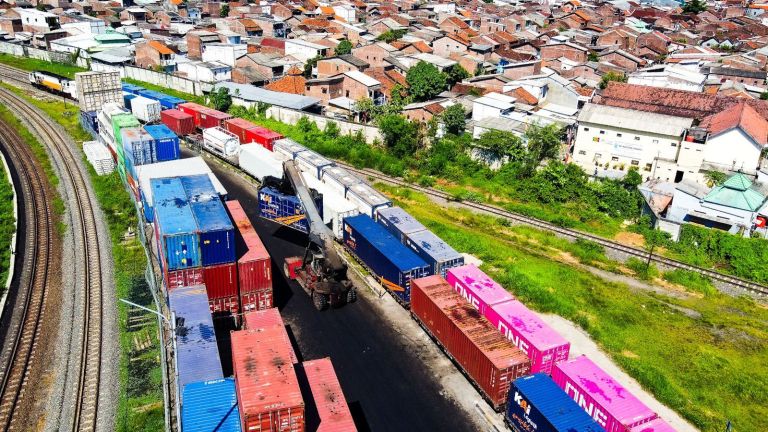
At the same time, pressure from global energy markets due to conflict, high domestic logistics costs, and increasing economic uncertainty is altering the business and investment calculations of Indonesian industry. In this condition, companies need to be increasingly precise in distinguishing between investments that can immediately improve efficiency and reduce costs, and long-term investments that require larger financing and market certainty to generate value.
One area for savings lies within a company’s own operations. Energy audits conducted through the Sustainable Energy Transition in Indonesia (SETI) programme found a potential energy saving of 58.4 million kWh per year in the analysed facilities, equivalent to a potential cost saving of approximately Rp44.9 billion per year.
These opportunities arise, among others, from basic factory systems such as boilers, air compressors, heating systems, and energy management. Audit results show that efficiency improvements can begin by reducing wasted energy without always waiting for new technology investments that require large capital expenditure.
However, efficiency only addresses part of the investment calculation. Ongoing research by WRI Indonesia estimates that the Levelised Cost of Product for several green products could increase by 29–81%, primarily due to high green energy costs and transition costs. The magnitude of this increase may vary between products and technologies, meaning this figure cannot be used as a specific estimate for steel.
For the steel industry itself, WRI Indonesia’s analysis shows that the decarbonisation technology pathway is becoming clearer, but implementation remains determined by various business considerations. Companies need to account for investment needs, financing schemes, capital payback periods, impacts on production costs, potential savings, and operational readiness before making investment decisions.
Other risks emerge when companies invest in technologies that potentially lose competitiveness during market shifts. Modelling by Climate Catalyst regarding the transition of the Indonesian steel industry estimates that sustained investment in coal-based production could face potential stranded asset risks of up to US$35 billion.
Pressure on investment decisions also comes from changing requirements in export destination markets. “Our analysis shows that approximately US$51.5 billion of Indonesian exports are facing or potentially facing green trade policies. This means that readiness for changing market requirements will increasingly become part of the competitiveness strategy for Indonesian industry. However, this readiness cannot be placed solely on the industry. The government also needs to strengthen the supporting ecosystem, including through the accelerated adoption of low-carbon technology and the development of credible Monitoring, Reporting, and Verification (MRV) systems that align with global market standards,” said Clorinda Wibowo, Senior Manager for Energy and Sustainable Business, WRI Indonesia.
These conditions place market demand as a vital part of investment calculations. Low-carbon products require buyers, credible standards, affordable financing, and sufficiently strong demand so that new investments can achieve commercial scale. From the industry side, certainty of such demand has not yet fully formed.
“We are already able to produce. However, there is actually no certainty from the domestic market that can serve as an anchor, both for electric vehicles and BESS (Battery Energy Storage Systems),” said Aditya Farhan Arif, President Director of Indonesia Battery Corporation (IBC).
That certainty is also a primary requirement for financing. “In addition to technology and production, what is needed is revenue certainty, or technically, offtake agreements. Before a company reaches financial close, banks will certainly require a number of offtake agreements that include price, volume, and tenor. Therefore, an MoU is not enough,” explained Dwangga Nugraha, Sustainable Infrastructure Finance Specialist, WRI Indonesia.
Green Public Procurement can serve as one instrument to build such demand. “Green Public Procurement is essentially about how the state can become the primary buyer of these green commodities. With demand present, industry can seek financing and undertake investments that are business-justified,” said Arief Aziz, Director of Networks and Partnerships at Climate Catalyst.
In the context of the steel industry, Climate Catalyst’s analysis estimates around 5.1 million tonnes, or 28%, of the estimated national steel requirement of 18.3 million tonnes per year. However, the magnitude of this potential does not automatically create market certainty for producers.
Indonesia does not yet have specific green criteria for steel, nor certainty regarding the purchase volume of green products in procurement. For public procurement to truly build a market, there needs to be clarity regarding which products meet the criteria, the scale of demand, and the future direction of procurement.
Source: jawawa.id (https://jawawa.id/newsitem/energy-and-logistics-pressures-drive-shifts-in-strategy-and-investment-calculations-for-indonesian-industry-1791312665)
Originally published by olenka.id (https://olenka.id/tekanan-energi-dan-logistik-dorong-pergeseran-strategi-dankalkulasi-investasi-industri-indonesia/amp), translated from Indonesian