
Ending the Paradox of Access Without Prosperity
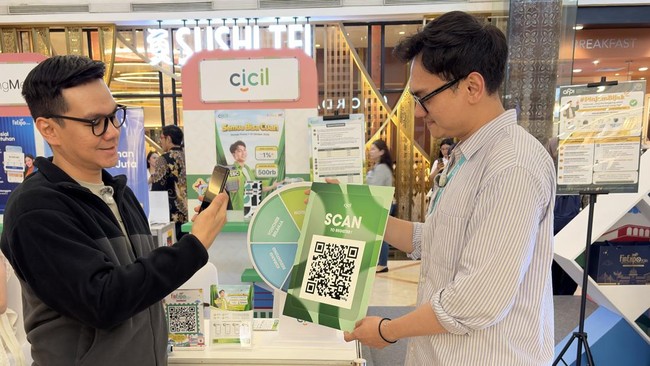
Indonesia faces a development paradox in the financial sector. Public access is expanding, the number of accounts is rising and financing continues to flow. But to what extent is this progress increasing incomes, strengthening families’ economic resilience and creating prosperity?
The paradox came to the fore when President Prabowo Subianto attended the National Coordination Meeting of Regional Financial Access Acceleration Teams (TPAKD) on 22 October 2026. The President stressed that wellbeing should be reflected in increases in people’s real incomes and purchasing power.
That message has gained momentum with the transformation of the National Council for Financial Inclusion (DNKI) into the National Council for Financial Wellbeing (DNKK), under Government Regulation No. 42 of 2026. The change should mark a fundamental shift: from expanding access to creating measurable financial wellbeing.
Financial inclusion is not the ultimate goal of development. Without productivity, financial capability and risk protection, wider access could instead create new vulnerabilities.
The paradox behind the figures
The 2026 National Survey of Financial Literacy and Inclusion (SNLIK) recorded an inclusion index of 93.61 per cent, up from 92.74 per cent in 2025. Literacy rose from 66.64 per cent to 69.57 per cent.
The gap of 24.04 percentage points shows that access is growing much faster than people’s understanding of financial products’ benefits, costs and risks.
Having an account is not the same as being able to save. Obtaining credit does not necessarily increase productivity. Using digital financial services does not automatically strengthen financial resilience.
The disparity is even more apparent in the literacy figures: 72.54 per cent in urban areas, compared with 64.42 per cent in rural areas. Among farmers, livestock breeders, plantation workers and fishers, literacy stands at just 59.75 per cent, although inclusion has reached 87.82 per cent.
This means people are increasingly connected to the financial system, but do not necessarily gain economic value from it. The question is no longer simply who has access, but who genuinely benefits.
Changing the measure of success
The paradigm shift has a strong theoretical basis. The Consumer Financial Protection Bureau (CFPB) defines financial wellbeing through four dimensions: the ability to manage day-to-day finances, absorb financial shocks, achieve financial goals and retain the freedom to make life choices.
The G20/OECD framework likewise treats financial wellbeing as a multidimensional condition encompassing financial security, meeting obligations, resilience to risks and the achievement of economic aspirations.
Amartya Sen’s capability approach reinforces this argument. Development should not be measured only by the resources people possess, but by their real ability to use those resources to improve their quality of life.
Accounts, credit, insurance and investment are merely instruments. They create developmental value when they enable people to meet their needs, build assets, cope with uncertainty and determine their economic futures.
Policy must therefore distinguish between financial access, financial usage and financial outcomes. Access is a prerequisite, usage reflects activity, while outcomes determine the quality of wellbeing.
Indonesia has been relatively successful in expanding the first two dimensions. The next challenge is to make the third the main measure of success.
TPAKD and the productivity challenge
As of October 2026, 552 TPAKD teams had been established across 38 provinces and 514 regencies and cities. The Credit/Financing Against Loan Sharks programme disbursed Rp64.85 trillion to 2.28 million borrowers, while financing for priority sectors reached Rp5.41 trillion for more than 103,000 borrowers.
The One Student, One Account programme covered 59.36 million accounts, or 88.83 per cent of the student population. Laku Pandai was operating in 72,982 villages and had brought around 17 million people into the formal financial system.
These achievements deserve recognition. However, the amount of financing does not automatically reflect the scale of economic value created. How many borrowers have seen their net incomes rise? How many micro-enterprises have moved up to the next level? To what extent has reliance on loan sharks declined? How many families can build financial reserves without falling back into debt?
The answers will determine whether TPAKD merely expands financial intermediation or genuinely drives regional economic transformation. TPAKD should therefore evolve from a forum coordinating access into an orchestrator of local productivity ecosystems.
Agricultural financing must be linked to technology, insurance, processing and markets. Financing for fishers needs cold-chain facilities, logistics and reliable buyers. Financing for micro, small and medium-sized enterprises (MSMEs) should be integrated with mentoring, digitalisation, stronger management and industrial supply chains.
Without such integration, credit risks increasing financial liabilities without improving borrowers’ ability to generate income.
DNKK as architect of transformation
The establishment of DNKK offers an opportunity to address fragmented policies and build a national financial-wellbeing framework. At least five strategic initiatives are needed.
First, establish a National Financial Wellbeing Index. Measures of literacy and inclusion should be supplemented with indicators of people’s ability to meet basic needs, withstand shocks, manage debt burdens, protect against risks, accumulate productive assets and feel financially secure.
Second, shift TPAKD performance from output-based to outcome-based policy. The number of accounts, borrowers and financing disbursed remains relevant, but success must be linked to higher real incomes, business sustainability, job quality and reduced household vulnerability.
Third, strengthen coordination across fiscal, monetary, macroprudential, microprudential and consumer-protection policies. Expansion of productive financing must be consistent with economic stability, sound risk management and the prevention of exploitative lending practices.
Fourth, integrate commercial and social finance, including zakat, infak, sedekah and productive waqf. Social assistance should provide the foundation for empowerment, while commercial financing can accelerate growth once recipients have sufficient economic capacity.
Fifth, develop longitudinal, data-based monitoring. Evaluations should measure changes in household wellbeing over time, rather than merely count transactions or beneficiaries.
These five priorities require national coordination as well as implementation tailored to the economic characteristics of each region. The President’s stated plan to channel Rp400 trillion in financing next year further underscores the urgency of reform. Financing on that scale requires accurate targeting, risk controls and credible impact measurement to ensure that credit expansion does not become an expansion of vulnerability.
From access to prosperity
The transformation of DNKK is a test of whether the government is prepared to change its definition of success in financial-sector development. Indonesia must not become trapped in a situation where millions of people have accounts but remain unable to cope with job losses, crop failures, healthcare costs or rising prices for basic goods.
Financial wellbeing is not merely an agenda for the financial services industry. It brings together productivity, equal opportunity, social protection, economic stability and human development. DNKK must serve as the architect of a national paradigm shift, while TPAKD translates it into tangible improvements in regional wellbeing.
Ultimately, the financial sector’s success should not be judged by whether everyone is merely connected to the financial system, but by whether that system improves their quality of life. Financial inclusion reaches its highest purpose when access becomes capability, financing becomes productivity and growth becomes wellbeing.
Source: jawawa.id (https://jawawa.id/newsitem/ending-the-paradox-of-access-without-prosperity-1794156650)
Originally published by CNBC Indonesia (https://www.cnbcindonesia.com/opini/20261108232336-14-783337/mengakhiri-paradoks-akses-tanpa-kemakmuran), translated from Indonesian