
Encouraging the Younger Generation to Directly Engage with Biodiversity
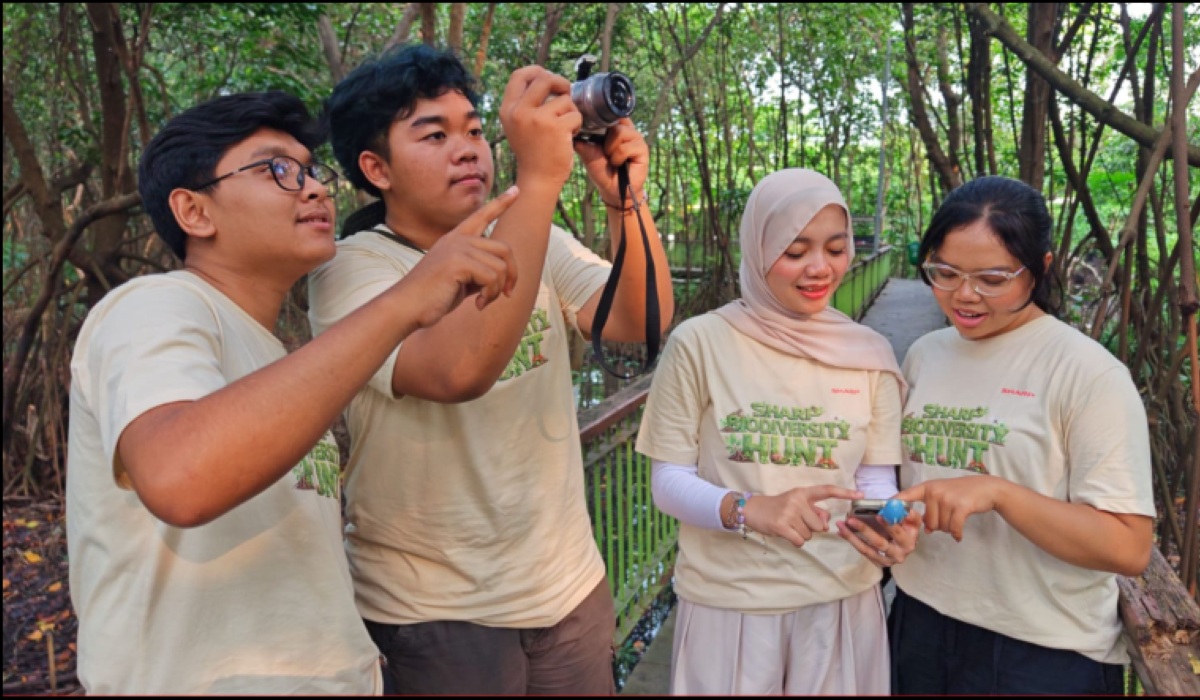
As one of the world’s mega-biodiversity nations, Indonesia is blessed with extraordinary flora and fauna. However, rapid urbanisation and shifting modern lifestyles in urban areas such as Jakarta are increasingly distancing the younger generation from their natural environment. This lack of engagement poses a serious challenge to the future sustainability of ecosystems.
To address this challenge, and in commemoration of World Biodiversity Day 2026, PT Sharp Electronics Indonesia is organising the Biodiversity Hunt 2026. This environmental education programme is designed to invite young people to recognise, observe, and document biodiversity directly through a citizen science approach.
In collaboration with the Terangi Foundation, Sharp has created a participatory learning space at the PIK Mangrove Ecotourism area in North Jakarta. This location was selected because it serves as a vital habitat for various species, ranging from water birds, reptiles, and insects to various other coastal biota.
During this activity, participants do not merely explore; they also contribute to global scientific data. All findings of flora and fauna are documented and uploaded via the iNaturalist application, a platform used by researchers and conservationists worldwide to map biodiversity.
Pandu Setio, Head of PR & Brand Communication Department at Sharp Electronics Indonesia, emphasised that a sustainable environment is a collective responsibility that must begin with early education. “Through the Sharp Biodiversity Hunt 2026, we want to open a space for the younger generation to learn directly from nature. We hope this programme can produce more young naturalists who possess high levels of care and can act as agents of change for Indonesia’s future,” said Pandu.
Echoing this sentiment, Idris, Head of the Coral Reef Resource Management Division at the Terangi Foundation, highlighted the importance of data collected by the community. According to him, every observation made by participants holds scientific value that can support future conservation policies.