
Encouraging the Redesign of the Kurban Charity Scheme
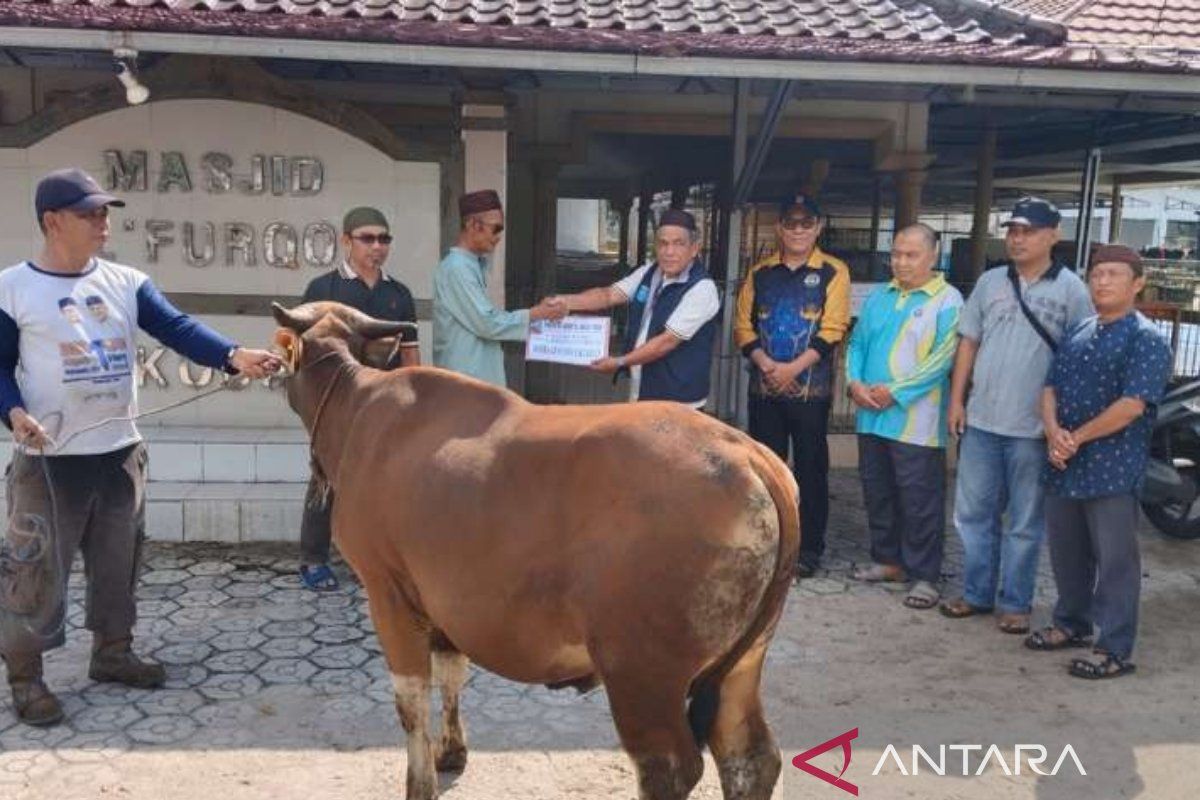
The kurban charity scheme must now be redesigned to become part of more integrated socio-economic development.
JAKARTA, ANTARA – Every Eid al-Adha, millions of Indonesian Muslims revive the tradition of kurban. Thousands of cattle and goats are slaughtered, meat distributed, and a strong sense of community prevails across regions.
Yet behind this annual ritual lies a crucial question increasingly relevant amid modern economic challenges: has the current kurban charity scheme truly fostered sustainable socio-economic empowerment?
For years, kurban has been viewed primarily as a temporary charity or social aid. Meat is distributed to communities, and the activity concludes within days.
This model undoubtedly holds significant humanitarian and spiritual value. However, amidst growing economic inequality, rising living costs, and the need to strengthen the community’s economy, this approach requires a more progressive redesign.
Kurban holds far greater potential than mere annual meat distribution. It encompasses socio-economic power that can empower local farmers, strengthen rural economies, enhance food security, and create community empowerment ecosystems based on social solidarity.
Indonesia has substantial potential for this. The Strategic Research Centre of the National Zakat Agency (Puskas BAZNAS) projects the national kurban economic potential to reach Rp34.85 trillion in 2025, with over 2.8 million sacrificial animals circulating in society. This potential stems from approximately 3.56 million kurban households in Indonesia.
These figures demonstrate that kurban is not merely a religious ritual but part of national socio-economic activity with a multiplier effect. The kurban economy touches multiple sectors, including livestock farming, animal feed trade, transportation, slaughterhouses, logistics distribution, and food-related MSMEs.
The surge in livestock demand before the holiday serves as a vital income source for rural communities. The Central Statistics Agency’s 2024 Livestock in Figures report shows that the livestock subsector remains a key pillar of Indonesia’s rural economy, particularly for cattle, goats, and sheep. Thus, kurban should not only be seen as an annual social consumption activity but also as an instrument for community economic empowerment.
Further, to empower communities, the kurban charity scheme needs redesign through modernisation and transformation of kurban management from short-term meat distribution (consumptive charity) to long-term productive or sustainable programmes for poverty alleviation and economic empowerment.
In this redesign context, transforming kurban meat from immediate consumption into economic assets is key – such as providing business capital for impoverished farmers, establishing livestock reserves, or creating perpetual community funds.
Additionally, addressing meat congestion in major cities through modern logistics management would ensure distribution reaches remote, underdeveloped, or poverty-stricken areas in need.
Regarding fund collection, kurban funds could be managed using other Islamic philanthropy instruments like livestock waqf, where animals are bred and their proceeds provide year-round economic benefits for beneficiaries (mustahik). This would act as a catalyst for food security programmes by empowering small-scale local farmers to supply kurban animals, directly stimulating grassroots economic activity.
Empowerment model
Source: jawawa.id (https://jawawa.id/newsitem/encouraging-the-redesign-of-the-kurban-charity-scheme-1779932735)
Originally published by Antara (Indonesian) (https://www.antaranews.com/berita/5583211/mendorong-redesain-skema-karitas-kurban), translated from Indonesian