
Encouraging the Private Sector's Role in Infrastructure
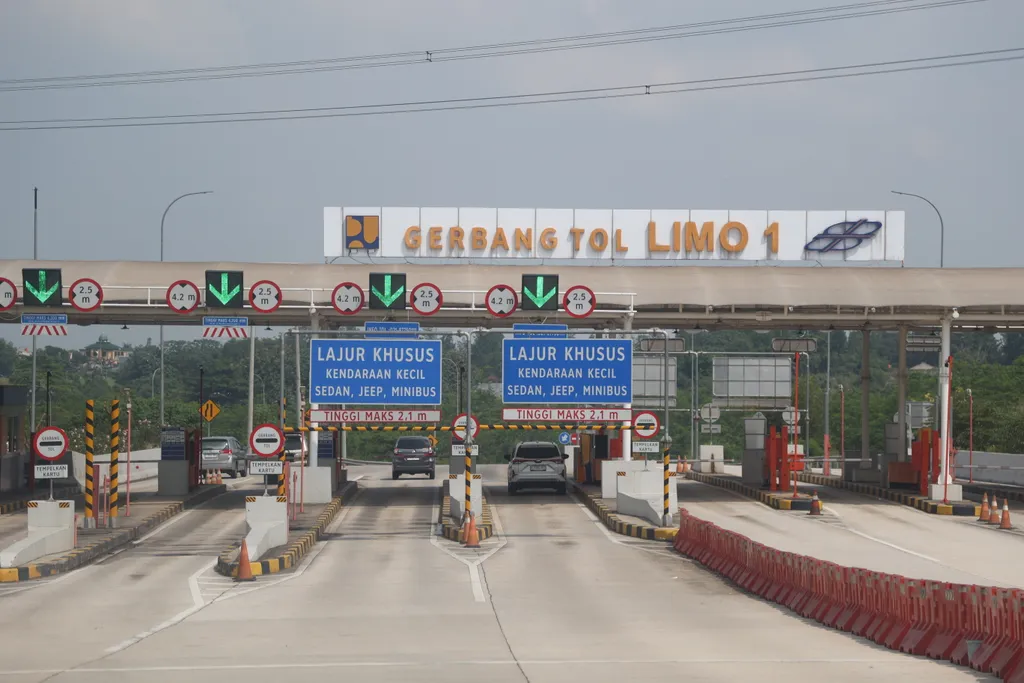
JAKARTA, KOMPAS — Investment needed for the development of the national toll road network is projected to approach Rp 1,000 trillion. Amid these substantial needs, the government’s financing capacity is limited. To bridge this gap, policy breakthroughs and financing schemes are required, and the private sector’s role in toll road construction must be expanded.
Chairman of the Indonesian Toll Road Association (ATI), Rivan A Purwantono, explained that the investment value of currently operating toll roads has reached approximately Rp 668 trillion. This figure will approach Rp 1,000 trillion when accounting for toll road sections still under construction and in preparation.
“On the other hand, the government’s financing capacity has limitations, so policy breakthroughs and financing schemes that can encourage private sector participation are needed,” said Rivan.
Currently, the operational toll road network in Indonesia spans 3,115.98 kilometres across 76 sections. The network is managed by 59 toll road business entities (BUJT). ATI assesses that investment sustainability requires attention because most operational toll road sections are still in the early to middle phases of their investment return cycle.
“Toll road development must ultimately provide real benefits to the public. The public needs safe, comfortable, high-quality, and reliable toll road services. Therefore, ATI and the government continue to synergise to maintain the industry’s sustainability while ensuring the public receives the best toll road services,” Rivan stated.
Beyond financing issues, the sustainability of toll road infrastructure also faces pressure from over-dimension and over-load vehicles (ODOL). ODOL vehicles are considered to accelerate physical road damage and increase safety risks for road users.
Acting Secretary General of ATI, Kristianto, said that policy alignment between the government and business players is necessary in determining financing schemes and toll road regulations. “Synergy and policy balance are crucial for the future of the national toll road industry,” said Kristianto.
Senior economist at the Institute for Development of Economics and Finance (Indef), Tauhid Ahmad, noted that experience from the past decade shows not all toll road projects have adequate financial feasibility. This condition risks pressuring the performance of state-owned enterprises (BUMN) involved in infrastructure development and management.
“BUMN are tasked with running these projects. But actually, many of the projects built are not financially viable, and only marginally so economically,” said Tauhid.
According to Tauhid, the financial feasibility of infrastructure projects is a problem because the rate of return on investment for a number of projects is insufficient to cover financing costs. Toll road construction generally uses syndicated bank financing, which must be repaid even if toll revenues fall short of projections. If traffic volume is lower than estimated, the toll road operator’s income will be insufficient to meet financing obligations. In such conditions, companies may seek additional financing through corporate bond issuance.
“It is not financially viable, but it is forced through. Because of that experience, the government is now more cautious,” Tauhid said.
Apart from financial viability issues, government budget support for infrastructure projects is also considered limited. One recurring problem is land acquisition. Changes in land prices during the construction process can increase project costs and are not always accommodated in the initial planning.
Tauhid believes the government needs a special funding scheme to help improve project viability, especially in the early stages. Such support could include land acquisition assistance, land capping, project preparation, and investment assistance. “The government can help and prepare it so it becomes viable. If it is fully charged to the private sector, the private sector will not want to get involved or will be reluctant to participate,” he said.
According to Tauhid, the space for private sector involvement can be expanded through government and business entity cooperation (KPBU) schemes, pure private investment, or blended finance. However, private sector involvement cannot be encouraged solely by providing investment opportunities. The government also needs to reduce various risks that make projects financially unviable.
Tauhid stated that one important form of support is providing contingency funds to anticipate changes in project conditions during the construction period. Changes in costs and market conditions can cause investment needs to increase after a project is underway. In addition, the government must ensure that toll road projects are integrated with regional spatial plans (RTRW) and other planning documents. This certainty is important to reduce the risk of planning changes that could increase costs or disrupt investment projections.
According to Tauhid, government support in the early stages will determine whether a project can become financially viable for investors. Thus, private sector involvement in toll road construction is not simply a matter of shifting the financing source from the government to business entities. The government still needs to bear certain basic risks beyond the investor’s control to ensure the project has adequate certainty and a sufficient rate of return.