
Encouraging Integrated Downstreaming to Strengthen National Industrial Resilience
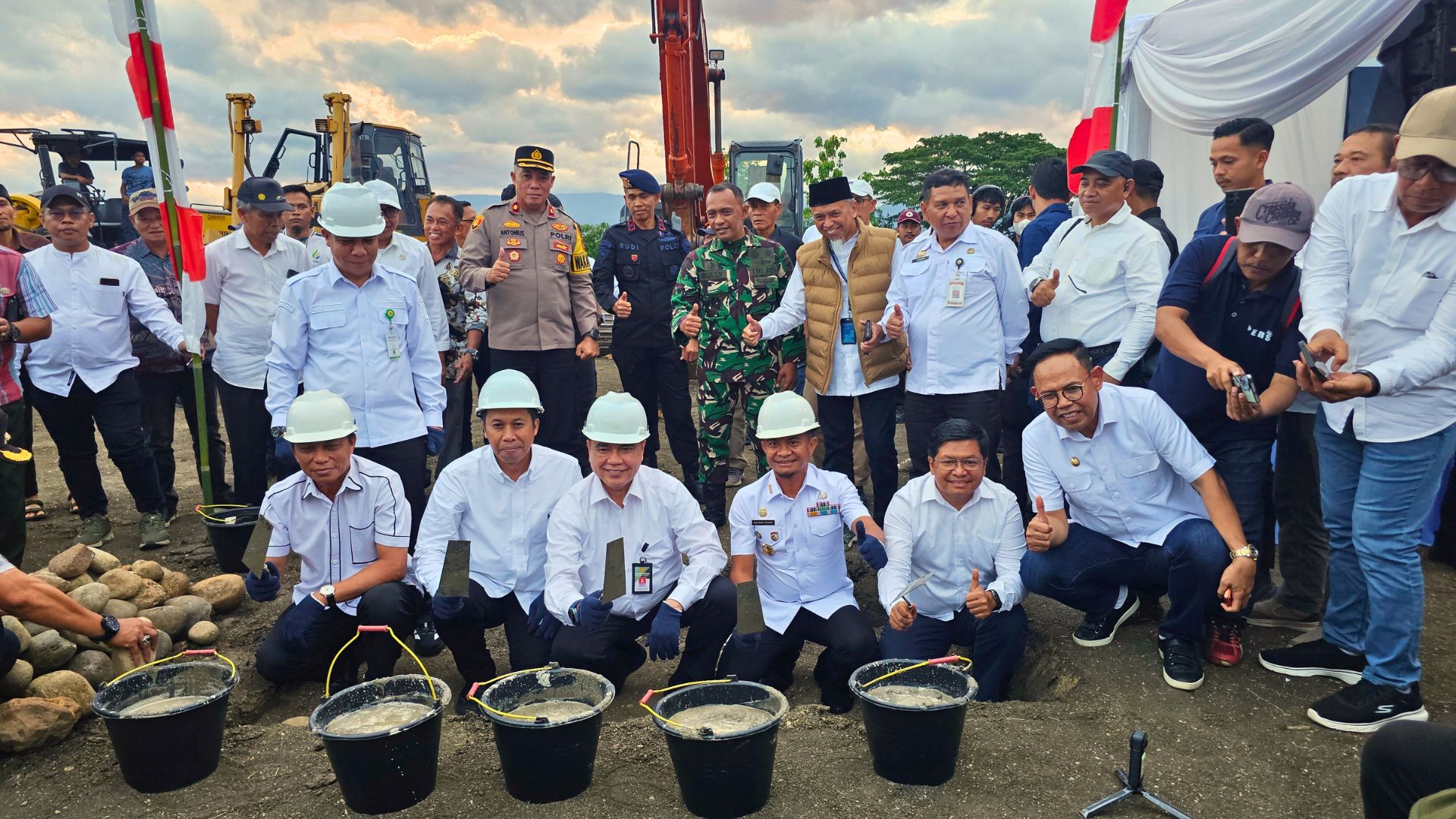
Downstreaming remains the government’s primary strategy for strengthening the national economic structure by increasing the added value of natural resources. This policy not only aims to reduce dependence on raw material exports but also to foster a processing industry that creates jobs, expands investment, and enhances Indonesia’s competitiveness in the global market. Investment developments in the second quarter of 2026 show that the downstreaming agenda is entering a new phase with a broader range of commodities.
Data from the Ministry of Investment and Downstreaming/BKPM indicates that downstreaming investment reached Rp152.7 trillion in Q2 2026, a 5.7 per cent increase from the previous period. This figure contributed approximately 29.8 per cent to the total national investment realisation during the same period, demonstrating that the downstreaming sector is increasingly becoming a primary engine for Indonesia’s economic growth.
A notable shift has occurred in the composition of investment across commodities. For the first time, bauxite became the sector with the largest downstreaming investment realisation in Indonesia. Bauxite investment reached Rp40.1 trillion, surging by around 193 per cent from Rp13.7 trillion in Q1 2026. This achievement displaces nickel, which for years had been the backbone of investment in the mineral processing sector. Nickel downstreaming investment followed at Rp29.4 trillion, with copper at Rp16.7 trillion, iron and steel at Rp13.2 trillion, and silica sand at Rp4 trillion. Other commodities, including tin, gold, silver, cobalt, manganese, coal, Buton asphalt, and rare earth metals, recorded investments of approximately Rp4.7 trillion. This composition indicates that industrial processing development is becoming more evenly distributed across various strategic resources.
Minister of Investment and Downstreaming Rosan Perkasa Roeslani explained that the change in investment composition was influenced by the acceleration of bauxite processing projects involving both domestic and foreign investors. He noted that the increase in investment for this commodity shows that national downstreaming is no longer reliant on a single mineral type but is moving towards stronger diversification. The government is also continuing to expand the scope of downstreaming to other leading commodities, including palm oil, rubber, timber, and silica sand, aiming to maximise Indonesia’s natural resource potential through processing that yields higher economic value.
The commitment to accelerating industrial processing development is also evident in smelter construction. The Ministry of Energy and Mineral Resources reported that by early 2026, there were 14 integrated mineral smelter projects with a total investment value of approximately US$8.69 billion. Six of these projects are integrated bauxite smelters with a combined investment of US$2.18 billion.
Sudirman Widhy Hartono, Chairman of the Indonesian Mining Experts Association (Perhapi), assessed that the rise in bauxite downstreaming investment is a natural progression. He stated that this does not reflect a weakening of the nickel industry but rather indicates that the nickel sector has entered a phase of maturity after developing for six to seven years since the government implemented the raw ore export ban. Sudirman explained that bauxite downstreaming projects are just entering a large-scale expansion phase, marked by the commencement of various strategic projects, including the development of a bauxite, alumina, and aluminium processing zone in Mempawah, West Kalimantan. This project is expected to strengthen the national aluminium industry from upstream to downstream.
Sudirman also stressed the importance of maintaining balance in investment development. Experience from the nickel industry shows that overly rapid growth in processing facilities can lead to overcapacity, depress commodity prices, and present challenges in industrial governance. He argued that bauxite downstreaming development must be carried out in a measured manner to ensure its economic benefits are sustainable over the long term. The aspect of sustainability is a key concern, with Sudirman noting that development must consider the resilience of mineral reserves and environmental preservation. Good governance will ensure that the benefits of downstreaming are not only felt in the short term but also safeguard the continuity of the national industry in the future.
Ronald Sulistyanto, Chairman of the Indonesian Bauxite Association (ABI), assessed that the increase in bauxite downstreaming investment is also influenced by the rapid development of the global electric vehicle and battery manufacturing industries. Demand for aluminium is expected to continue rising as the material becomes an important component in building the clean energy ecosystem. Ronald explained that Indonesia has a competitive advantage because it controls four of the six main raw materials in the electric vehicle battery ecosystem, namely nickel, bauxite, manganese, and copper. This advantage provides a significant opportunity for Indonesia to build a more integrated battery industry supply chain. He noted that processing bauxite into aluminium can increase the commodity’s economic value by around 10 to 15 times compared to selling it in raw form.
The increasingly integrated direction of downstreaming development shows that Indonesia is not only pursuing increased investment but also building a stronger industrial foundation. Diversification of commodities, strengthening of the processing ecosystem, and attention to sustainability are key elements in ensuring that downstreaming truly becomes the backbone of a resilient and competitive national industry.