
Encouraging Digital Savings Contribution to Regional Development
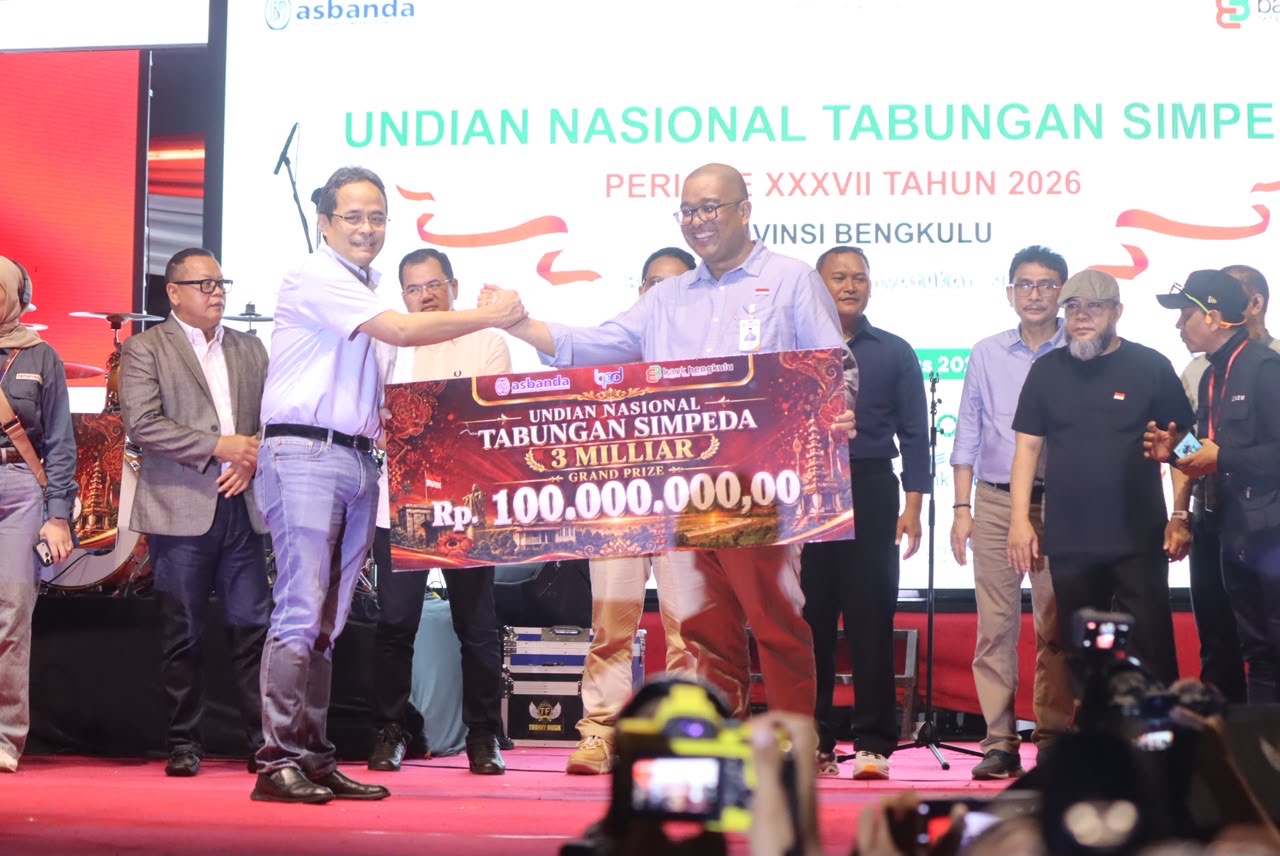
The Simpeda savings product continues to be directed towards adapting to the evolving financial needs of the public. The joint savings product of 27 Regional Development Banks (BPD) across Indonesia recorded a balance of approximately Rp74.86 trillion as of June 2026.
Chairman of the Association of Regional Development Banks (Asbanda) Agus H. Widodo said that this achievement does not merely demonstrate the amount of funds collected by BPDs. More than that, the figure reflects the level of public trust in BPDs across various regions.
“Rp75 trillion is not just a number on the balance sheet. Behind it lies public trust. The funds are collected from the public, managed prudently by BPDs, and then intermediated back into financing for the public, MSMEs and the business world to drive the regional economy,” said Agus on Monday (24/8).
According to Agus, the future development of Simpeda cannot be solely oriented towards increasing the number of accounts and balance growth. Changes in public behaviour in using financial services demand that Simpeda become a product that is more practical, fast, secure, and integrated with various daily activities.
Therefore, Asbanda is encouraging BPDs to strengthen Simpeda’s digital services while expanding its use in various transactions. This development encompasses payments, transfers, shopping transactions, merchant services, and other financial needs.
“Simpeda in the future cannot merely be a place to save. We want Simpeda to be closer to people’s daily lives—more modern, more digital and easier to use, without losing its main strength, namely closeness to regional communities,” he said.
This digital transformation is expected not only to improve convenience for customers but also to strengthen Simpeda as a healthy and sustainable source of retail funds for BPDs. Thus, public funds collected can continue to support the intermediation function and financing of regional development.
Agus considers the existence of Simpeda as a joint product of 27 BPDs to be one of the advantages that needs to be continuously developed. Each BPD has a network and understanding of the characteristics of communities in their respective regions.
If these strengths become more integrated, Simpeda is considered to have the opportunity to develop into a national-scale retail banking service network that remains rooted in regional strengths.
“The positioning we want to build is very clear: Simpeda is deeply rooted in the regions, but connected nationally. The local strength of 27 BPDs, if we connect them further, will become a great national financial strength,” he said.
To realise this, Asbanda will encourage the development of product innovation, improvement of the quality of customers’ digital experience, expansion of the merchant and payment ecosystem, and strengthening of service quality. These steps are also directed so that Simpeda is increasingly able to reach a broader segment of society, including the younger generation.
Asbanda is optimistic that strengthening Simpeda will further increase the contribution of BPDs to the regional economy. Through service transformation and inter-regional connectivity, Simpeda is expected to remain a product that is close to the public while being able to keep pace with national financial needs.
“Funds grow from the public, are managed by BPDs, and return to the public to build the regions. That is the strength of Simpeda. From the regions we grow together with the public, and with the strength of 27 BPDs we are connected to build Indonesia,” he concluded.