
Encouraging Cross-Perspective Collaboration for the Future of Indonesian Architecture
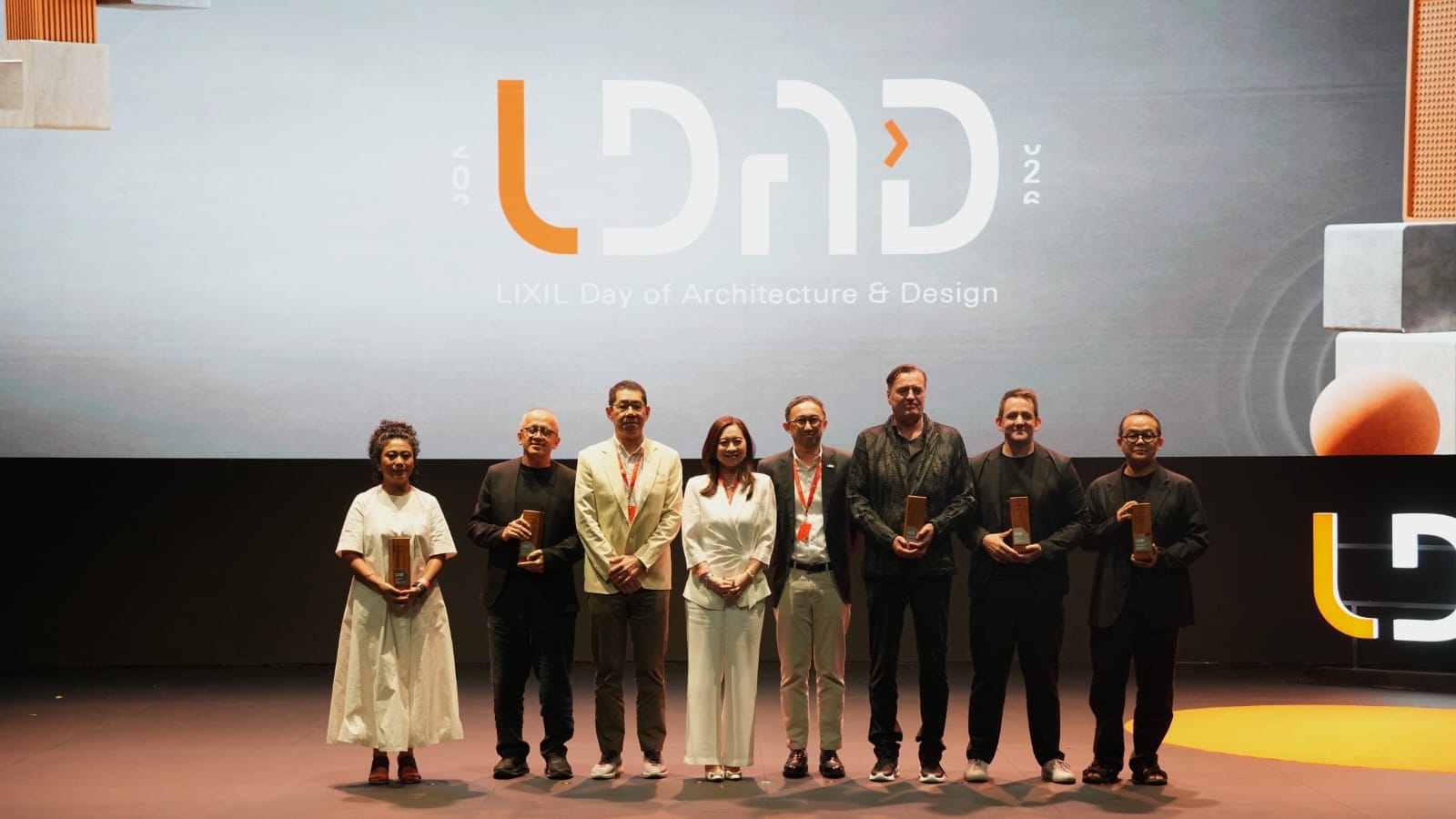
LIXIL Water Technology Indonesia is encouraging stronger cross-disciplinary collaboration in the development of architecture and design in Indonesia through the LIXIL Day of Architecture & Design (LDAD) 2026.
Carrying the theme “Archipelago Dialogues: Architecture as a Space of Co-Creation”, the event held at Ciputra Artpreneur, Jakarta, on Wednesday (12/8) brought together architects, design practitioners, and industry players from home and abroad to discuss the future of architecture and the quality of living spaces.
Leader of LIXIL Water Technology APAC, Audrey Yeo, said LDAD is part of LIXIL’s contribution to the development of the architecture and design community in Indonesia.
“For us, LDAD is more than just an event. LDAD is LIXIL’s contribution to the Indonesian architecture and design community, reflecting our commitment to continue growing together with the industry. We saw extraordinary enthusiasm, with this year’s registration numbers even exceeding the available capacity,” said Audrey, quoted from a press release received on Saturday (15/8).
According to her, the co-creation theme raised this year provides a space to bring together various perspectives in responding to changes in society, the environment, and technological developments.
LDAD 2026 featured four discussion sessions presenting a number of national and international architects and practitioners. The discussions were directed at how architecture can develop through dialogue, understanding of context, use of technology, and cross-disciplinary collaboration.
In the first session, Managing Director Asia of Snøhetta, Richard Wood, emphasised the importance of architecture in creating a positive legacy for local communities. According to him, architecture is not merely about buildings, but also about creating a platform for public life and the relationship between people and space.
He introduced the concept of “ecotone”, a meeting space between different phenomena. In the context of architecture, the concept describes the meeting of human character, perspectives, and expertise that can produce new spaces while enriching the design process.
Meanwhile, Principal of Yolodi+Maria Architects, Gregorius Supie, highlighted the importance of understanding context in producing an architectural work. According to him, the form of a building does not have to be determined from the outset, but can develop through a process of observing life around the site. The design process, he continued, needs to consider natural conditions, community needs, culture, materials, and local climate character.
A perspective on context was also shown by Principal of andramatin studio, Andra Matin, through the use of tradition, local materials, and tropical architectural principles in contemporary works. Strategies such as natural ventilation, shading, landscape, and social spaces are considered capable of creating buildings that have identity while being responsive to the climate and the needs of their users.
Principal of ZHA, Patrik Schumacher, brought the discussion to technological developments in architecture. According to him, technology not only serves as a design tool, but also has the potential to change the way architecture is designed, developed, and used. The use of the metaverse, virtual reality (VR), and gaming engines enables collaboration processes to be carried out more interactively from the early stages.
This technology also allows designers to explore spaces virtually before a project is realised.
Marketing Director of LIXIL Water Technology Indonesia, Arfindi Batubara, said the four sessions showed that architecture cannot be built through a single perspective alone.
“Each speaker brought a different point of view, but the overall sessions showed one commonality: that architecture is not shaped in isolation. Each discipline can complement one another in answering the increasingly dynamic challenges of spatial planning. Dialogue, understanding, and collaboration are key to shaping architecture that is relevant, solution-oriented, and sustainable,” said Arfindi.
The LDAD 2026 series also concluded with the presentation of awards to the winners of the LIXIL Architectural Design Competition (LADC) 2026. The competition, initiated by LIXIL Water Technology Indonesia together with the Indonesian Institute of Architects (IAI), serves as a platform for professional architects and young talent to respond to real spatial planning issues through design ideas.
In the professional category, first place was won by the work “Pagar Laut: Reclaiming Our Coastline” designed by Ar. Iqbal Nurhidayat (IAI), Fahry Triza Nugraha, and Imam Darmawan Putra. Meanwhile, the student category was won by the work “ei peowu: Catalyzing Resilience Across Sabu Raijua” designed by Melvino Anindra Bagaswara, S.Ars., Bayu Putra Setiawan, and Muhammad Fathur Rahman.
In addition to the discussion forum and the LADC 2026 awards, LDAD also presented a number of supporting activities, including 10x10 Archinesia, an exhibition area for selected LADC 2026 works, and a LIXIL Product Display Area.
Arfindi added that all these strategies and initiatives are part of LIXIL’s commitment through the spirit of “Better Homes for Everyone, Everywhere”.
“At LIXIL, we believe that delivering better living spaces does not stop at products and functional solutions that answer society’s needs. When all stakeholders can increasingly understand one another and synergise, the ecosystem will become stronger, so that together we can create more meaningful change today and for the future,” he concluded.