
Empowering Women to Eradicate Poverty in 3T Regions Completely Within Three Years
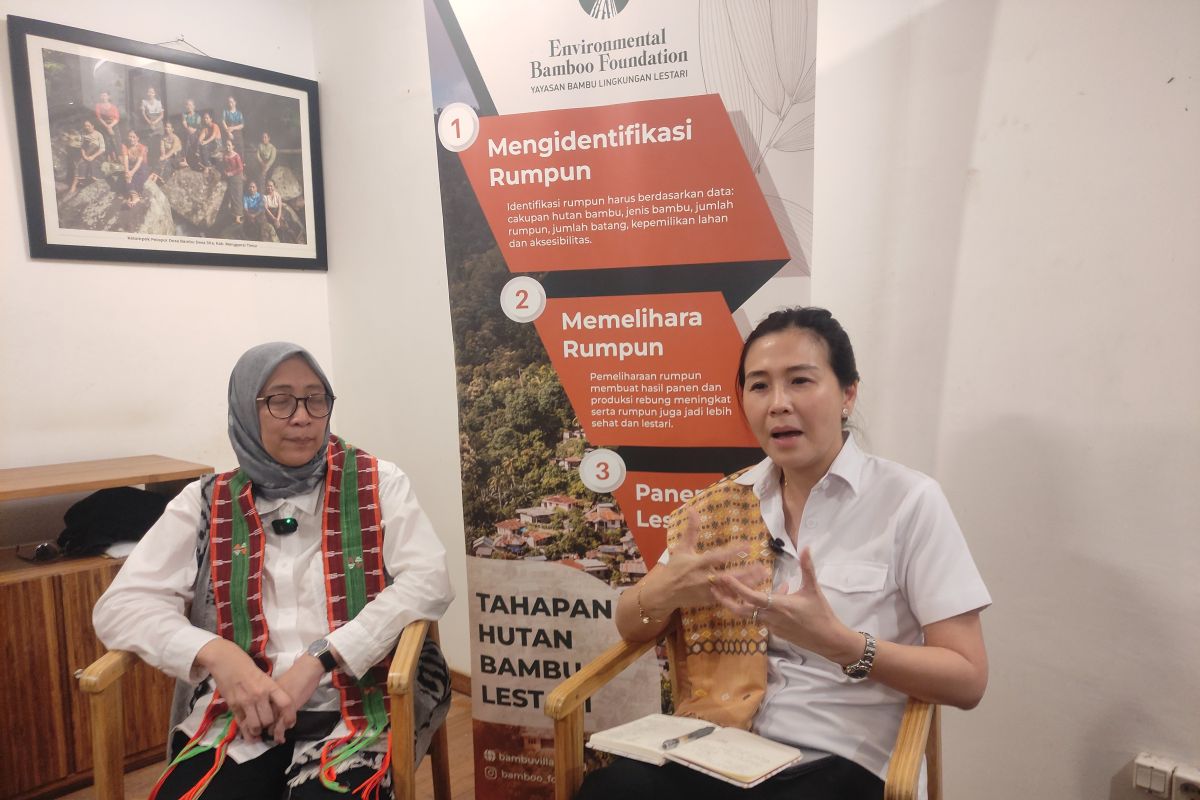
Labuan Bajo, NTT - The Ministry of Women’s Empowerment and Child Protection (PPPA) is targeting a women’s empowerment programme through the Local Women’s Food Garden scheme to eradicate poverty and child health disruptions in 3T (disadvantaged, frontier, and outermost) regions completely within three years. Deputy Minister PPPA Veronica Tan stated that the programme is highly strategic, using food sovereignty as an entry point to strengthen women’s positions in family economy and nutrition in disadvantaged areas. “Women’s empowerment is a three-year target that we have planned. Our entry point is through this Women’s Local Food Garden,” she said after a restorative social forestry forum with the Ministry of Forestry at the Bambu Lingkungan Lestari Foundation Campus in Labuan Bajo, NTT, on Thursday. Veronica is optimistic that the women’s empowerment programme through the Local Food Garden scheme can have a significant impact in solving poverty problems and child health disruptions in 3T regions as targeted. This confidence grows after the PPPA Ministry’s pilot programme receives support from various sectors, such as the Ministry of Forestry providing access to utilise 648.65 hectares of forest for six forest farming groups in East Nusa Tenggara, which are predominantly women, through the Social Forestry scheme. This is inseparable from the prevalence of stunting in children in NTT still at 31.4 per cent, far above the national average, while cases of violence against women and children continue to be a serious challenge that are interconnected and rooted in economic issues. “Honestly, I am moved and I also express my thanks for the inter-ministerial cooperation and institutions. So this is the result of collaboration and openness to find ways and innovations for us to move forward as a pilot to make NTT a national model for food sovereignty-women’s empowerment,” she said. Veronica added that the programme’s success in the next three years also greatly depends on collaboration between local governments with foundations and the private sector through Corporate Social Responsibility (CSR) programmes. Thus, more families can feel the benefits of this food sovereignty-women’s empowerment programme.