
Empowering the Elderly through Microgreen Cultivation
The increasing number of elderly people in Indonesia is becoming a challenge that requires serious attention, particularly regarding independence and quality of life. According to data from the Central Bureau of Statistics (BPS) for the first half of 2026, the elderly population has reached 34 million, or 12 per cent of the total population, and is predicted to surge to 40 million by 2030.
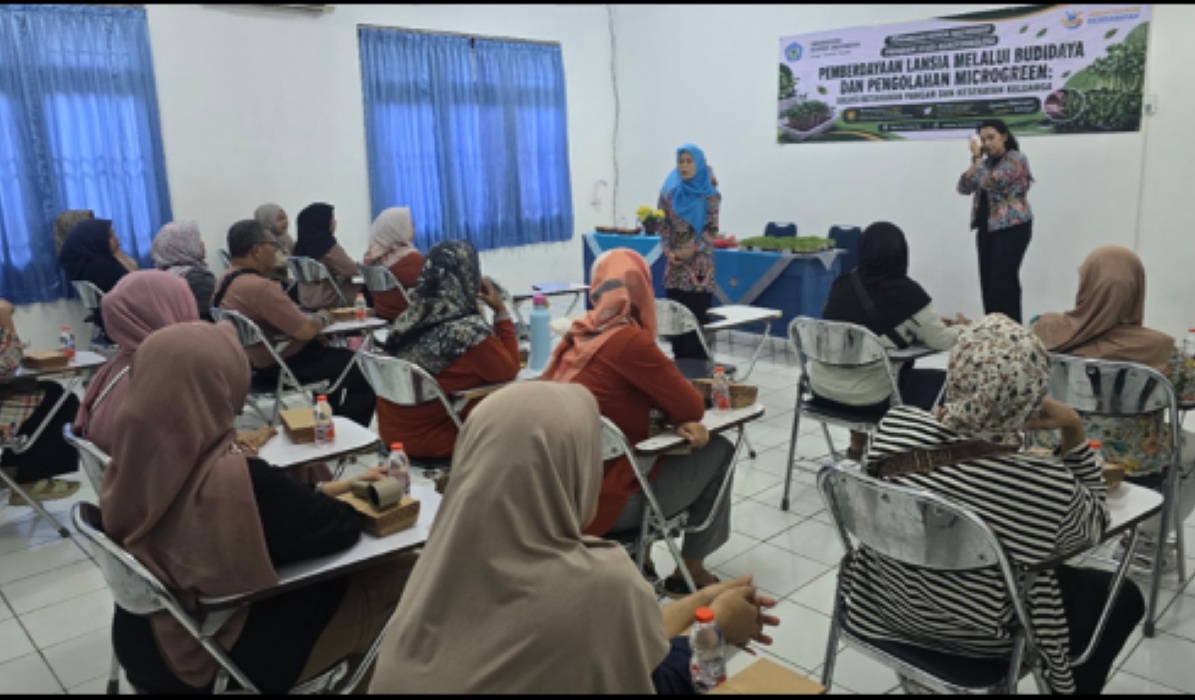
Responding to this condition, a team of Agrotechnology lecturers from the Faculty of Agriculture at Universitas Respati Indonesia (Urindo) Jakarta provided microgreen training to 20 elderly residents in Bambu Apus, Cipayung, East Jakarta, on 1 September. The Project Leader for Community Service (PKM), Reni Nurjasim, explained that introducing microgreens is vital because many elderly individuals have limited knowledge regarding functional foods and plant cultivation in narrow spaces.
“This activity aims to increase the knowledge and skills of the elderly community through the cultivation and processing of microgreens as a healthy food source that can be implemented on limited land,” said Reni on Tuesday (10/9). According to Reni, the elderly require not only health support but also productive activities to enhance their social roles and their ability to meet family food needs independently within urban environments.
During the practical session, team member Maria Aditia Wahyuningrum explained that participants were trained to cultivate pakcoy microgreens using cocopeat media in thin-wall plastic containers. The process included media preparation, planting, maintenance, and harvesting.
“Participants also utilise the harvest to be processed into various healthy food products such as salads, juices, sandwiches, and omelettes. This demonstrates that simple agricultural technology can support family food security and productive activities for the elderly,” explained Maria.
Meanwhile, Siti M. Sholihah added that microgreens are young plants harvested at the early growth stage. These plants hold great potential as functional foods because they are rich in vitamins, minerals, carotenoids, and phenolic compounds.
“Microgreen cultivation serves as an alternative urban agriculture technology suitable for the elderly because the production cycle is short, space requirements are low, and it can be carried out in small areas such as house terraces,” said Siti.