
Employers and Workers Form Joint Team to Discuss New Manpower Bill
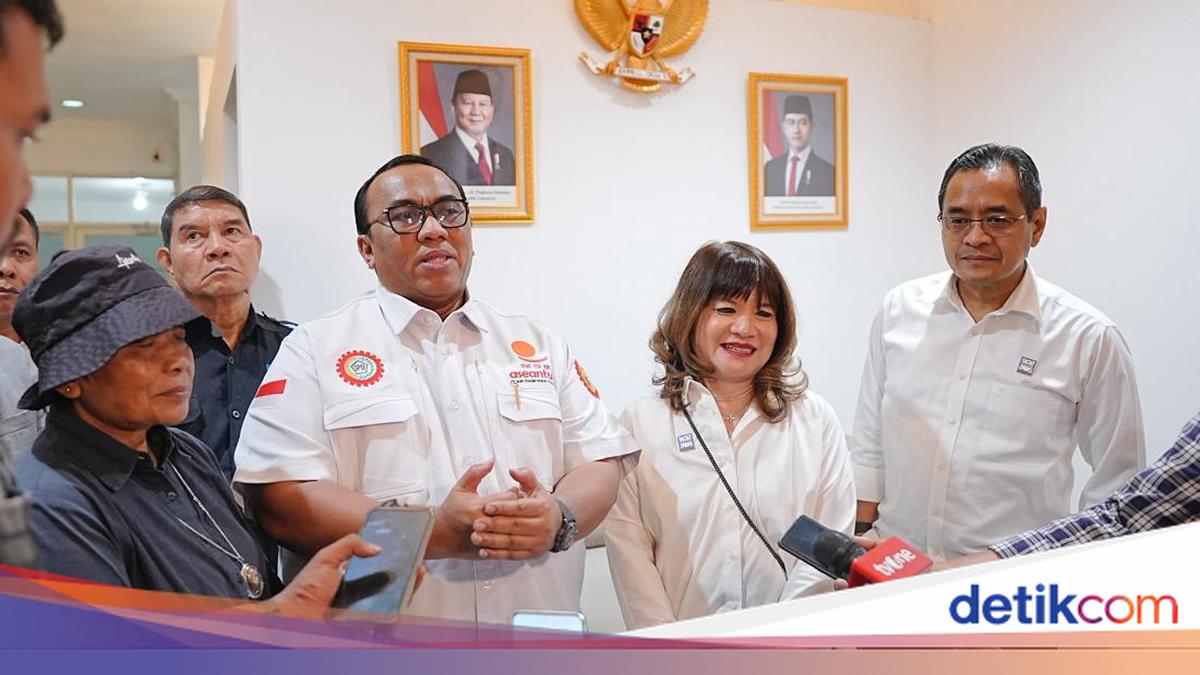
The Indonesian Employers’ Association (Apindo) and the Grand Coalition of Indonesian Workers’ Struggle (KBPBI) have agreed to form a joint drafting team to prepare a draft of the Labour Bill.
Apindo Chairwoman Shinta Widjaja Kamdani said the joint drafting team is targeted to produce a draft agreed by both parties within approximately two weeks, or by the end of August 2026 at the latest. The draft will subsequently be submitted jointly to the House of Representatives (DPR RI).
“We must target the end of this month. Two weeks from now. In principle, we will have a joint draft that has been agreed and will be submitted to the DPR together,” she explained in a written statement on Thursday (13/8/2026).
According to Shinta, the drafting of the Labour Bill needs to consider the interests of workers as well as the sustainability of the business world and job creation.
“Although it was said earlier that we have many differences between employers and workers, we have one common goal: how we together want Indonesia to be more prosperous,” said Shinta.
She assessed that worker welfare is also linked to the sustainability of companies. “If the employers are prosperous, the workers will certainly be prosperous,” she said.
Shinta said worker protection needs to go hand in hand with protection of the business world so that the investment climate remains conducive.
“Worker protection is very important, but protection of employers is also important to be able to create a conducive, competitive and sustainable investment climate,” she explained.
Regarding points that still differ, Shinta said both parties will first seek common ground and narrow the differences in the discussions.
“So, we are now focusing on what our similarities are, and on how we can narrow the gap between our differences,” she said.
She stressed that the formation of the drafting team is an effort by both parties to reach a mutual agreement. “In principle, it is an initiative and goodwill from both parties. We want to reach a mutual agreement,” she asserted.
Shinta also said Indonesia’s competition in attracting investment and creating jobs is not between workers and employers, but with other countries.
“Our competition is with other countries, not among ourselves. So, how can we further improve Indonesia’s competitiveness to be able to compete with our neighbouring countries,” concluded Shinta.
Meanwhile, President of the All-Indonesia Workers’ Union Confederation (KSPSI) Andi Gani Nena Wea said workers and employers have the same interests in the discussion of the Labour Bill. Therefore, KBPBI agreed to form a joint drafting team with Apindo.
“We want to form a joint drafting team in drafting the Labour Law,” he said.
Andi Gani said both parties also agreed to conduct comparative studies to Vietnam, Thailand, Malaysia and the Philippines. The study will examine labour policies, the investment climate, and the role of government in balancing the interests of workers and employers.
“We will learn together and find out what the point of view is like. Why investment there can be more advanced and more developed, what the government provides, what kind of room for manoeuvre the state gives to employers and trade unions,” he explained.
According to Andi Gani, the discussion of the Labour Bill will be directed towards finding common interests between the two parties.
“We are not looking for differences here, we are looking for similarities. How to keep the Republic of Indonesia rising, investment continuing to grow, and workers also being protected,” he asserted.
He assessed that the relationship between companies and workers is a single unit in economic activity.
“Companies and worker welfare are a partnership. Without companies, workers will not be able to do anything. Without workers, companies cannot do anything either. So, it is a single unit,” he explained.