
Emphasising Tax Compliance as a Business Foundation
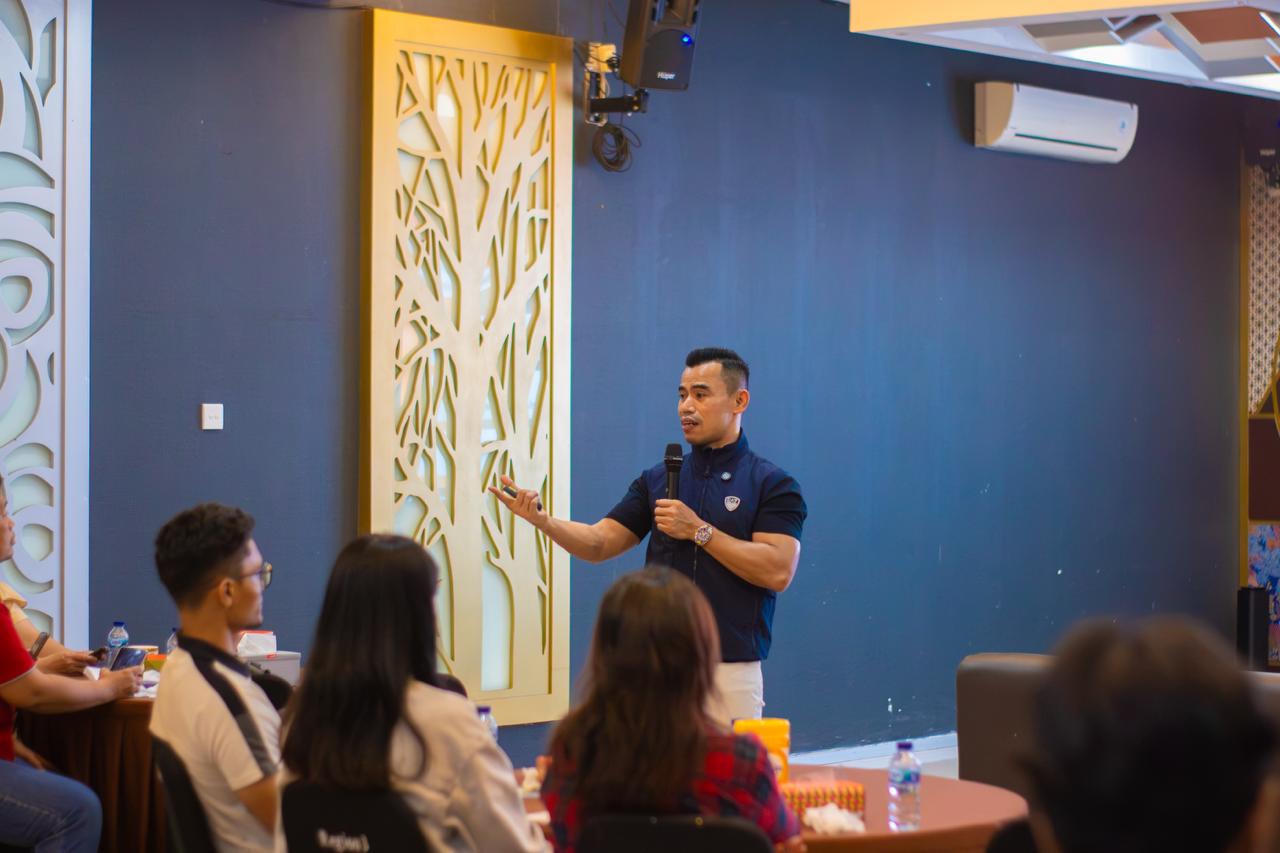
The Founder and CEO of Hive Five, Sabar L. Tobing, has emphasised the importance of bookkeeping, tax planning, and compliance as the foundation for maintaining businesses and protecting corporate assets. These remarks were made by Dr Sabar during a seminar titled ‘Emphasising Tax Compliance as a Business Foundation’ held at Bank Mandiri Prioritas KCP Jakarta Glodok Pancoran.
During the event, he discussed the optimisation of bookkeeping, tax planning strategies, mitigation of audit risks, and asset management for future generations. “Good bookkeeping, strategic tax planning, and compliant reporting serve as the business foundation to protect company assets and minimise the risk of fiscal sanctions,” Sabar stated on Saturday.
According to him, company ownership and operational structures must also be considered when developing tax strategies. One approach highlighted was the optimisation of business entities. “Avoid placing taxes on individuals; shift them to business entities,” Sabar suggested.
He explained that arranging business structures should be part of tax planning so that the tax burden can be managed through business entities in accordance with applicable regulations. Sabar also warned regarding the risks of tax audits and the statute of limitations, which can cover a five-year period.
“The statute of limitations for tax audits is five years. This means that financial instruments, such as deposits, remain under surveillance and have the potential to be audited by the Directorate General of Taxes,” he said.
In his presentation, Sabar also touched upon developments in tax regulations, including PMK Number 15 of 2025 and PMK 55 of 2026. “PMK 15 of 2025 regulates audits to be complete, focused, and specific. Meanwhile, PMK 55 of 2026 tightens the requirements for legality and competence to become a tax consultant,” Sabar noted.
Sabar also noted that documentation is inseparable from tax compliance. Taxpayers must ensure that financial documents and bookkeeping remain available when required. “Bookkeeping documents must be kept for at least 10 years. If a taxpayer is unable to calculate them, the DGT may use official assessments or valid calculation norms based on the law,” he revealed.
Nevertheless, Sabar reminded that taxpayers do not only have obligations but also possess rights when they do not accept the results of audits conducted by tax authorities. “Taxpayers have the right to reject audit results through the legal mechanism of objections, which is officially regulated in tax regulations,” he said.
He also issued a warning that tax planning should not transform into practices of manipulation or engineering to evade oversight. “There is no point in withdrawing all money at the end of the year and re-depositing it in January just to avoid being audited by the tax office,” he asserted.
According to him, such methods do not constitute proper tax planning. Non-compliance can instead bring financial consequences for taxpayers. “There is a high price to pay for non-compliance,” he added.
In another section, Sabar reminded that asset management and taxation do not only concern the interests of current business owners but also have consequences for future generations. “Avoid leaving problematic inheritances to our children and grandchildren. The risk is borne by the recipient,” he concluded.