
Empathy of Healthcare Workers Towards the Suffering of BPJS Patients
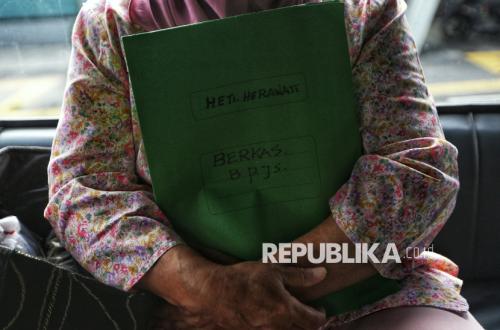
In Indonesia, a book titled ‘Orang Miskin Dilarang Sakit’ (The Poor Are Forbidden to Be Sick) by Eko Prasetyo was once circulated in 2004. The title of this book remains relevant today in describing the fate of poor people who desire proper health services for themselves. Instead of the complaints of patients from this poor community being responded to well, the opposite has occurred.
Yurizal Tri Chserawan, a BPJS programme participant who complained on the Threads platform on 22 July 2026, recounted how he waited up to eight hours to obtain an inpatient room, yet never received what he wanted. Yurizal’s motive in conveying his complaint on social media may have simply been to vent. As part of the digital community, it is natural for Yurizal to express his grievances in the public sphere. However, far from receiving a sympathetic response, Yurizal’s post was instead met with unsympathetic reactions from a number of health workers.
Some questioned Yurizal’s economic status. Others turned it into a joke by linking it to the mortuary. In essence, there was a message from these health workers that Yurizal seemingly did not deserve to complain. The case of the health workers’ lack of empathy towards this BPJS patient then went viral and drew sympathy from netizens when Yurizal passed away on 31 July 2026. Yurizal ultimately became a symbol of the fate of poor patients whose rights to obtain health services are often not fulfilled like other patients – regardless of their economic status and whether or not they are BPJS participants.
The comments made by a number of health workers towards BPJS patients are in fact a form of bullying. Belittling and even insulting BPJS patients cannot be justified in any way. Doctors and nurses are professionals who work under an oath that places the safety and dignity of human beings at the highest level. Professional ethics in the medical field must truly be upheld, and do not simply cease when someone takes off their uniform and holds their gadget at home.
The Ministry of Health and the Indonesian Health Council have firmly highlighted this matter, reminding that professional discipline enforcement also includes ethics on social media. A health worker is not permitted to arbitrarily express opinions that appear to insult BPJS patients.
BPJS patients are not second-class patients who can be treated arbitrarily and insulted because of their limited economic status. Based on laws and regulations and the guarantee from BPJS Kesehatan, every active JKN participant who meets medical indications has fundamental rights guaranteed by the state. Thus, a health worker who insults a BPJS patient has in fact violated their oath and also violated applicable legal rules.
Indeed, some parties argue that what a number of health workers did in Yurizal’s case was an act of negligence and an expression of work fatigue and environmental pressure they experienced. In various hospitals, it must be acknowledged that many health workers are under heavy work pressure. High workloads, unbalanced patient ratios, limited hospital facilities, and the administrative complexity of health insurance claims often trigger frustration which is then expressed on social media.
However, using work environment pressure as a justification for harming the psychological condition of BPJS patients cannot be justified in any way. This is a behaviour and a grave error. Patients and families who come to health facilities are in the most vulnerable position. For them, waiting eight hours in the Emergency Department or transit room are moments full of anxiety, because they are helpless patients who need proper medical services.
The unethical comments made by certain health workers towards JKN participants in the digital space not only injure the humanitarian values of the medical profession, but are a form of attitude lacking in empathy. The law guarantees that JKN participants have full rights to equal, non-discriminatory, and dignified health services, without stigma related to their financing status. As health workers, those who bullied Yurizal certainly understand that what they did was inappropriate.
Firstly, in various hospitals it is often reported that BPJS participants generally receive minimal health services. In fact, referring to applicable regulations, participants are expressly entitled to equal, fast, and easy health services at health facilities cooperating with BPJS Kesehatan, without being differentiated from general patients.
Secondly, BPJS participants have the right to obtain information and also the right to submit complaints about what they experience. They have the right to obtain clear information regarding health service procedures and handling of obstacles through official channels, such as BPJS SATU! officers at hospitals or the Mobile JKN application.
Thirdly, BPJS patients also have the right to obtain a treatment class according to their membership in the BPJS programme. They have the right to obtain inpatient facilities in accordance with the rights of the treatment class chosen or for which contributions are paid. According to regulations, if the room corresponding to their entitlement is not available, the patient has the right to be treated in a class one level above for a maximum of three days at no additional cost, or be referred to an equivalent health facility.
Fourthly, and most importantly, BPJS patients also have the right to dignified treatment. They have the right to be treated humanely, with respect, honesty, and honour for their dignity as human beings wherever the service process takes place. BPJS patients, even though they pay for health services differently from patients in private hospitals, still have the right to be treated humanely.
The bullying and lack of empathy towards BPJS patients until the patient passed away is certainly a matter of concern for all of us. This case must become a momentum for total evaluation. Professional organisations such as the Indonesian Medical Association and the Indonesian Health Council should immediately act firmly to enforce ethical sanctions against health workers proven to have violated humanitarian values, so that there is a deterrent effect.
Beyond improving the ethics of health workers, no less important is that Yurizal’s case should also awaken the government to immediately address the limitations of basic health service infrastructure so that long queues and room shortages can be minimised. Patients and health workers are essentially partners in the health ecosystem; both should not be placed in opposing positions due to weaknesses in the system. Patients and health workers are two parties who should work together to carry out the patient’s healing process professionally and empathetically.
That there are health workers who made mistakes and then engaged in bullying must certainly be addressed through guidance. However, merely blaming health workers will certainly not solve the root of the problems faced in ensuring adequate access to health services for Indonesian society as a whole.
Source: jawawa.id (https://jawawa.id/newsitem/empathy-of-healthcare-workers-towards-the-suffering-of-bpjs-patients-1786409522)
Originally published by Republika (https://analisis.republika.co.id/berita/tjkuld393/empati-nakes-terhadap-penderitaan-pasien-bpjs), translated from Indonesian