
Emotional Outpouring as Padang Kloter 14 Pilgrims Prepare for Arafah Ahead of 2026 Hajj Peak
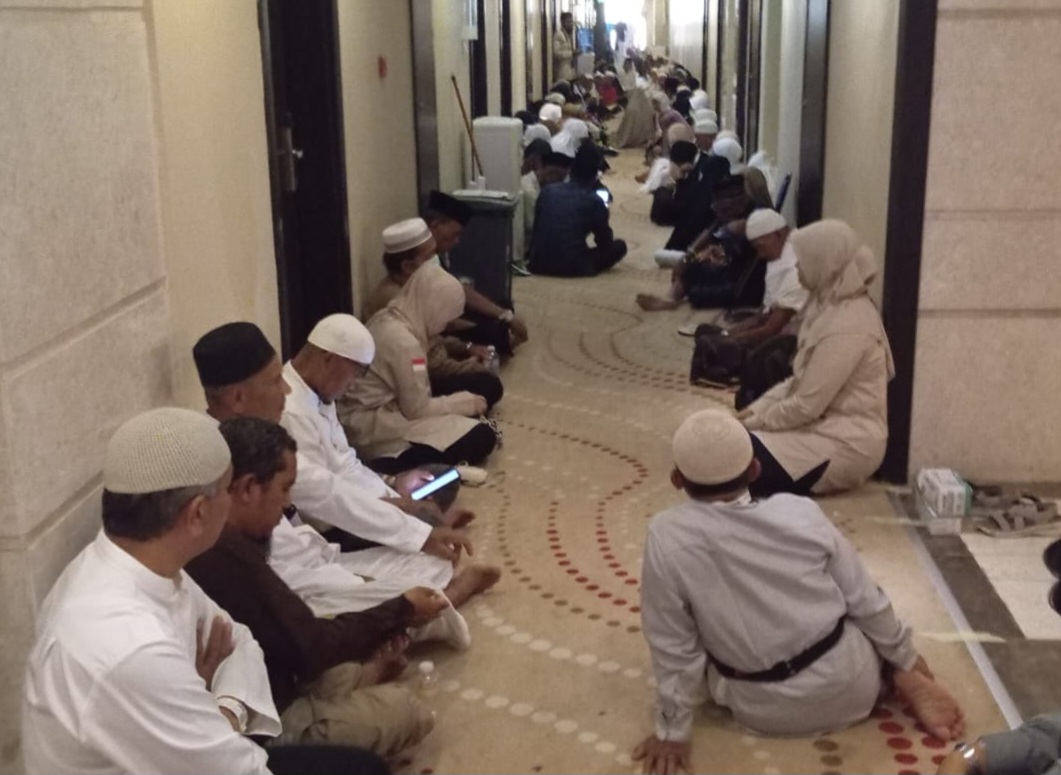
An overwhelming atmosphere of emotion enveloped a hotel in the Aziziyah district of Mecca. Hundreds of pilgrims from Padang’s Kloter 14 group were immersed in prayer and tears during a spiritual guidance session ahead of their departure to Arafah on Sunday (24 May). With the Armuzna phase (Arafah, Muzdalifah, and Mina) imminent, pilgrims’ spiritual preparations became deeply emotional. For them, this moment represents the culmination of a lifelong spiritual journey they have awaited for years. In the corners of the room, a contrast emerged between physical activity and inner calm. Some pilgrims carefully folded their ihram cloths, while others clutched small prayer books, softly reciting dhikr. Others gazed into the distance with hopeful eyes, imagining themselves standing on the plains of Arafah alongside millions from across the globe. Tri Andriani Djusair, the Kloter 14’s spiritual guide, stressed that the journey to Arafah was more than a geographical shift. ‘Armuzna is not merely a physical journey. It is where we knock on the gates of heaven,’ said Tri Andriani, as the pilgrims fell silent. The room grew even more solemn. Arafah is viewed not just as a location on the Hajj route, but as a place where individuals bring all their regrets, sins, hopes, and best prayers. There, social status dissolves; millions of pilgrims stand in identical attire, without titles or positions. Tri Andriani also reminded the pilgrims that the Wukuf (standing) at Arafah is the most sacred moment. ‘At the plains of Arafah, millions gather in the same garments, seeking forgiveness through tears of remorse and knocking on heaven’s gates with their finest prayers,’ she added, her voice trembling. Before the maktab buses arrived to transport the group to Arafah, pilgrims were guided to solidify their spiritual preparations. The focus that night was not merely on physical rituals such as trimming nails or ritual bathing, but on purifying the soul. Pilgrims were led in collective istighfar (seeking forgiveness), followed by the shahada (declaration of faith), salawat (blessings upon the Prophet), and dhikr. This was to ensure past mistakes did not hinder the prayers offered at the Hajj’s peak. ‘Cleanse the heart before uttering the intention. It is not just the body that must be pure, but the heart must be open and sincere,’ Tri Andriani advised. The spiritual guidance also addressed female pilgrims experiencing shar’i excuses or menstruation. Tri Andriani affirmed that their biological condition does not diminish their right to attain a mabrur (accepted) Hajj. ‘They can still make the intention from the hotel, with the restriction of not performing prayers or tawaf,’ she explained to reassure worried pilgrims. As the collective declaration of ‘Labbaikallahumma labbaik’ (Here I am, O Allah, here I am) echoed through the room, the hotel’s atmosphere transformed into profound sanctity. With the Hajj intention spoken, all ihram prohibitions officially took effect for each pilgrim. Officials stressed strict self-discipline, particularly avoiding foul speech (rafath), sinful acts (fusuq), and disputes (jidal). Given the physical challenges at Arafah and Mina, pilgrims were also urged to look out for one another, especially the elderly in their group. With hearts prepared and souls purified, Padang’s Kloter 14 pilgrims now stand ready to depart for Arafah, prepared to receive forgiveness and knock on heaven’s gates with millions of hopes. (YH/E-4)