
Emergency Response to Caesium-137 Contamination Declared Complete
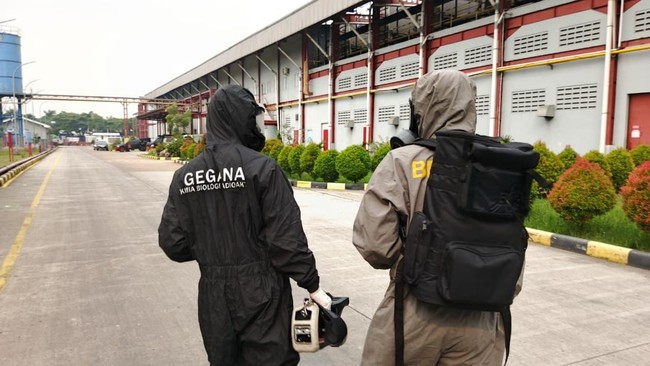
Jakarta, CNBC Indonesia — The Indonesian Government has officially announced that the emergency response phase to Caesium-137 (Cs-137) contamination has concluded. Coordinated efforts by multiple ministries and agencies over the past year have delivered significant results in environmental recovery, public health protection and stronger food-safety assurances for international trade partners.
Bara Krishna Hasibuan, head of diplomacy and public communications for the Task Force for Handling the Cs-137 Radionuclide Radiation Hazard, represented the Coordinating Minister for Food Affairs, who chairs the task force. He expressed his highest appreciation to task force members, including the Ministry of Environment, the National Research and Innovation Agency (BRIN), the Nuclear Energy Regulatory Agency (BAPETEN), the Ministry of Marine Affairs and Fisheries, the National Agency of Drug and Food Control (BPOM), the Ministry of Health, the Ministry of Industry, the Ministry of Trade, the Indonesian National Armed Forces and National Police, local governments, and the management of the Modern Cikande Industrial Estate (KIMC), for their hard work and exceptional coordination.
“The Government confirms that Indonesian food is safe. Every shipment of spices and shrimp to the United States undergoes radiation screening and testing at accredited laboratories before export. KIMC has also been declared a safe zone,” Bara said in an official statement on Tuesday (27 October 2026).
He said the announcement marked an important moment in restoring international confidence.
“We affirm that ‘our food is safe to consume’. This emergency response has been completed through close cooperation between the task force, representing the Indonesian Government, and the US Food and Drug Administration (USFDA), the competent authority of the United States,” he said.
Although the emergency phase has ended, the task force said follow-up measures would continue within the respective mandates of each agency. The main achievements include:
1. Response to Cs-137 contamination at the Modern Cikande Industrial Estate
Over the past year, the task force has continuously conducted radiation surveys, decontamination and environmental monitoring at KIMC and within a radius of up to 5 kilometres. Following inspections by BRIN and BAPETEN on 24 September 2026 at 12 affected locations, radiation dose rates were found to be below the threshold, with no new contamination detected.
The area has been declared under control (“clean and clear”), allowing industrial activity to return to normal. Ongoing monitoring includes installing Radiation Portal Monitors (RPMs) at the estate’s gates, strengthening the requirement for relevant industries to use Continuous Emission Monitoring Systems (CEMS), and securing contaminated material at the temporary storage facility of PT Peter Metal Technology (PMT).
Tests of food products from industries within 5 kilometres of PT PMT found levels below the threshold.
2. Health response for potentially affected residents
The Ministry of Health has examined 9,950 people. Internal Cs-137 contamination was detected in 11 people through Whole Body Counter (WBC) examinations. All have received treatment with Prussian Blue and health monitoring, and their condition has been reported as good.
No new cases have been found to date. The Government is continuing to strengthen facilities for examinations and ongoing public health monitoring.
3. Response to contamination in South Lampung
The source of exposure in Penengahan District has been controlled by encasing it in concrete, bringing the dose rate below the threshold. Inspections of gardens, a clove warehouse and commodities including coffee, cocoa, areca nut and long pepper found no Cs-137 contamination.
4. Law enforcement measures
On 13 August 2026, the Ministry of Environment/Environmental Control Agency (KLH/BPLH) filed a civil lawsuit against PT Peter Metal Technology and PT The New Asia Industrial Estate, the industrial estate manager, over alleged pollution and environmental damage linked to the management of hazardous and non-hazardous waste and Cs-137 contamination.
The lawsuit, based on the polluter-pays principle and strict liability, was registered at the Serang District Court and remains at the mediation stage, which is due to run until 29 October 2026. Separate criminal proceedings relating to the case are also continuing.
Meanwhile, a former PT PMT director, named as a suspect by the Criminal Investigation Agency of the National Police, is currently standing trial at the Serang District Court in Banten.
5. Safeguarding continued shrimp and spice exports
The Indonesian Government is assuring the safety of shrimp and spice exports to the United States through testing and the issuance of Shipment-Specific Certificates (SSCs) by the Ministry of Marine Affairs and Fisheries’ Marine and Fisheries Product Quality Assurance and Inspection Agency (BPPMHKP), and BPOM. The two bodies have been appointed by the USFDA as certifying entities.
In November 2025, the task force conducted diplomatic outreach to convince the USFDA, the Department of Energy (DoE), US Customs, buyers and importers’ associations that Indonesian shrimp and spices were safe to consume.
In May 2026, the task force facilitated a USFDA visit to Indonesia to conduct an in-country assessment of the two certifying bodies, shrimp and spice processing facilities, and three laboratories. The USFDA found that BPPMHKP and BPOM substantially met certification requirements and, on that basis, decided to retain their appointment as official certifying entities.
The mechanism has established a new standard for meeting US export requirements. Results include:
Between October 2025 and September 2026, the Ministry of Marine Affairs and Fisheries issued Cs-137-free certification for 6,291 containers of shrimp, totalling 95,438 tonnes and valued at Rp16 trillion (US$933 million).
Between November 2025 and September 2026, BPOM issued Cs-137-free certification for 835 spice shipments, comprising 1,235 containers and valued at Rp48 trillion (US$2.7 billion).
All these products, accompanied by Cs-137-free certificates, have entered the US market, with no rejections by the US Government. The task force said this demonstrates its commitment and the effectiveness of Indonesia’s certification system in ensuring food safety and continued access to the US export market.
6. Preventing a recurrence
The Ministry of Industry has made it mandatory for imported steel scrap to be accompanied by evidence that it is free from radioactive and hazardous substances. It has also required commitments to install CEMS and RPMs at steel-smelting industrial sites.
The Ministry of Industry will issue a ministerial regulation on preventing and handling radioactive-substance contamination in industrial facilities and industrial estates.