
Emergency Go-Bag Alert Sparks Debate: What Japan, South Korea and Indonesia’s BNPB Recommend
Jakarta, CNBC Indonesia — Emergencies can happen at any time. Recently, dozens of countries around the world have formally urged their citizens to prepare essential supplies for emergencies. In total, 35 countries have asked residents to stock up on food, water and medicines.
Citing Newsweek, The Nation and Anadolu Agency on Saturday (7 November 2026), the global calls are linked to threats of war, extreme weather and cyberattacks.
Countries have begun issuing preparedness advice with different levels of urgency and timeframes. Japan is among those taking emergency measures.
On 2 November, Japan’s newly established National Disaster Management Agency issued an urgent advisory urging households to secure their furniture, stock at least three days’ worth of food and water — preferably enough for a week — and identify the nearest evacuation shelter.
Both campaigns are part of broader efforts to encourage households to prepare for a range of emergencies, rather than being responses solely to signs of an imminent threat.
South Korea also has emergency preparedness guidelines covering natural disasters and wartime situations.
The latest emergency preparedness handbook from the Ministry of the Interior and Safety, published in August, identifies preparing a survival backpack as one of four key precautionary measures for households.
Similar recommendations have appeared in government guidance since 2019, suggesting that recent online interest has drawn attention to established preparedness practices rather than entirely new precautions.
Under the ministry’s 2026 guidance, South Korean households are advised to prepare emergency supplies including bottled drinking water, ready-to-eat food, essential medicines, a torch, a battery-powered radio, hygiene products and blankets.
The guidance also includes protective equipment such as gas masks, raincoats, rubber gloves and boots, reflecting South Korea’s need to prepare for a range of emergencies, including military attacks.
However, official preparedness advice does not suggest that households need to spend millions of won on specialised survival equipment. Other recommendations include keeping important documents readily accessible, recording emergency contact numbers and making arrangements for family members who may need additional assistance. In South Korea, authorities also recommend identifying the nearest emergency shelter in advance; residents can find shelters through the government’s Emergency Ready app.
In Indonesia, meanwhile, the National Disaster Management Agency (BNPB) has urged the public to be alert to potential hydrometeorological disasters caused by heavy rain accompanied by lightning, strong winds or tornadoes, floods and landslides.
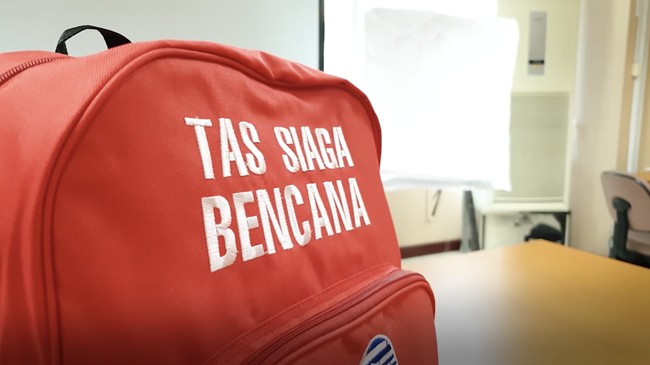
The BNPB has reminded residents to remain prepared and pack a bag for disaster emergencies. A Disaster Preparedness Bag is a waterproof bag prepared by family members in case a disaster or other emergency occurs. It is intended to help people survive until assistance arrives and make evacuation to a safe place easier.
According to the BNPB’s disaster preparedness pocket guide, the following basic supplies for three days should be included in the bag:
Important documents, such as land certificates, vehicle registration documents, diplomas, birth certificates and other essential papers.
Three days’ worth of clothing, including underwear, trousers, a jacket, a blanket, a towel and a raincoat.
Long-lasting snacks, such as instant noodles, biscuits, shredded meat and chocolate.
Drinking water sufficient to meet needs for approximately three days.
A first-aid kit and personal medicines, including wound treatment, common medicines and any prescription drugs regularly taken.
Lighting equipment, such as a torch, head torch, matches and candles.
Enough cash to cover supplies for approximately three days.
A whistle to call for help if trapped in a dangerous or emergency situation.
A mask to help filter dirty or polluted air.
Toiletries, such as soap, a toothbrush, toothpaste, a comb and cotton buds.
A radio or mobile phone, together with a charger and spare battery or power bank, to monitor disaster information and communicate.
The BNPB also highlighted several protective measures people should know:
Assess the situation: identify the type of disaster and the conditions around you.
Decide whether to stay or move: in some situations, people may need to remain where they are; in others, they should relocate.
Make the decision carefully: if you are not in immediate danger, stay put and seek the latest information. If you need to move, decide quickly. It is essential to follow instructions from local authorities.
Find clean water and ensure you can breathe: clean air is essential in any disaster. Protect yourself and seek fresh air, covering your mouth with a cloth or mask if necessary.
Protect yourself from debris and signal rescuers: if trapped under rubble, find a space to breathe. Throw something or blow a whistle to attract help, and try to make noise with objects nearby.
Maintain hygiene: ensure access to safe drinking water and sanitation.
Source: jawawa.id (https://jawawa.id/newsitem/emergency-go-bag-alert-sparks-debate-what-japan-south-korea-and-indonesias-bnpb-recommend-1794034246)
Originally published by CNBC Indonesia (https://www.cnbcindonesia.com/news/20261107085740-4-783148/heboh-perintah-siaga-tas-darurat-ini-isinya-versi-jepang-korsel-bnpb), translated from Indonesian