
Embracing 'Green Jobs' for Indonesia
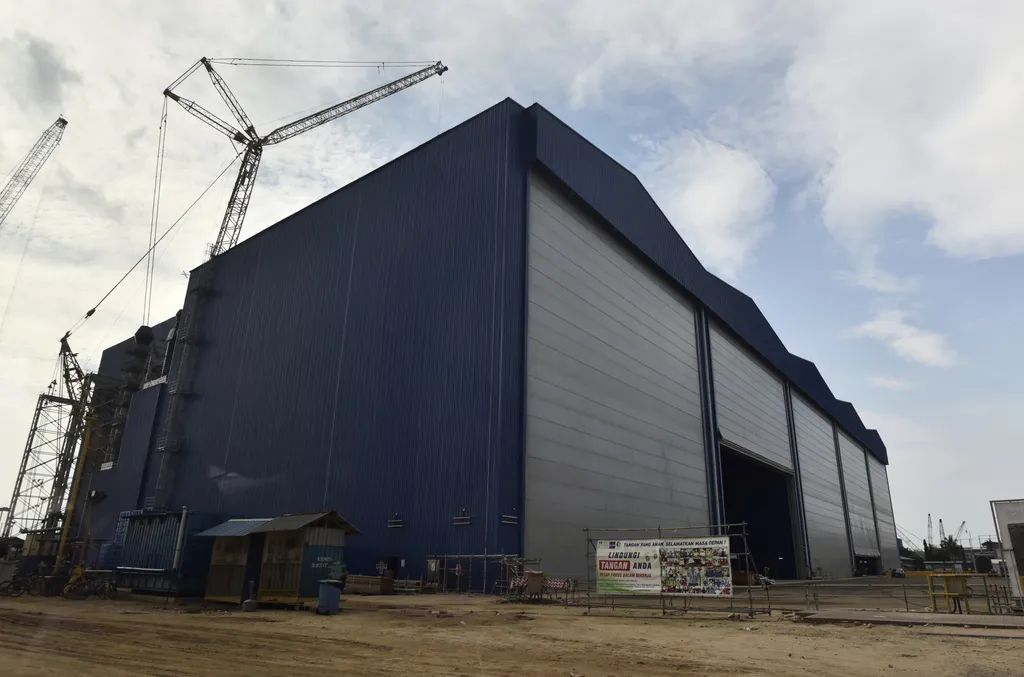
Kota Batam, Kepulauan Riau, has now entered the global energy transition supply chain. The presence of an international company manufacturing transmission devices to supply global clean energy business needs is tangibly creating environmentally friendly or green industrial sector jobs in Indonesia. Indonesia’s important role in the global clean energy supply chain was marked by the inauguration of the Cakrawala and Nusantara Buildings owned by McDermott Indonesia in Batam by the Minister of National Development Planning, Rachmat Pambudy, on Thursday (28/5/2026). This facility will produce converters to be sent to Germany for a 2 gigawatt high voltage direct current (HVDC) transmission project, part of the development of an offshore wind power plant in the North Sea, Europe.
The presence of McDermott Indonesia’s fabrication facility essentially opens up green job opportunities. According to the International Labour Organization (ILO), green jobs are decent jobs that contribute to preserving or restoring the environment. This contribution includes traditional sectors like manufacturing and construction, or new and developing green sectors such as renewable energy and energy efficiency. This job opportunity is illustrated by the project carried out by McDermott in Batam. McDermott Vice President Commercial HVDC Jason Williams explained that the construction project for the Cakrawala and Nusantara Buildings alone has absorbed nearly 4,000 workers, both from the Batam area and outside Batam. The presence of this project is expected to help reduce the unemployment rate.
McDermott Senior Vice President Low Carbon Solutions Rob Shaul added that the existence of the Cakrawala and Nusantara Buildings and the 2 GW HVDC project is projected to absorb around 4,500 workers annually. In fact, its economic impact is not limited to direct labour absorption. The economic impact will also be felt in the hospitality, accommodation, and culinary sectors. These sectors also reap economic benefits from the presence of McDermott’s project. This investment simultaneously opens up opportunities for follow-up projects in the coming years.
Rachmat stated that investments like the one made by McDermott are not just about building production facilities. More than that, this investment helps build an ecosystem, one of which is a skills ecosystem. Therefore, Indonesia greatly welcomes this kind of investment. The government hopes more companies will come to Indonesia not only to sell products, but also to build partnerships, transfer knowledge, create job opportunities, and grow together with the local community. He said what McDermott is doing in Batam can serve as an ideal investment model in Indonesia, not only because of the size of the investment, but also due to long-term commitment, local workforce development, industrial development, and improving community welfare.
Kepulauan Riau Governor Ansar Ahmad revealed that Kepulauan Riau is the second province in Indonesia to have completed an economic transformation roadmap. One of its focuses is preparing human resources oriented towards the job market and future technology, including in the green jobs sector. Therefore, Kepulauan Riau is developing more vocational-scale education. The concept is 70 percent vocational high schools and 30 percent senior high schools. The Kepulauan Riau Provincial Government will continue to synergise with district/city governments, the central government, and the Batam Concession Agency. Ansar hopes that strategic investments like those made by McDermott will continue to grow and develop in his region. Moreover, Kepulauan Riau has a very strategic geo-economic advantage as it directly borders the important trade route in the Malacca Strait. Every year, around 80,000 ships and 70 million containers pass through these waters. With this strategic position, Batam will always be a main attraction for investors.
He also believes that Batam has a very promising future. Strategic location, industrial capacity, logistical connectivity, and workforce quality give Batam a competitive advantage to emerge as one of the most important green industry centres in the region. Going forward, Batam is projected to play a much more crucial role in the global economy. This target can be achieved through proper planning and policy, as well as solid collaboration between the central government, local government, and national and international industry players.
A 2021 International Energy Agency (IEA) report titled ‘Net Zero by 2050: A Roadmap for the Global Energy Sector’ stated that supporting infrastructure and technology have a vital role in efforts to transform the global energy system. Annual investment in electricity transmission and distribution networks is projected to increase sharply, from around US$260 billion currently to US$820 billion by 2030. Furthermore, the report emphasised that raising capital for large-scale infrastructure development requires closer cooperation between project developers, investors, public financial institutions, and governments.