
Elon Musk Summoned by Pentagon to Design Future American Warfare
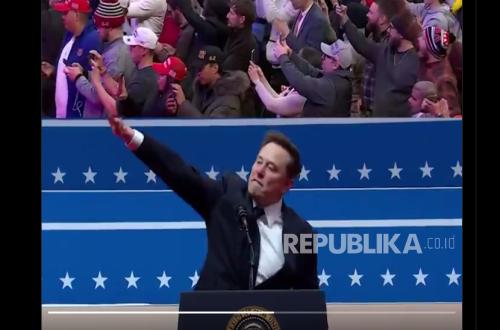
The Pentagon has partnered with three figures from the American technology and political worlds to map the face of future warfare. Elon Musk, Palmer Luckey (founder of Anduril Industries), and former US House Speaker Newt Gingrich have been appointed as co-directors of Project Meridian, a 120-day study that will determine which technologies and military capabilities will be deemed necessary for America in the wars of the coming decades.
US Secretary of Defense Pete Hegseth announced Project Meridian during his State of the Force speech at Marine Corps Base Quantico, Virginia, on Wednesday (30/09/202<0xC2>6). The study will cover everything from artificial intelligence, autonomous systems, and robotics to potential forms of warfare spanning from underground environments to cislunar space—the region between the Earth and the Moon.
The Pentagon has given the group only 120 days. The final results will be presented in a non-classified report released to the public, accompanied by classified appendices containing sensitive sections vital to US defence interests.
“The best forecasters regarding future conflicts do not only reside within the Pentagon,” said Hegseth. He noted the risk involved when a defence institution acts as the party that both poses the questions and provides all its own answers.
Consequently, Project Meridian deliberately brings actors from outside the defence bureaucracy into the heart of American military technology planning. The Pentagon aims to incorporate the perspectives of innovators, business leaders, technologists, policymakers, and national security experts to envision battlefields that do not yet exist.
However, Hegseth emphasised that Project Meridian is not a new agency for creating war doctrine or defence policy. Its task is more specific: to identify future domains of combat, the capabilities that must be mastered, and the weapon systems that need to be developed, tested, and prepared for use.
From Underground to the Moon
The scope of Project Meridian is designed to be very long-term. The Pentagon is not only asking the team to estimate military needs for the next few years, but also for technologies that may be required by the next generation.
Hegsetting described the scope as extending “from beneath the Earth to beyond the Moon”. In defence terminology, the study encompasses conventional battlefields as well as new environments increasingly influenced by artificial intelligence, space technology, robotics, autonomous systems, directed energy, and biotechnology.
Project Meridian will be facilitated by Pentagon Chief Technology Officer Emil Michael, who also serves as the Under Secretary of Defense for Research and Engineering. He is tasked with connecting the external team with the research and development structures within the Pentagon.
Musk, Luckey, and Gingrich bring very different backgrounds. Musk leads SpaceX, a company that has become an essential part of America’s national security launch and satellite systems. Luckey founded Anduril, a defence technology company that builds drones, autonomous systems, anti-drone systems, and various next-generation weaponry platforms.
Meanwhile, Gingrich brings political and policy experience. The Republican politician led the US House of Representatives from 1995–1999 and, after leaving Congress, has remained active in discussions regarding technology, national security, and artificial intelligence.
This combination demonstrates a shift in how the Pentagon views defence innovation. The US government is increasingly attempting to draw technology from private companies into the military sphere, rather than relying solely on traditional defence contractors and procurement processes that can take years to complete.