
Elon Musk Said to Have Restricted Starlink in Ukraine: Can a Billionaire Determine the Course of a War?
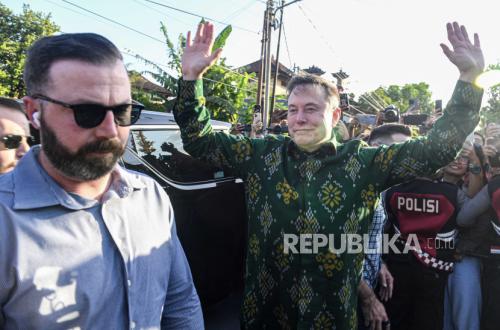
Military strength in a war is no longer determined solely by the number of troops, weapons or ability to control territory. Reliance on satellite communications technology has placed private companies in a strategic position from which they can influence the course of military operations.
The issue has resurfaced after reports that US technology billionaire Elon Musk ordered restrictions on satellite services used by Ukrainian forces fighting Russia’s invasion.
The US newspaper The Wall Street Journal (WSJ) reported on Tuesday (20 October 2026) that Musk had ordered the throttling of military-grade satellite communications services developed by his company, SpaceX, for Ukraine. The restrictions were said to have disrupted the operation of attack and interceptor drones, which are an important part of Ukraine’s defence.
The WSJ report was based on accounts from several US officials and people familiar with the decision-making process. According to those sources, Musk restricted the speed at which Ukrainian military devices could move while maintaining a connection to SpaceX’s satellite network.
CBS News, in a separate report on the same day, also cited sources who said Musk’s decision had restricted Ukraine’s use of the satellite communications network.
Reuters reported that Musk, SpaceX and the White House did not immediately respond to its requests for comment on the latest findings.
The controversy raises questions about the limits of a business leader’s influence over decisions concerning a country’s security. The issue is further complicated by differing accounts from Musk, the US government and several defence officials about who was responsible for the service restrictions.
Ukrainian drones lose connection during military operations
Ukrainian forces had reported the effects of the satellite communications restrictions since 14 October 2026. Reuters reported that day that some Starlink devices used in military operations had experienced connection problems, particularly when installed on fast-moving drones.
Serhii Beskrestnov, an adviser to Ukrainian President Volodymyr Zelenskyy on defence technology, said the service restrictions affected devices moving at speeds above 160 kilometres per hour. He said they had been imposed without prior notice to Ukraine’s military, disrupting some operations.
Ukraine’s Seventh Rapid Response Corps also reported connection problems with slower-moving drones. In a statement cited by Reuters, the unit said connections could drop for 10 to 20 seconds when drones were flying at about 110 to 120 kilometres per hour.
The communications disruption made it difficult for operators to maintain control of drones on missions. Some operations had to be cancelled because the devices could not sustain the connection needed to continue flying.
In the Russia-Ukraine war, drones are used for a range of purposes, from reconnaissance and monitoring troop movements to attacking enemy positions and logistics routes. Ukraine also uses interceptor drones to counter Russian unmanned aircraft, including high-speed Shahed variants.
The speed restriction is a serious problem because interceptor drones must move fast enough to pursue their targets. If communications equipment cannot maintain a connection as a drone accelerates, the effectiveness of air-defence systems may be reduced.
In an interview with the Associated Press (AP) on Friday (16 October 2026), Beskrestnov said Ukraine was in talks with SpaceX, the Pentagon and the US government to resolve the issue. He said SpaceX had fixed temporary connection problems that emerged at the outset, but the speed restrictions remained in place.
The distinction between restoring the connection and lifting the speed limit is important to understanding the latest developments. A service that was disrupted may resume operating, while its use by high-speed drones may not have been fully restored.
On Tuesday (20 October 2026), Zelenskyy again said that Starshield’s service speed restrictions remained in force. In an AP report, the Ukrainian president said they continued to hamper military operations, although some earlier communications problems had improved.
Who ordered the Starshield restrictions?
There is no single agreed account of who was responsible. In an investigation published on 16 October 2026, Reuters reported that the instruction to restrict Starshield services for Ukraine had come from within the White House.
The report cited two US officials and a Western official who had been briefed on the matter. According to the three sources, senior Pentagon officials had received a message that Starshield services for the Ukrainian military should be throttled.
The sources did not identify the White House official who issued the instruction or the party that implemented it. A senior US official also denied that President Donald Trump had ever given such an order.
Trump himself said he was not responsible for the satellite communications restrictions affecting Ukraine. Speaking to reporters on Friday (16 October 2026), he also questioned whether Musk had caused the disruption.
US Secretary of State Marco Rubio gave a different account on Saturday (17 October 2026). Rubio denied that the White House had ordered Starlink services to be slowed and said the US government had not deliberately caused the communications disruption.
Rubio went further, saying that nobody in the US government had ordered a reduction in service speed. His statement contradicted information Reuters had obtained from sources who said an instruction had come from within the White House.
US Defence Secretary Pete Hegseth also denied issuing such an order on Tuesday (20 October 2026). He said the Pentagon had not instructed anyone to withdraw or reduce satellite communications services for Ukraine.
Hegseth said that use of the service remained subject to the terms agreed between provider and customer. SpaceX had authority to make decisions about its service terms, he said, while the Defence Department had issued no direction to restrict Ukraine’s access.
Musk, meanwhile, said that Starshield’s operation was under the authority of the US government. In a post on the X platform, he said decisions about restricting the speed or use of Starshield were made by the US military and ultimately fell under the president’s authority.
Musk’s comments have fuelled debate about the relationship between private companies’ decisions and government policy. By contrast, the latest investigations by the WSJ and CBS News point to Musk’s involvement in the decision to impose the restrictions.
As of 21 October 2026, there was no public account reconciling the conflicting versions of who made the final decision. The information available was also insufficient to establish whether the restrictions were based entirely on technical considerations, contractual terms or a political decision.