
Elon Musk Brings New Disaster, This Profession Is Threatened with Extinction
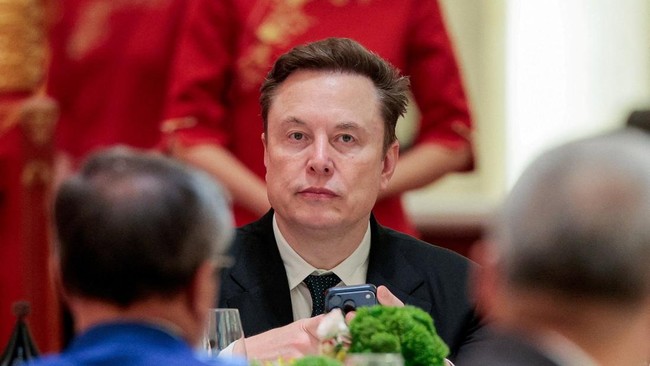
The taxi driver profession in Las Vegas, United States, is facing a serious threat. The Nevada Transportation Authority has officially given the green light for thousands of driverless taxis (robotaxis) from various service providers to begin operating in the region.
Operating permits were granted to Tesla, Uber, and Waymo in Clark County. The three robotaxi service providers are allowed to deploy up to 8,000 autonomous vehicles (AVs) across the area over the next 12 months, as reported by TechCrunch on Friday (21/8/2026).
Tesla, the company owned by billionaire Elon Musk, received the largest fleet allocation with permission for up to 5,000 robotaxi units. Meanwhile, Waymo and Uber were each allocated around 1,000 units.
In its operations, Uber will distribute robotaxis through partnerships with Hyundai subsidiary Motional and Zoox. Zoox itself has also obtained a permit from the autonomous vehicle network to deploy 100 fleet units.
However, the three companies appear unable to immediately deploy robotaxis at full scale. Tesla said it would likely only be able to provide around 2,500 units next year.
“We are not in a position to deploy 5,000 vehicles at once next year, and that is not due to a technology problem,” said Eric Early, Tesla’s Chief Engineer for the Cybercab.
“We would be very pleased if we could reach 2,500 units, or perhaps slightly higher, within the next year,” he added.
Even if the 8,000-unit quota is not fully met and only half is realised, Clark County is certain to remain a major battleground for the robotaxi service giants.
This situation is predicted to significantly change the employment landscape in the city. On one hand, the new industry could create new jobs in vehicle maintenance. On the other hand, the potential for layoffs of conventional taxi drivers is unavoidable.
The operating permits have drawn strong opposition from the Public Transport Operators Association and several local taxi companies. Both parties consider the permits to have been issued hastily.
Maxson-Rushton, a lawyer representing the Public Transport Operators Association, said the permits raise two main concerns: the risk of saturation in the commercial transport industry and the potential for severe traffic congestion, particularly in the Golden Triangle area, which is often used as a testing location for autonomous vehicles.