
Eleven Electric Buses to Support Environmentally Friendly Public Transport in Bali
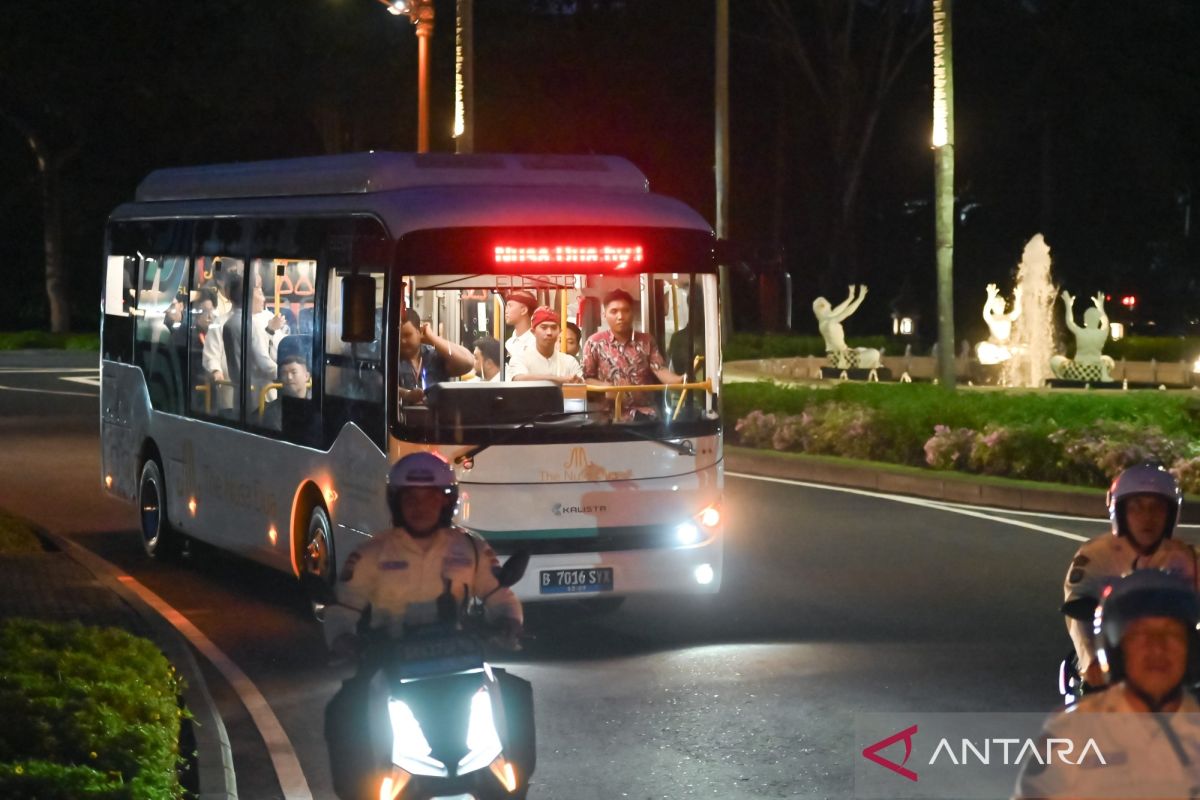
Jakarta (ANTARA) – Eleven electric buses have been launched to strengthen comfortable, efficient and low-emission public transport services in Bali. The move is a concrete effort to encourage the use of public transport for everyday journeys while supporting emissions reduction. The launch of the 11 buses, equipped with six fast chargers and a Fleet Management System to monitor bus and charger operations, is part of the Bali E-Mobility project.
The project is a collaboration between the Government of Indonesia, represented by the Ministry of National Development Planning (Bappenas), and the Government of the Republic of Korea, represented by its Ministry of Climate, Energy and Environment. Bappenas serves as the executive agency, while the Ministry of Transportation and the Ministry of Energy and Mineral Resources are the implementing agencies. The Bali Provincial Government is the beneficiary, and the Global Green Growth Institute (GGGI) is the project’s implementer.
Minister of National Development Planning and Head of Bappenas Rachmat Pambudy stressed that electrifying public transport is part of the transition towards low-carbon development and a green economy. “The Bali E-Mobility project is concrete proof of the strength of collaboration with the Global Green Growth Institute. It is a real example of the energy transition: a policy-based, evidence-based project that is ready to be replicated gradually throughout the archipelago,” Minister Rachmat Pambudy said in Bali on Thursday (22 October).
The use of electric public transport not only shifts dependence away from fossil fuels towards cleaner energy, but also improves national efficiency and boosts public productivity. This is an important foundation for preparing Indonesia’s economic transformation, in line with the 2025–2029 National Medium-Term Development Plan (RPJMN).
South Korean Ambassador to Indonesia Yoon Soon-gu said the launch reflected the climate and technology partnership that Korea and Indonesia had developed over many years.
“The launch of these electric buses is the result of the climate partnership and technological cooperation built jointly by Korea and Indonesia,” he said. “We hope Korea’s experience in green transport and related policies can support Bali’s transition to a low-carbon transport system, while paving the way for closer climate cooperation between the two countries.”
For Bali, the new fleet is expected to improve everyday mobility while supporting the island’s electric vehicle targets. Bali Governor Wayan Koster welcomed the new buses as part of the province’s efforts to expand clean transport while preserving the island’s environment. “The electric buses will provide cleaner and more comfortable public transport for the people of Bali,” Koster said. “We will continue to accelerate the use of clean energy, the adoption of electric vehicles and other environmental initiatives to keep Bali clean, healthy and sustainable, for residents and visitors alike.”
GGGI Indonesia Country Representative Rowan Fraser said the launch was about more than putting 11 electric buses on the road. “Today’s launch is not just about eleven electric buses. It is the starting point for a broader transition to green transport, beginning in Bali, expanding across Indonesia and ultimately reaching South-East Asia,” Fraser said.
“GGGI will continue to bridge government and the private sector, and bring together policy, technology and investment so that Bali’s experience can develop into a model for public transport electrification that can be applied in other regions of Indonesia,” he added.
The 11 electric buses will operate on Trans Sarbagita Corridor 1, covering a 53-kilometre return route with 56 stops and connecting GOR Ngurah Rai and Garuda Wisnu Kencana (GWK) via Udayana University. One bus is designed to accommodate wheelchair users as part of efforts to provide a more inclusive service. The bus chassis were manufactured in South Korea, while the bodies and interiors were completed in Indonesia by coachbuilder Laksana.
The collaboration demonstrates opportunities for cross-border cooperation as well as the role of domestic industry in developing electric mobility. The project also includes six 100 kW Chaevi fast chargers at two locations. Three are installed at the Bali Provincial Transportation Agency depot for overnight charging, and three at GOR Ngurah Rai to support daily operations. A Fleet Management System (FMS) will support the operation of the buses and charging facilities.
The public is encouraged to take part in this change by using public transport, planning journeys more efficiently and choosing more environmentally friendly modes of travel. Every journey on reliable, high-quality public transport is a shared step towards reducing emissions, protecting air quality and leaving a more sustainable Bali to future generations.
Source: jawawa.id (https://jawawa.id/newsitem/eleven-electric-buses-to-support-environmentally-friendly-public-transport-in-bali-1792680883)
Originally published by Antara (Indonesian) (https://www.antaranews.com/berita/5805871/sebelas-bus-listrik-untuk-mendukung-transportasi-publik-ramah-lingkungan-di-bali), translated from Indonesian