
Elephant Ivory Trade in Bali Uncovered via Cyber Patrol
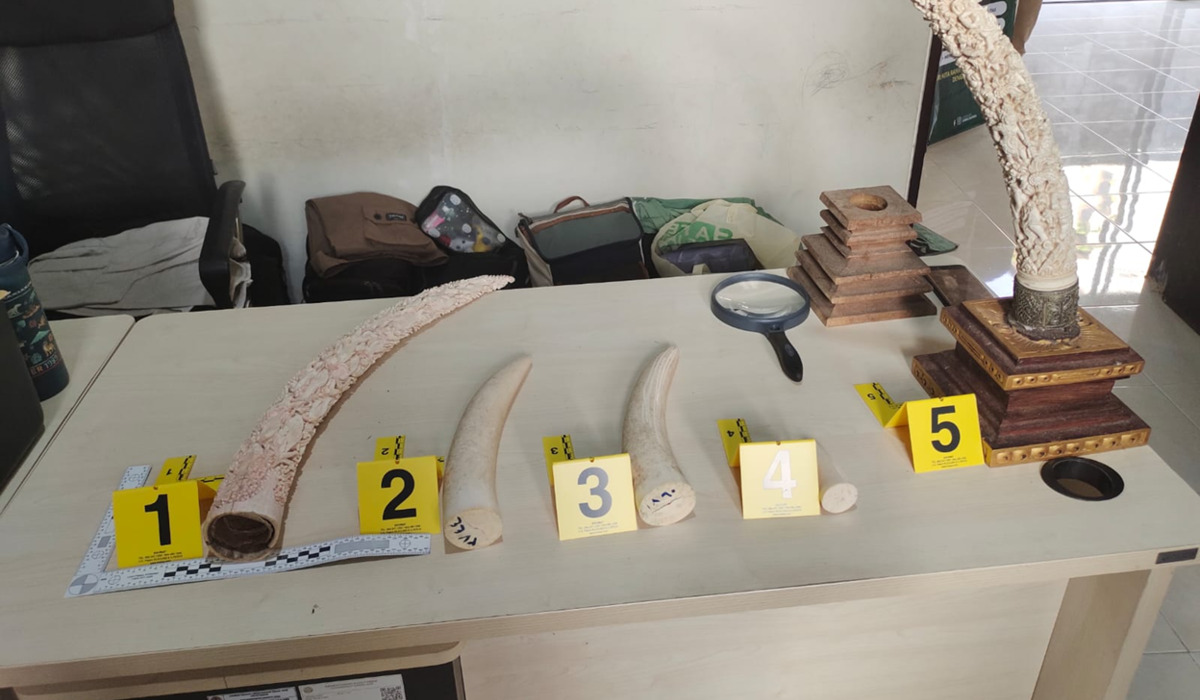
The Ministry of Forestry, through the Directorate General of Forestry Law Enforcement, has successfully finalised the case files regarding the alleged illegal trade of elephant ivory in Gianlar Regency, Bali Province. The case, which originated from monitoring digital spaces, has now been declared complete (P-21) by the Public Prosecutor.
The Director General of Forestry Law Enforcement, Dwi Januanto Nugroho, stated that the trade of protected animal body parts remains prevalent due to market demand from collectors who view these items as economically valuable assets. “The elephant ivory trade is a serious threat to our biodiversity. As long as these items are viewed as ornaments or collections, illegal hunting will continue to have a market. This law enforcement action aims to close the trading space and build public awareness that protected animals are not commodities,” said Dwi Januanto on Tuesday.
The ivory trade case was revealed thanks to the vigilance of the Cyber Patrol Team of the Forestry Law Enforcement Agency (Gakkumhut) for the Java, Bali, and Nusa Tenggara region. Officers discovered Facebook posts offering items suspected to be derived from protected animal parts. Following these findings, the team conducted investigations in the Tampaksiring area of Gianyar. On 14 April 2026, officers performed direct inspections at an art shop, followed by a joint operation with the Bali Regional Police on 15 April 2026.
From two different locations in Gianyar, the team seized several pieces of evidence, including ivory handicrafts, carvings, and ornaments made from protected animal parts, as well as ivory fragments ready for processing. Based on further investigations, investigators have named an individual with the initials IKS as a suspect. The Head of the Gakkumhut Agency for the Java, Bali, and Nusa Tenggara region, Aswin Bangun, explained that proving this case requires extra precision because the evidence has been transformed into artworks. “Investigators must ensure the type of material, the protected status of the animal, and the legal elements of trade. Even if they are in the form of carvings or ornaments, it remains strictly prohibited to trade them under the law,” Aswin emphasised.
The suspect is charged under Law Number 32 of 2024, which amends Law Number 5 of 1990 concerning the Conservation of Biological Natural Resources and their Ecosystems. This regulation strictly prohibits the storage, possession, transport, or trade of specimens or goods made from protected animal parts. The Ministry of Forestry has urged the public to cease purchasing or collecting any parts of protected animals and requested that citizens actively report similar trading practices, whether in physical markets or digital platforms, to protect the nation’s living heritage from extinction.