
Electrification of Routes Strengthens Urban Services on Rangkasbitung, Bogor, and Cikarang Lines
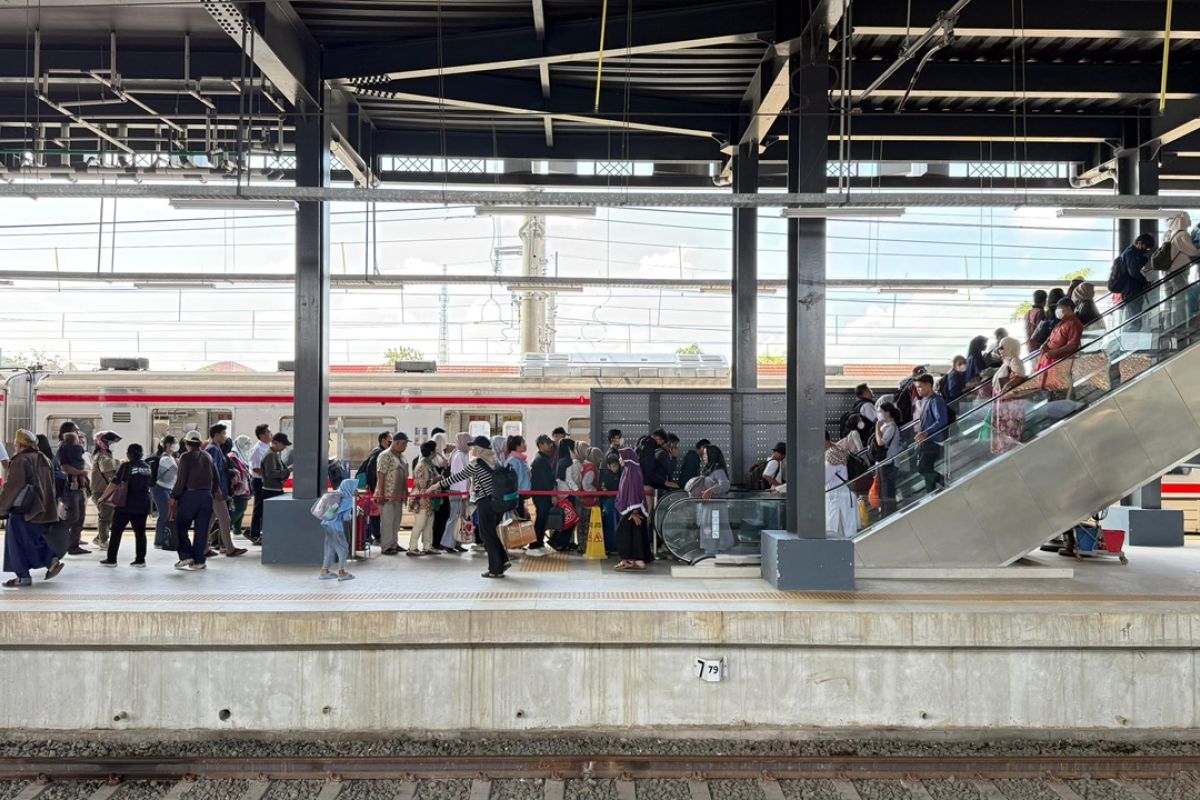
The growing need for mobility underscores the urgency of expanding rail line electrification. Jakarta (ANTARA) - PT Kereta Api Indonesia (Persero) continues to strengthen public transportation services through the development of rail line electrification in urban areas and supporting regions. This step aligns with government policy, where President Prabowo Subianto emphasised that the railway system is one of the national development focuses during the inauguration of the new Tanah Abang Station in Jakarta on 4 November 2025, particularly to provide transportation services that reach the wider community. As residential, industrial, and economic activities develop, public movement expands further and shows a continuously increasing trend year on year. Passenger Movement Evident from the Figures On the Rangkasbitung line, KRL passenger growth shows a consistent increase. In 2022, there were 43,317,716 users, rising to 77,552,716 in 2025. This trend continued into 2026, with 20,197,205 users from January to March alone. Growth is also evident in the Rangkasbitung–Merak local train service. The number of users increased from 3,617,478 in 2023 to 4,463,498 in 2025, and reached 1,134,514 users from January to March 2026. On the Bogor line, the volume of movement is on a much larger scale. The number of KRL users was recorded at 102,054,022 in 2022, increasing to 133,040,885 in 2023, then 145,920,264 in 2024, and reaching 155,009,997 in 2025. Entering 2026, in the first quarter alone, there were 38,203,481 users, indicating a continuing upward trend. This growth also continues to the Bogor–Sukabumi line through the Pangrango train service. The number of users increased from 786,001 in 2023 to 874,789 in 2024, then 1,109,398 in 2025, and reached 281,659 users from January to March 2026. Meanwhile, the Cikarang line also shows consistent growth. The number of users increased from 55,660,235 in 2022 to 71,636,443 in 2023, then 84,426,385 in 2024, and reached 85,936,774 in 2025. From January to March 2026, the number reached 21,717,664 users. This line is also supported by local train services such as Jatiluhur and Walahar, serving mobility in industrial areas up to Purwakarta. KAI Vice President of Corporate Communication Anne Purba stated that these figures illustrate the changing patterns of public mobility that are expanding. “Public movement is expanding further. These numbers show the continuously developing service needs following activities in various regions,” said Anne. Rail Line Electrification Opens Room for Service Strengthening In line with this growth, the ongoing rail line electrification provides space for service strengthening. Trip frequency can be increased, transport capacity expanded, and operational patterns become more flexible to meet needs. This strengthening is carried out through collaboration between KAI and the Directorate General of Railways (DJKA) of the Ministry of Transportation, which has played a role in developing rail line electrification and improving infrastructure. Various efforts have been made, from building double tracks, strengthening integration nodes like Manggarai, to operating larger capacity train sets and tighter headway arrangements. Emission Efficiency Also Visible from the Scale of Movement Amid this volume increase, rail line electrification also has environmental impacts. On the Rangkasbitung line, emission efficiency reaches around 2.69 to 2.83 million tonnes of CO₂e. The Bogor line records efficiency of around 4.16 to 4.37 million tonnes of CO₂e, while the Cikarang line is around 1.37 to 1.44 million tonnes of CO₂e. Overall, these three lines result in emission efficiency of around 8.22 to 8.64 million tonnes of CO₂e. Development Continues Following Growth With the continuing upward trend, service development is directed to reach more areas. The Rangkasbitung line has potential to be extended to Merak, the Bogor line to Sukabumi, and the Cikarang line towards Cikampek. This development is expected to open wider access, strengthen inter-regional connectivity, and encourage the formation of new economic growth nodes. “We continue this development gradually so that services can keep up with public needs. The hope is that journeys become easier to access, more comfortable, and support economic activities in various regions,” Anne concluded.