
Electricity Tariffs Surge 90%, Residents Protest and Factories Face Bankruptcy Threat
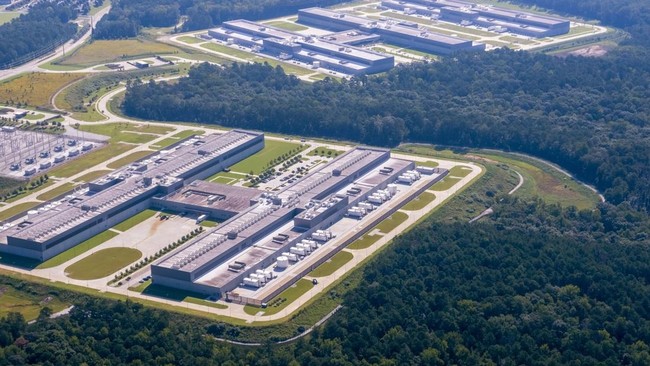
The development of Artificial Intelligence (AI) technology has simultaneously triggered several new crises. The most visible is the global memory chip shortage, which has driven up the retail prices of consumer electronic devices such as smartphones, laptops, and gaming consoles.
Furthermore, an electricity crisis is intensifying in regions with dense large-scale AI data centre infrastructure in the United States. A prime example is Sugarcreek, Ohio. Known as ‘Little Switzerland of Ohio’, the village is experiencing a surge in electricity tariffs due to the high demand for power required by AI data centres. Belden Brick Company, the largest private brick factory in the US, reported that its electricity tariffs swelled by 90% over the past year.
The 141-year-old factory stated that its monthly electricity bills jumped from US$1,600 to US$12,000, according to Reuters. Belden Brick is just one of many US factories experiencing tariff spikes caused by the massive growth of AI data centres.
Reuters noted that electricity bills for factories are increasing faster than those for households or other businesses. This conclusion was drawn from a Reuters study of energy data and interviews with dozens of factories and industry advocates.
Federal, state, and local governments have received public complaints regarding electricity tariffs. Concerns have also emerged regarding the stability of the power grid. Consequently, the government has urged tech giants to pay more for their projected electricity needs.
However, some proposals treat smaller factories the same as tech giants like Meta and Amazon, whose energy requirements can be up to 50 times greater than even large manufacturing companies.
The International Energy Agency projects US electricity demand growth from 2025 to 2030. Data centres are expected to consume 203.4 terawatt-hours (TWh), the largest share of all electricity needs. Industry follows in second place at 62.6 TWh, followed by transport (58.5 TWh), heat pumps (37.8 TWh), cooling (28 TWh), other buildings (22.8 TWh), and remaining sectors (12.9 TWh).
Meta declined to comment, while Amazon did not respond to requests for comment from Reuters.
High electricity tariffs and regulatory uncertainty threaten the future of factories in the US. According to policy experts, this also threatens US President Donald Trump’s ambition to prioritise domestic manufacturing.
Factories may consider raising product prices, experiencing growth slowdowns, or, in some cases, considering relocation to other regions.
Belden Brick has already raised brick prices by 4%, yet profits continue to be eroded. If bills continue to rise, local factories may soon reach their limit in terms of cost-cutting or price increases.
“There will be companies that find themselves in a very critical position,” said a representative from Belden.
The White House stated that Trump has taken steps to ease the burden on the manufacturing sector. This refers to his role in facilitating the signing of a “protection pledge for electricity customers” by tech companies earlier this year, as well as instructions to build more power plants in the PJM region funded by these tech companies.
Supporters of the data centre industry argue that the rapid expansion of this industry is driving long-overdue investment in the US power grid, while highlighting other factors driving cost increases, such as the decommissioning of power plants and transmission capacity constraints.
“The growth of data centres is forcing us to grapple with difficult decisions that we must inevitably face,” said Aaron Tinjum, Vice President of Energy at the Data Center Coalition, an industry association.