
Electricity Supply in Central Java-DIY Surplus, Walhi Claims Mount Ungaran Geothermal Project Lacks Urgency
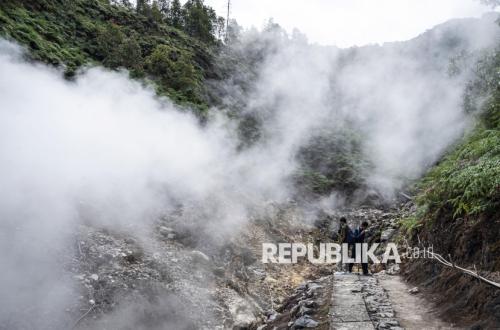
The Deputy Director of the Wahana Lingkungan Hidumn (Walhi) for Central Java Province, Nur Cholis, has revealed that the issuance of geothermal utilisation permits for Mount Ungaran to PT PLN (Persero) lacks urgency. This is because the electricity supply in Central Java and the Special Region of Yogyakarta (Jateng-DIY) remains adequate and even significantly exceeds current requirements.
“Walhi Central Java questions the urgency of issuing such permits, given the current state of the electricity sector in Central Java. Based on 2025 data from PLN UID Jateng-DIY, the electricity system in the region is currently experiencing a surplus. The installed capacity reaches approximately 6,400 megawatts, while the peak load is only around 4,200 megawatts,” Nur stated during an interview on Tuesday (1/9/2026).
He added that this results in a surplus of 2,200 megawatts, or approximately 44.94 per cent. “Given this oversupply condition, we believe Central Java does not yet have an urgent need to add new large-scale power plants, especially in landscapes that are vital to citizens. This policy potentially accommodates investment interests rather than the real needs of the community,” he said.
Nur emphasised that the government can no longer force projects through a top-down approach without listening to the voices of the people. “The rejection of the geothermal project on Mount Lawu proves that the community is highly aware of the importance of preserving mountain ecosystems, which serve as water sources for agriculture and their livelihoods,” he noted.
Nur added that for any development project, the primary foundation must stem from the needs of the people, be designed alongside the people, and must involve Free, Prior, and Informed Consent (FPIC). “The veto rights of local communities over their living spaces must be respected. If the people in the Mount Ungaran area feel that their living space and water sources are threatened, the government is obliged to cancel the project, rather than forcing it through for the sake of investment ambitions,” he argued.
He reminded that energy sovereignty will never be achieved if the approach remains centralised, large-scale, and land-intensive, such as geothermal or coal-fired power plants. “The government must place the people as the primary actors, not merely as victims. Develop small and medium-scale renewable energy potential managed directly by communities, such as micro-hydro or communal solar panels, tailored to the environmental carrying capacity of each village. In this way, energy independence can be achieved without destroying forests, damaging water sources, or seizing the living spaces of the community,” Nur concluded.