
Electricity Resilience as a Pillar of Total Energy Defence
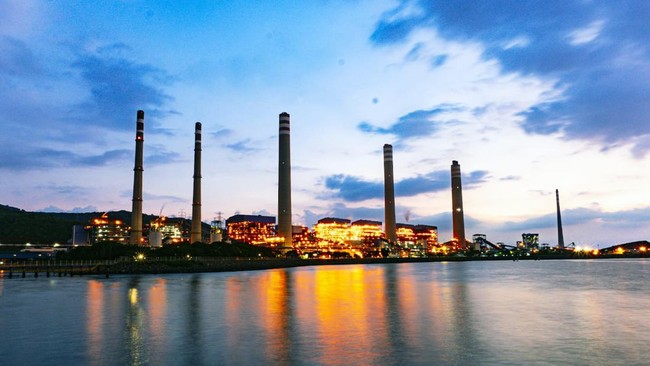
In a modern state, electricity is often considered the nervous system of the nation. When the power is on, water flows, hospitals work, ports operate, data centres hum, and financial transactions proceed. But when a widespread and prolonged blackout occurs, it disrupts not just household lighting but the state’s ability to govern, protect its citizens, and sustain economic activity.
Indonesia must therefore develop a more explicit and realistic national electricity resilience strategy. The country cannot wait for a major crisis to learn that electricity is the centre of gravity of a modern economy. If the grid is disrupted, power plants lose fuel supply, or a major disaster severs critical infrastructure, the state must retain a minimum capability to maintain essential services, mobilise government, and protect strategic economic functions.
This strategy can be built on three main layers. The first is grid strengthening. In a modern power system, the network is as important as the generation itself. Building power plants without a robust grid is like building a port without exit roads. Strengthening transmission, distribution, substations, load control centres, protection systems, and recovery capabilities must be a national resilience priority. Indonesia needs a grid that is not only extensive but also fault-tolerant, with backup transmission paths, the ability to isolate disturbances, and higher reliability standards for strategic areas. Industrial estates, smelters, major ports, refineries, data centres, the capital city, government centres, referral hospitals, clean water installations, and defence facilities must be mapped as critical national loads and not treated as ordinary consumers. The N-1 concept, or even N-2 for the most vital locations, must be seriously considered, ensuring the system continues to operate even if one or two main components fail. This requires investment, but it is far cheaper than the economic losses from a major blackout that paralyses industry, ports, banking, and public services. Grid strengthening must also include digital modernisation, incorporating sensors, automation, real-time monitoring, and rapid recovery capabilities, while treating SCADA systems, control centres, and operational data as critical defence infrastructure with mandatory cybersecurity.
The second layer is strengthening the primary energy supply. Blackouts are not always caused by grid damage; they can occur when power plants lack fuel. Coal may fail to arrive due to bad weather, gas supply can be disrupted by pipeline issues, diesel for isolated island generators may be delayed, and LNG shipments can be held up by global price spikes or logistical bottlenecks. In such cases, the generation assets exist but cannot operate. Electricity resilience must therefore be read in tandem with primary energy supply resilience. Indonesia must ensure that strategic power plants have secure minimum supplies, flexible contracts, alternative logistics routes, and sufficient operational stockpiles. For coal-fired plants, the domestic supply chain must be protected from being undermined by export dynamics. For gas, the integration of domestic production, pipeline networks, LNG, and floating storage regasification units must be designed as a resilience system, not merely a commercial arrangement. For diesel-fired plants on small islands, fuel storage and distribution logistics must be treated as a strategic public service obligation.
The third layer is crisis governance. When a major electricity disruption occurs, the problem is no longer just technical or corporate; it becomes a matter of state. The state must have a clear protocol on who takes command, how decisions are made, how information is disseminated to the public, and how recovery priorities are set. This protocol cannot be created during a crisis; it must be prepared, simulated, and regularly updated. The national electricity crisis protocol must be integrated with the national disaster management system, the national logistics system, the national cyber defence system, and the national defence command structure. In a prolonged blackout scenario, the state must be able to decide which loads are served first, which regions are isolated to protect the wider system, and how to mobilise emergency resources such as mobile generators, floating power plants, and emergency fuel supplies. This requires a clear chain of command, pre-established contracts with logistics providers, and a communication system that remains functional even when the main grid is down.
Indonesia has strong reasons to adopt this perspective. As the world’s largest archipelagic state, located on the Ring of Fire, it has thousands of islands, dispersed load centres, long energy logistics chains, and varying dependencies between different power systems. In Java, the challenge is massive load and national economic dependency. In Sumatra and Kalimantan, it is network integration and support for downstream industries. In Sulawesi, it is the growth of mineral processing and the need for stable power. In Maluku, Nusa Tenggara, and Papua, the issues are distance, weather, logistics, and energy access equity. The 2025-2034 Electricity Supply Business Plan (RUPTL) has set an important direction by planning significant capacity additions, increasing the renewable energy mix, and incorporating storage. This is a commendable foundation, but the strategic challenge ahead is not just adding generation capacity; it is ensuring that electricity remains available when the system is under severe stress. The energy transition must proceed hand in hand with energy resilience. Clean energy is important, but resilient energy is equally vital.
Source: jawawa.id (https://jawawa.id/newsitem/electricity-resilience-as-a-pillar-of-total-energy-defence-1782989572)
Originally published by CNBC Indonesia (https://www.cnbcindonesia.com/opini/20260702165600-14-747615/ketahanan-listrik-sebagai-pertahanan-semesta-energi), translated from Indonesian