
Electricity in 3T Regions Still Prone to Blackouts, IESR Urges Acceleration of Solar Power Plants
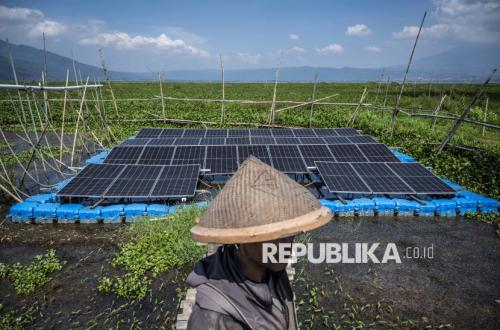
JAKARTA – The Institute for Essential Services Reform (IESR) is urging the government to accelerate the use of solar photovoltaic power plants (PLTS) to reduce dependence on diesel-fired power plants (PLTD), particularly in underdeveloped, frontier and outermost (3T) regions. According to IESR, accelerating solar power is an important step towards improving electricity reliability while supporting national energy independence.
His Muhammad Bintang, Head of Electricity and Energy Storage at IESR, said solar power could serve as a short-term solution in the dedieselisation programme, as the operational costs of diesel plants continue to rise due to fluctuating fuel prices and high distribution costs.
“PLTS is not only a solution for increasing the share of renewable energy, but also an instrument for reducing dependence on diesel plants that are expensive and vulnerable to fuel supply disruptions. With a combination of solar power and batteries, Indonesia has the opportunity to strengthen electricity reliability even in remote regions,” Bintang said during a media briefing on the Indonesia Solar Summit 2026: Solar Power Can Support Electrification and Dedieselisation in Indonesia, on Thursday (9/7/2026).
IESR considers that Indonesia’s electricity challenges are no longer solely about the electrification ratio, but also the quality, reliability and sustainability of electricity supply. In a number of 3T regions, power outages still occur frequently, sometimes several times a day or lasting longer when fuel supplies for diesel plants are disrupted by weather.
According to Bintang, solar power has advantages because it is modular, can be built close to centres of electricity demand, and can be combined with battery-based energy storage systems so supply remains available when the sun is not shining.
Despite its great potential, IESR believes solar power development still faces various obstacles. In the household sector, the economic benefits of rooftop solar installation need to be strengthened through schemes such as net metering. Meanwhile, in the industrial and commercial sectors, high interest in solar power has not been fully accommodated due to quota limitations.
On the other hand, utility-scale solar development is also considered to be progressing slowly due to suboptimal procurement processes.
“To accelerate the use of solar power, Indonesia needs to improve regulations, open up more space for rooftop solar, expedite the procurement and construction of utility-scale solar plants, and ensure support for grids and energy storage systems. Without a supportive ecosystem, the enormous potential of solar power will not develop optimally,” Bintang said.
IESR encourages the government to position solar power as an important part of the national energy resilience strategy. In addition to expanding access to clean electricity, solar power development is seen as capable of reducing the operating costs of diesel-based generation, cutting dependence on fossil fuels, and helping industry meet the demands of increasingly low-emission global markets.
Source: jawawa.id (https://jawawa.id/newsitem/electricity-in-3t-regions-still-prone-to-blackouts-iesr-urges-acceleration-of-solar-power-plants-1783677200)
Originally published by Republika (https://ekonomi.republika.co.id/berita/thybg0416/listrik-di-daerah-3t-masih-sering-padam-iesr-dorong-percepatan-plts), translated from Indonesian