
Electricity Grid Is Indonesia's New Toll Road
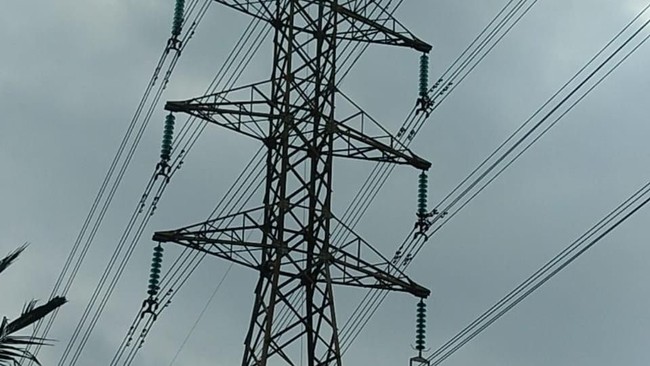
Over the past decade, toll roads have become one of the most visible symbols of Indonesia’s infrastructure transformation. Thousands of kilometres of new routes have connected industrial estates with ports, accelerated the distribution of goods, lowered logistics costs and opened new growth centres. Toll roads are not merely transport infrastructure. They have become the foundation of national productivity because they enable goods, people and investment to move faster.
However, every era has its own infrastructure needs. If the 20th century was marked by the construction of highways, ports, airports and railways to support industrialisation, the 21st century presents new demands. Future economic growth is no longer determined solely by the ability to move people and goods, but also by the ability to channel large amounts of energy to centres of economic activity.
This is where the electricity grid acquires an increasingly strategic role. Indonesia’s future economic competitiveness will be determined not only by toll roads, but also by an electricity network capable of connecting energy sources with industrial estates, data centres, economic zones and growing cities.
This transformation is underway around the world. The explosion of investment in artificial intelligence, data centres, electric vehicles, the battery industry, semiconductors and green hydrogen has changed the structure of global energy demand. If electricity was once seen as a utility that followed economic activity, it now determines whether an investment can grow or even operate at all.
Data centres cannot operate without a stable electricity supply. Smelters cannot produce metals without large and sustainable amounts of energy. Battery factories, electric vehicle manufacturing and the digital industry require a far higher quality of electricity supply than conventional industries. In the modern economy, energy reliability increasingly determines investment reliability.
This shift also explains why the world’s largest technology companies no longer invest only in computing and software. Microsoft, Google, Amazon, Meta and other technology firms have begun securing long-term power purchase agreements, investing in renewable energy and even supporting the development of nuclear power plants to guarantee energy supply for their data centres. In the digital economy, access to electricity has become a strategic factor as important as access to capital and technology.
For this reason, power plants can no longer be seen as the sole measure of success in an energy system. Power plants do generate electricity, but it is the transmission and distribution network that turns energy into economic productivity. Electricity that cannot be delivered to consumers will not create added value.
No matter how large a country’s generation capacity, its economic benefits will be limited if its transmission network is unable to carry energy to industrial estates, growth centres and areas with high electricity demand.
The simplest analogy remains the toll road. Toll roads do not produce goods, but without them goods cannot move efficiently from factories to markets. The same applies to the electricity grid. It does not produce energy, but without it energy cannot be used by productive sectors. If toll roads accelerate the flow of logistics, the electricity grid accelerates the flow of energy that is the main fuel of the modern economy.
That is why many countries now treat the electricity grid as a strategic priority. China is building an Ultra High Voltage network to transmit electricity from its energy-rich western regions to industrial centres on the eastern coast.
India is developing the Green Energy Corridor to connect renewable energy potential with consumption centres. The United States is accelerating transmission investment to accommodate the growth of clean energy and data centres. In Southeast Asia, the ASEAN Power Grid shows that cross-border electricity connectivity is beginning to be seen as part of regional competitiveness.
Indonesia faces a more complex challenge because of its geographical character as an archipelagic nation. Renewable energy potential is often located far from demand centres. Large hydropower resources are available in Kalimantan and Papua. Geothermal energy is spread across Sumatra, Java, Sulawesi and Nusa Tenggara. Solar energy has great potential in eastern Indonesia. Meanwhile, the largest electricity consumption remains concentrated in industrial centres and urban areas, especially in Java.
Without a strong and integrated transmission network, most of that potential will remain figures on paper. Therefore, ambitious generation development targets, including large-scale renewable energy development, must proceed together with the construction of a commensurate transmission network. Building power plants without strengthening the grid is like building an industrial estate without connecting roads: the investment exists, but its economic benefits are not maximised.
The energy development paradigm also needs to change. So far, public attention has focused mostly on how many gigawatts of generation capacity have been built. Going forward, the question is not only how much electricity can be produced, but how quickly, reliably and efficiently it can be delivered to users.
In the digital economy, the quality of an energy system is determined by the entire chain: generation, transmission, distribution, energy storage and the digitalisation of the electricity grid. For Indonesia, this issue has enormous economic dimensions. The government is promoting growth through mineral downstreaming, industrial estates, electric vehicles, economic digitalisation and data centre investment. All of these agendas require a reliable and extensive electricity network.