
Electric Vehicles in NTB Still Tax-Free, Here Are the Considerations
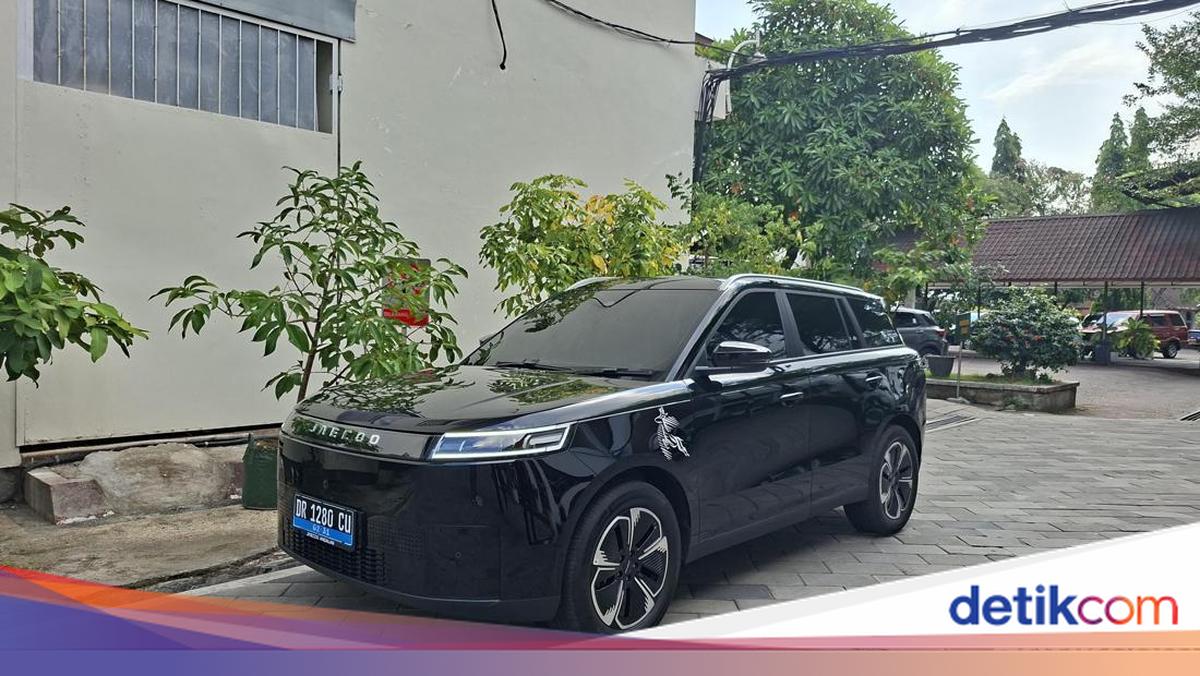
The West Nusa Tenggara Provincial Government (Pemprov NTB) is exempting Motor Vehicle Tax (PKB) and Motor Vehicle Transfer Fee (BBNKB) specifically for Battery-Based Electric Vehicles (KBLBB). This policy is part of an effort to encourage the use of environmentally friendly vehicles in NTB.
The Secretary of the Regional Revenue Agency (Bapenda) of NTB, Muhammad Zuhudy Kadran, explained that this incentive policy refers to Circular Letter (SE) Number 900.1.13.1/3764/SJ from the Ministry of Home Affairs (Kemendagri). The circular instructs all governors in Indonesia to provide full exemptions for regional taxes specifically for electric vehicles.
“We are still following central government policy. For electric vehicles, incentives for tax exemptions or reductions are provided as long as the Circular Letter has not been revoked,” said Zuhuddy when met at the NTB Governor’s Office on Thursday (4/6/2026).
By regulation, this tax exemption is confirmed not to violate any rules, as the central government has urged all regions to waive or reduce the tax burden on electric vehicles. Nevertheless, he explained that regions actually possess the authority to begin collecting a portion of the electric vehicle tax.
“If collected, according to the Ministry of Home Affairs circular, one may pay 25 per cent of the principal tax. For example, if the amount due should be Rp 1 million, they would pay Rp 250,000,” he noted.
Currently, the NTB Provincial Government has included plans for electric vehicle taxation in the revision of the Regional Regulation (Perda) concerning Regional Taxes and Levies (PDRD). However, this regulation is still awaiting ratification by the Governor of NTB.
Zuhudy emphasised that the plan to collect taxes in the future does not mean the government does not support environmental programmes.
“We are following the provisions regarding the principal tax. Therefore, this tax collection is not inconsistent with net zero emissions; it proceeds side by side,” he asserted.
The fundamental reason behind the plan to collect taxes is the principle of fairness regarding public facilities. Electric vehicles hold the same status as conventional vehicles in using highways built with state funds.
“Because roads require maintenance, there must be a tax contribution. However, there is a policy to attempt to zero it out for now to attract public interest in using electric vehicles,” said Zuhudy.
Zuhudy revealed the future tax calculation formula for electric vehicles. The amount will be calculated based on the Motor Vehicle Sale Value (NJKB) multiplied by a BBNKB rate of 1.025 per cent, then charged at 25 per cent of the principal tax.
According to Zuhudy, current vehicle tax rates in NTB are among the lowest compared to Bali and East Nusa Tenggara (NTT). Additionally, the BBNKB rate for new vehicles in NTB is also lower than in several other regions.
“In NTB, our tax rate is the lowest compared to Bali and NTT at 1.025 per cent. Our rate is among the lowest. The BBNKB is also low; when people buy new vehicles, we charge 9 per cent, whereas in other provinces, it is 12 per cent,” he explained.
Regarding tax grouping, electric vehicles are planned to be subject to a relatively uniform rate. Unlike conventional vehicles, which are calculated based on engine capacity (cc), electric vehicles use kilowatt-hour (kWh) as a parameter. Meanwhile, for hybrid vehicles, the taxation scheme will follow the provisions for conventional vehicles.
“For conventional vehicles, the tax amount is determined by CC. For electric vehicles, it is from kWh. However, we plan to standardise it. Except for hybrids, which will be taxed like conventional vehicles,” Zuhudy concluded.