
Electric Vehicles Hit with Taxes Again? Government Urged to Review Regulation
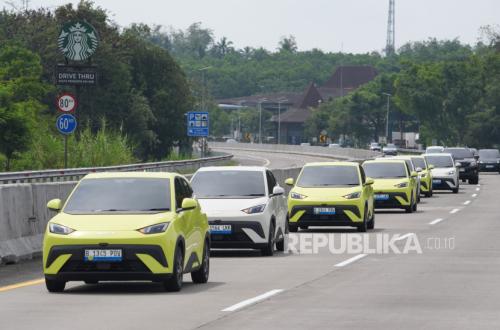
The think-tank Institute for Essential Services Reform (IESR) is pressing the government to review Interior Ministerial Regulation (Permendagri) No. 11 of 2026 on motor vehicle taxes. IESR views the elimination of the zero per cent tax mandate for Battery-Based Electric Motor Vehicles (KBLBB) as a “regulatory regression” that contradicts higher laws and endangers national energy independence targets. IESR stresses that the sustainability of investments in the electric vehicle sector heavily relies on regulatory stability. There is an urgent need to align Permendagri 11/2026 with Law No. 1 of 2022 on Financial Relations between the Central Government and Regional Governments (UU HKPD). “Article 7 of the UU HKPD has provided a highly progressive policy direction by exempting renewable energy-based vehicles from tax objects. We see the need for synchronisation so that Permendagri 11/2026 still refers to the mandate of that law, thus maintaining the ‘non-tax object’ status for electric vehicles,” said Chief Executive Officer (CEO) of IESR Fabby Tumiwa in his statement on Monday (20/4/2026). Through the introduction of the Motor Vehicle Selling Value (NJKB) formula and weight coefficient, Permendagri 11/2026 unilaterally designates electric vehicles as “tax objects”. Fabby assesses this policy as running counter to President Prabowo’s vision in curbing fuel imports and will impede achieving targets of 2 million electric cars and 13 million electric motorcycles by 2030. Fabby emphasises that electric vehicles are far more efficient with energy consumption 70-80 per cent lower than combustion engines, making exemptions from Motor Vehicle Tax (PKB) and Motor Vehicle Ownership Transfer Fee (BBNKB) crucial to attract public interest while reducing the government’s fuel subsidy burden.