
Electric Vehicle Tax Exemption to Be Reinstated, Is the Government Wavering?
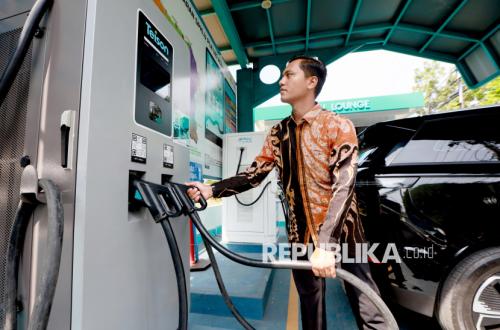
Executive Director of the Center of Economic and Law Studies (CELIOS), Bhima Yudhistira Adhinegara, stated that the instruction from the Minister of Home Affairs, Muhammad Tito Karnavian, to all governors to provide fiscal incentives in the form of tax exemptions for electric vehicle (EV) owners indicates inconsistencies in fiscal policy. Bhima assessed that this policy reflects a lack of alignment in policy direction between the central government and regional governments.
The wavering imposition of taxes on electric vehicles serves as evidence that the central government and regional governments are not yet aligned. On one hand, the central government faces budget limitations, and the efficiency of regional transfer funds puts local governments under pressure, even for routine expenditures,” said Bhima when contacted by Republika in Jakarta on Friday (24/4/2026).
In the Law on Financial Relations between the Central Government and Regional Governments (UU HKPD), said Bhima, regional governments actually have the authority to collect additional levies on vehicles, including electric vehicles. Therefore, he views the tax exemption instruction as potentially clashing with existing regulations.
“If local governments are asked not to collect taxes on electric vehicles, what compensation is there for the potential loss of regional own-source revenue? As long as there is none, local governments may still refer to the UU HKPD. This could lead to regulatory conflicts,” he continued.
According to Bhima, this coordination issue not only impacts regional governments but also affects EV consumers and the electric vehicle industry. Bhima noted that policy uncertainty could hinder the growth momentum of the electric vehicle market, which should be increasing amid the rise in non-subsidised fuel prices.
“This problematic coordination has long-term consequences for EV consumers. EV sales, whose momentum should rise due to the increase in non-subsidised fuel, could instead be stalled. For example, a Denza car could face a tax burden of Rp 15 million to Rp 18 million per year. Who would want to buy it?” questioned Bhima.
Bhima said that uncertainty is also felt by electric vehicle manufacturers who have invested in Indonesia. Investors, he said, now face a dilemma in determining production strategies and workforce.
“For EV producers who have already invested, it also creates confusion about whether production capacity and the number of employees need to be reduced? Uncertainty is high, so the energy transition moment could be missed,” said Bhima.
Source: jawawa.id (https://jawawa.id/newsitem/electric-vehicle-tax-exemption-to-be-reinstated-is-the-government-wavering-1777045946)
Originally published by Republika (https://esgnow.republika.co.id/berita/tdzxsi490/pajak-kendaraan-listrik-bakal-dibebaskan-lagi-pemerintah-plinplan), translated from Indonesian