
Electric Vehicle Tax Changes Prompt IESR Warning on Investment Risks
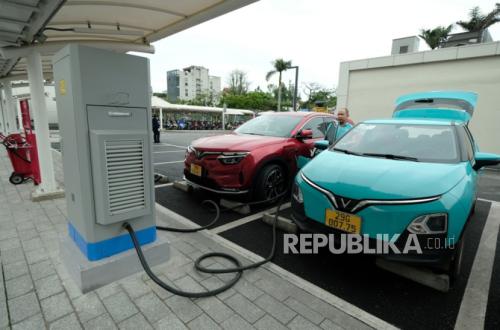
The Institute for Essential Services Reform (IESR) has called on the government to review Ministerial Regulation on Home Affairs (Permendagri) No. 11 of 2026 on motor vehicle taxes. IESR assesses that this policy change could potentially impede the acceleration of the national electric vehicle programme.
Meanwhile, the government’s target of reaching 2 million electric cars and 13 million electric motorcycles by 2030 has the potential to save foreign exchange on imports worth up to Rp 49 trillion and reduce fuel subsidies by Rp 18.3 trillion per year.
IESR Chief Executive Officer Fabby Tumiwa stated that the change from a zero per cent tax mandate to a policy dependent on each region risks disrupting the development of the national electric vehicle market.
“National tax incentives must be maintained and even expanded. The shift from a zero per cent tax mandate to rates dependent on each governor’s fiscal policy will damage the price parity that is essential for mass adoption,” said Fabby.
IESR assesses that the sustainability of investments in the electric vehicle sector heavily depends on regulatory stability. Policy inconsistencies are seen as risking reduced consumer interest as well as the investment climate for electric vehicle manufacturing and charging infrastructure, amid the early growth phase of the market.
In addition, IESR believes that Permendagri No. 11 of 2026 needs to be aligned with Law No. 1 of 2022 on Financial Relations between the Central Government and Regional Governments (UU HKPD). That regulation previously provided policy direction by excluding renewable energy-based vehicles from taxable objects.
“Article 7 of the UU HKPD has provided a very progressive policy direction by excluding renewable energy-based vehicles from taxable objects. We see the need for synchronisation so that Permendagri No. 11 of 2026 still refers to that law’s mandate, thus maintaining the ‘non-taxable object’ status for electric vehicles,” said Fabby.
IESR has requested that the government, particularly the Ministry of Home Affairs, postpone the implementation of provisions related to electric vehicles, carry out regulatory harmonisation, and provide permanent fiscal guarantees for the electric vehicle sector towards the 2030 targets.
“We cannot achieve industrial decarbonisation and the cessation of fuel imports if the rules of the game change every two years. If this regulation is not revised soon, it will be highly vulnerable to material review at the Supreme Court, which will only worsen consumer and investor confidence,” added Fabby.