
Electric Vehicle Battery Investment Drives Indonesia's Nickel Downstreaming
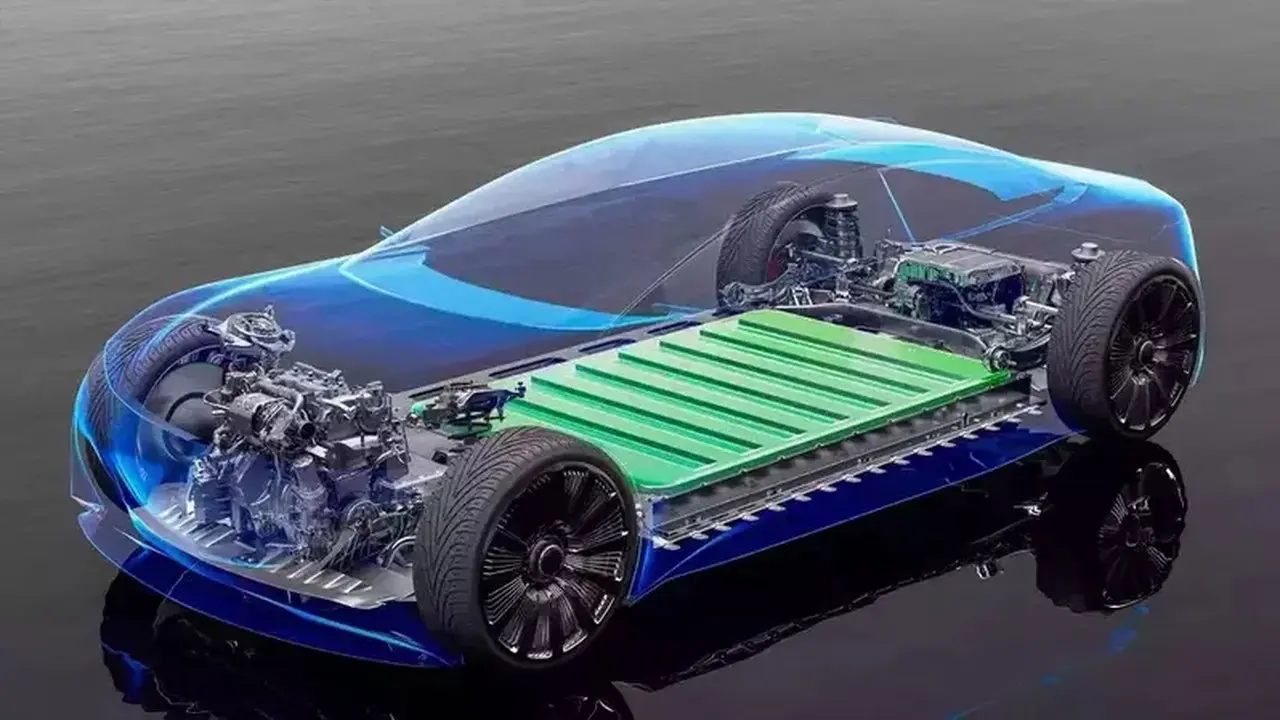
The development of electric vehicles (EV) is triggering a massive wave of investment in the battery sector. The Ministry of Investment and Downstreaming/BKPM reported that investment in the nickel sector reached Rp71 trillion in the first half of 2026. Of that figure, more than Rp50 trillion, or approximately 70%, has been allocated to the development of the electric vehicle battery ecosystem.
Ahmad Faizal Suralaga, Director of Downstreaming Strategy and Governance at the Ministry of Investment and Downstreaming/BKPM, stated that the high level of battery investment signifies a shift in the direction of Indonesia’s nickel downstreaming. “More than Rp50 trillion from Rp 71 trillion, or more than 70%, has been invested directly into the battery ecosystem,” he revealed during the International Battery Summit (IBS) 2026 in Jakarta on Friday (28/8/2026).
According to Ahmad, nickel investment is no longer solely focused on processing raw minerals but is moving towards a higher value chain. The government has comprehensively mapped the development of the EV ecosystem, ranging from mining, mineral processing, battery raw materials, precursors, cathodes, battery cells, battery packs, vehicle manufacturing, and charging infrastructure to battery recycling.
The development of the EV industry is part of the government’s strategy to transform natural resource wealth into national industrial strength. This step aligns with President Prabowo Subianto’s downstreaming agenda, which emphasises strengthening energy independence and increasing the added value of natural resources.
To accelerate investment, the government has formulated a downstream roadmap covering 28 commodities across eight strategic sectors. This roadmap is projected to attract investments worth US$618 billion by 2040 and has the potential to create more than 3 million direct jobs.
The government also provides various forms of support, including fiscal incentives, simplified licensing through the Online Single Submission (OSS) system, and research and development incentives. One such incentive is a super tax deduction of up to 200-300% for vocational activities and technological R&D, which is expected to encourage companies to increase technological investment and accelerate technology transfer within the battery industry.
Market and Infrastructure Challenges
On the market side, Indonesia’s electric vehicles are entering a new phase. The industry’s challenges now lie not only in improving vehicle technology but also in the readiness of the supporting ecosystem, particularly charging infrastructure.
ALVA Chief Executive Officer, Purbaja Pantja, acknowledged that experience in developing electric motorcycles shows that consumers are still considering the availability of charging facilities. He explained that current battery technology is actually capable of meeting daily mobility needs, such as ALVA electric motorcycles, which can travel up to 140 kilometres on a single charge.
However, the public requires certainty that electric vehicles can serve as a primary mode of transport. “The question is not just how far a vehicle can travel, but how to ensure customers can use electric vehicles as their primary mode of transportation,” said Purbaja.
Given that the majority of Indonesians use motorcycles as their primary vehicle, the charging network is a crucial factor in reducing user anxiety regarding range. To address this, ALVA continues to expand its Boost Charging Station network, which has increased from approximately 180 units to nearly 500 units.
This infrastructure expansion has led to higher usage. While last year the utilisation of ALVA charging stations was around 1,600 hours, it has now surged to approximately 68,000 hours. Purbaja views this as evidence of the increasing public demand for charging infrastructure as the number of EV users grows.
Moving forward, ALVA plans to build a charging network that supports intercity travel, covering routes such as Jakarta-Bandung, Semarang-Yogyakarta-Solo, and Surabaya-Malang. This network will continue to expand to connect Jakarta, Cirebon, Semarang, and Surabaya.
In addition to the number of stations, charging speed is also a focus. Purbaja aims for fast-charging technology that can fully charge a battery in approximately 25 minutes, with a target of reaching around 1,000 Boost Charging Stations by the end of the year.
Nevertheless, the expansion of the charging network still faces challenges, particularly in finding strategic locations and the right partners. “Finding the right location is key. That is what makes the expansion process time-consuming,” said Purbaja.
Leveraging the Electrification Momentum
The Chairman of the Indonesian Electric Vehicle Industry Association (PERIKLINDO), Moeldoko, emphasised that the presence of EVs is a momentum for Indonesia to strengthen its national automotive industry.
“In this technological field, it is truly a momentum for the Indonesian nation. We cannot catch up with conventional cars. But with the presence of EVs, this is a real momentum; we can leapfrog to catch up,” said Moletoko.
He added that Indonesia must utilise this electrification momentum to build independent technological capabilities, including the introduction of national electric vehicle brands. “Indonesia should already have a national EV brand. We can no longer just chase conventional cars. This is a momentum that must be utilised well,” he said.
Moeldoko explained that the transition to electric vehicles will significantly change the structure of the automotive industry. Internal combustion engine vehicles consist of thousands of components, whereas electric vehicles use simpler components. This change will impact the automotive supply chain, including the component industry that relies on conventional vehicles.
Therefore, Indonesia needs to prepare its industry so that it does not merely become a market for electric vehicles, but is capable of mastering key technologies such as…
Source: jawawa.id (https://jawawa.id/newsitem/electric-vehicle-battery-investment-drives-indonesias-nickel-downstreaming-1788065500)
Originally published by gegeronline.co.id (https://gegeronline.co.id/investasi-baterai-kendaraan-listrik-pacu-hilirisasi-nikel-indonesia/), translated from Indonesian