
Electric Motorcycle Incentive Plan Rolls Out: Which Issuers Stand to Gain the Most?
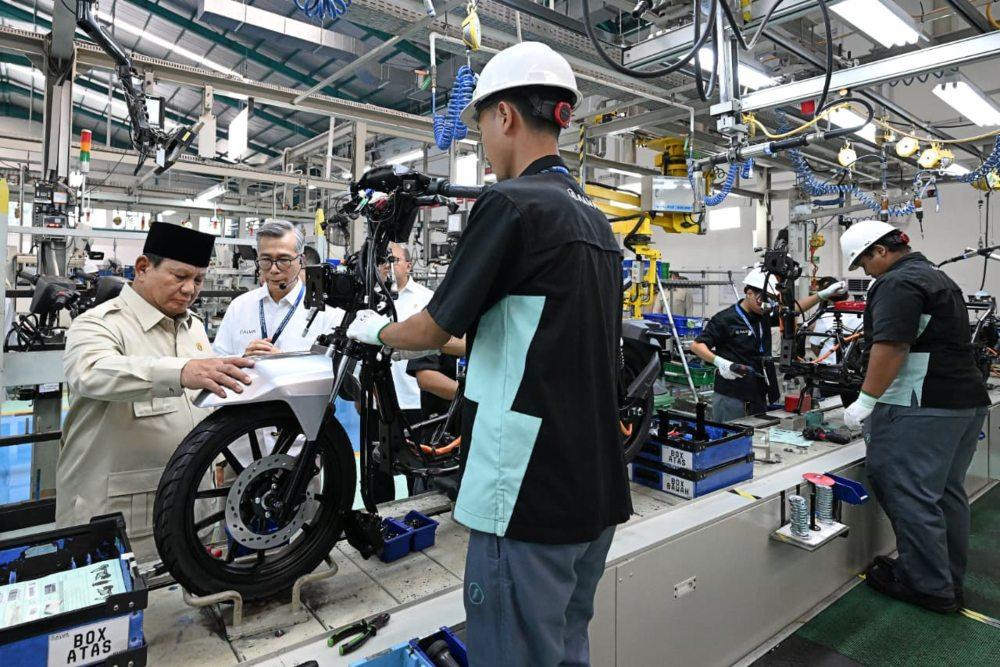
The government’s plan to provide incentives for one million domestically produced electric motorcycles has the potential to serve as a positive catalyst for a number of issuers in the automotive and EV manufacturing sectors.
This strategic policy was delivered directly by President Prabowo Subianto in his Financial Note speech for the 2027 State Budget Draft on Friday (14/8/2026).
The measure is intended to reduce the burden of fuel oil subsidies, lower public transportation costs, and strengthen the national electric vehicle industry supply chain.
“We will provide incentives for one million electric motorcycles produced domestically by Indonesian entrepreneurs,” said President Prabowo.
The Head of State also stated that the policy is not merely a consumption incentive, but a strategic investment to build independence in the national automotive and energy industries.
“Every Indonesian-made electric motorcycle on the road represents three victories at once: savings for families, reduced energy imports, and jobs for the nation’s children,” the President said.
Chairman of the Indonesian Electric Motorcycle Industry Association (Aismoli) Budi Setiyadi welcomed the signal positively, particularly the proposed financing schemes such as 0% down payment and low interest rates to broaden market access.
Based on capital market mapping, the policy is projected to trigger a surge in sales volume of battery-based two-wheelers produced locally with high domestic component levels.
Several issuers such as PT Astra International Tbk. (ASII), PT Indika Energy Tbk. (INDY), PT TBS Energi Utama Tbk. (TOBA), and PT VKTR Teknologi Mobilitas Tbk. (VKTR) are in strategic positions to absorb this opportunity.
The following is a list of issuers that could potentially benefit from the incentive:
- PT Astra International Tbk. (ASII)
As the dominant player in the national two-wheeler market through the Honda brand, Astra has the potential to absorb the mass incentive quota. ASII has already entered the electric vehicle segment through its Honda EM1 e: and ICON e: lines.
In addition, the company’s ecosystem advantage is supported by its extensive dealer network, after-sales facilities, and readiness of financing support through FIF Group if production localisation meets subsidy requirements.
- PT Indika Energy Tbk. (INDY)
The company has a pure portfolio in the two-wheeled electric vehicle sector based on local manufacturing. INDY relies on its ALVA electric motorcycle line under PT Ilectra Motor Group, which is already supported by a manufacturing facility in Cikarang with a focus on increasing local components.
- PT TBS Energi Utama Tbk. (TOBA)
TOBA is also aggressively developing the two-wheeled electric vehicle ecosystem in the country through Electrum. Electrum is a joint venture between TOBA and PT GoTo Gojek Tokopedia Tbk. (GOTO) focused on building the ecosystem and production of national electric motorcycles.
- PT VKTR Teknologi Mobilitas Tbk. (VKTR)
Although its main focus is on the electric bus segment, the expansion of its component supply chain ecosystem and local partnerships positions VKTR to potentially benefit from positive sentiment arising from the localisation of two-wheeler electrical components.